Persian Lamb & Wheat Halim
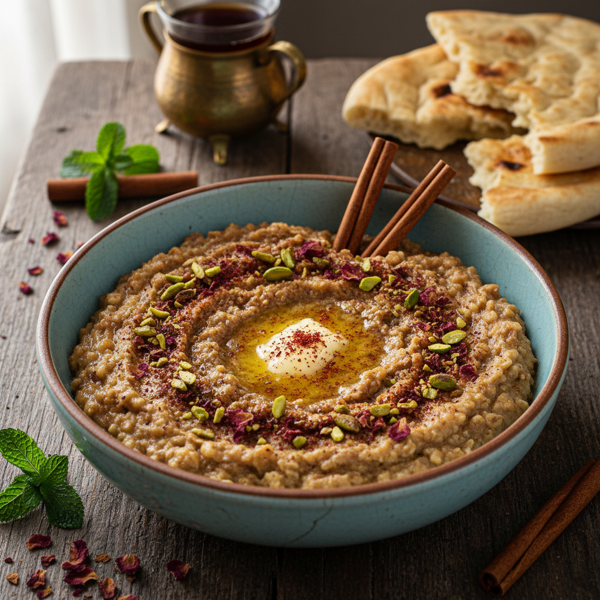
A beloved dish from the heart of Iranian cuisine, Halim is a hearty lamb and wheat porridge that warms both the body and soul. This recipe, adapted from chef Najmieh Batmanglij's renowned Food of Life, is perfect for gatherings or family meals. Its rich flavors and comforting texture come from slow-cooked lamb shoulder, wholesome whole wheat, and chickpeas, creating a nourishing dish that's traditionally enjoyed during winter months or special occasions. Don't be intimidated by the lengthy preparation time; the majority is simple soaking and slow cooking, allowing the ingredients to meld together beautifully while you go about your day. Garnished with a drizzle of melted butter, fragrant cinnamon, and a dusting of confectioners' sugar, each bowl of Halim is a delightful experience that brings a taste of Iran to your table.
N/A
Servings
300
Calories
11
Ingredients
Ingredients
Lamb shoulder or turkey
2 lbs (on the bone)
Water
8 cups (for cooking)
Onions
2 (peeled and thinly sliced)
Sea salt
1 1/2 teaspoons
Fresh ground black pepper
1/2 teaspoon
Turmeric
1/2 teaspoon
Whole wheat grain
1 lb (soaked in 4 cups of water for 24 hours, then drained)
Chickpeas
1/2 cup (soaked in 4 cups of water for 24 hours, then drained)
Butter
1/4 cup (melted)
Cinnamon
1 teaspoon
Confectioners' sugar
2 tablespoons
Instructions
1
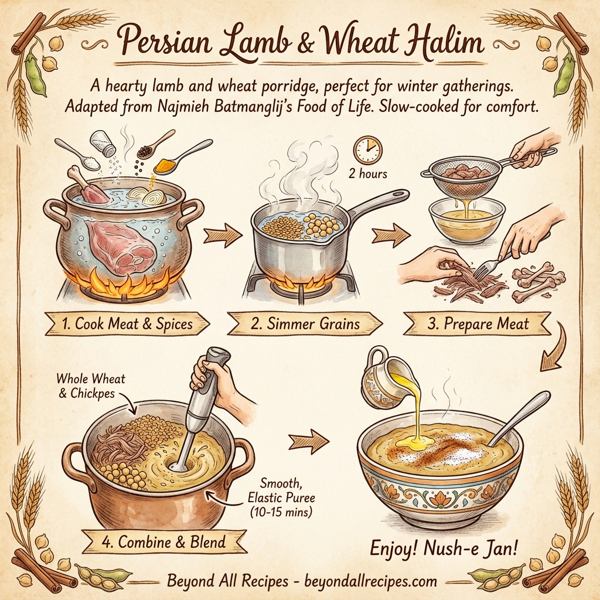
In a large, heavy-bottomed pot, place the lamb shoulder or turkey and pour in 8 cups of water. Bring the water to a boil, then skim off any froth that forms on the surface.
2
Once the froth has dissipated, add the sliced onions, sea salt, black pepper, and turmeric. Bring the mixture back to a boil, then reduce the heat to low, cover, and let simmer for 2 hours or until the meat is tender and falling off the bone. Stir occasionally, adding more warm water if needed to keep the meat submerged.
3
In a separate medium-sized saucepan, add the drained whole wheat and chickpeas along with 4 cups of fresh water. Bring this mixture to a boil, then reduce the heat, cover, and simmer for about 2 hours or until the wheat is tender. Keep an eye on it and add additional warm water if necessary to prevent sticking.
4
After the meat is tender, drain it through a fine-mesh sieve, returning the strained stock back into the pot. Remove the meat from the bones, shredding it and returning it to the pot, while discarding the bones and any other solids left in the sieve.
5
Add the cooked whole wheat and chickpeas into the pot with the meat. Place the pot over medium-low heat. Using a handheld mixer, blend the mixture together, mixing for about 10 to 15 minutes until you achieve a smooth and slightly elastic puree, fully incorporating the meat, wheat, and chickpeas. Adjust the seasoning as needed.
6
Serve the halim in individual bowls, and garnish each portion with a little melted butter on top, a sprinkle of cinnamon, and a dusting of confectioners' sugar. Enjoy your meal, or as they say in Persian, Nush-e Jan!
Nutrition Information
16.7g
Fat
25g
Carbs
20g
Protein
Frequently Asked Questions
Frequently Asked Questions
What is Persian Lamb & Wheat Halim?
Halim is a hearty lamb and wheat porridge from Iranian cuisine, known for its rich flavors and comforting texture.
What are the primary ingredients in this Halim recipe?
The main ingredients include lamb shoulder or turkey, whole wheat grain, chickpeas, onions, and spices like turmeric, cinnamon, and sea salt.
Can I use a different meat besides lamb?
Yes, this recipe allows for turkey as an alternative to lamb shoulder.
How long does the wheat and chickpeas need to soak?
Both the whole wheat grain and the chickpeas should be soaked in 4 cups of water for 24 hours before cooking.
What is the total cooking time for the lamb?
The lamb should simmer for approximately 2 hours or until it is tender and falling off the bone.
How long should the wheat and chickpeas simmer?
The wheat and chickpeas should be simmered in a separate saucepan for about 2 hours until the wheat is tender.
How is the signature smooth texture of Halim achieved?
The texture is achieved by using a handheld mixer to blend the cooked meat, wheat, and chickpeas together for 10 to 15 minutes until it becomes a smooth, elastic puree.
What are the traditional garnishes for Halim?
It is traditionally garnished with a drizzle of melted butter, a sprinkle of cinnamon, and a dusting of confectioners' sugar.
What is the origin of this specific recipe?
This recipe is adapted from chef Najmieh Batmanglij's renowned book, Food of Life.
When is Halim typically served in Iran?
Halim is traditionally enjoyed during the winter months or served on special occasions.
How many calories are in a serving of this Halim?
Each serving contains approximately 300 calories.
What is the protein content of this dish?
This dish provides approximately 20g of protein per serving.
How much fat is in one serving?
There are 16.7g of fat per serving.
How many carbohydrates are in this recipe?
There are 25g of carbohydrates per serving.
What spices are used during the meat cooking process?
Sea salt, fresh ground black pepper, and turmeric are added to the meat as it simmers.
Do you discard the cooking liquid from the meat?
No, you should strain the stock through a fine-mesh sieve and return it to the pot to be used in the final puree.
What should I do with the lamb bones?
Once the meat is tender, remove it from the bones and discard the bones before shredding the meat.
Is Halim considered a quick meal?
No, Halim is a slow-cooked dish requiring long soaking times and several hours of simmering to develop its flavor and texture.
How much butter is used for the garnish?
The recipe calls for 1/4 cup of melted butter to be drizzled over the individual servings.
How much whole wheat grain is required?
The recipe requires 1 lb of whole wheat grain.
What does 'Nush-e Jan' mean?
'Nush-e Jan' is a Persian phrase used during meals that translates to 'Enjoy your meal'.
How many onions are needed for the stock?
The recipe uses 2 onions, peeled and thinly sliced.
What equipment is needed to blend the Halim?
A handheld mixer (immersion blender) is used to create the smooth puree directly in the pot.
How much water is initially used to cook the lamb?
The lamb is initially cooked in 8 cups of water.
What should I do if the meat is not fully submerged during cooking?
You should add more warm water as needed during the simmering process to keep the meat submerged.
Can I adjust the seasoning of the Halim?
Yes, after blending the mixture into a puree, you should adjust the seasoning as needed before serving.
How much cinnamon is used for garnishing?
The recipe suggests using 1 teaspoon of cinnamon for the garnish.
Is confectioners' sugar a common addition to Halim?
Yes, a dusting of confectioners' sugar is a traditional topping that provides a unique sweetness to the savory porridge.
What kind of pot is recommended for cooking Halim?
A large, heavy-bottomed pot is recommended to ensure even heat distribution and prevent sticking.
What is the preparation style for the lamb shoulder?
The lamb shoulder should be prepared and cooked 'on the bone' to enhance the flavor of the stock.