Persian Eggplant Frittata (Kuku-e Bademjan)
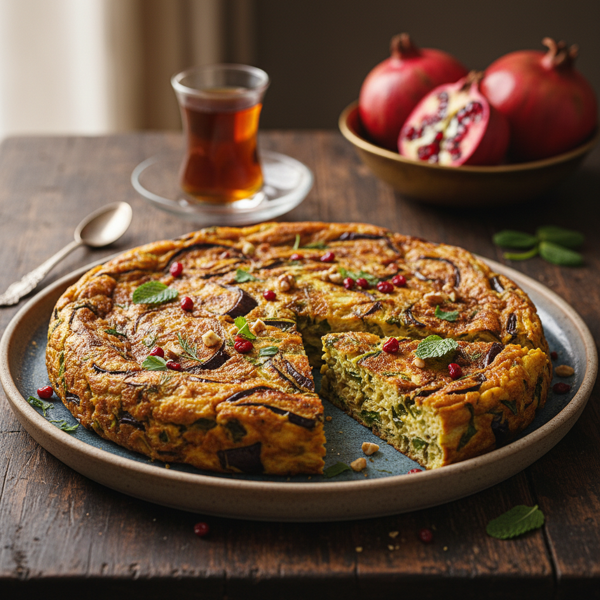
This delectable Persian Eggplant Frittata, or Kuku-e Bademjan, is a flavorful and wholesome dish that beautifully combines the rich taste of eggplant with the aromatic spices of Persian cuisine. It features tender sautéed eggplant, caramelized onions, and a blend of fresh herbs, all enveloped in a fluffy egg mixture. Perfect for lunch or as a delightful snack, serve it warm or at room temperature, and enjoy the combination of flavors that make this dish a favorite in Persian homes. It's not just delicious; it's also a wonderful way to eat your veggies and a great option for vegetarian diets.
N/A
Servings
N/A
Calories
13
Ingredients
Ingredients
eggplants
2 large or 6 small (peeled and cut into thin strips)
egg white
1 (lightly beaten)
vegetable oil, butter or ghee
1/2 cup (for frying)
onions
2 large (peeled and thinly sliced)
garlic cloves
4 (peeled and crushed)
eggs
4 (whole)
fresh parsley
4 tablespoons (chopped)
powdered saffron
1/4 teaspoon (dissolved in 1 tablespoon hot water)
lime
1 (juice of)
baking powder
1 teaspoon
all-purpose flour
1 tablespoon
salt
1 teaspoon
fresh ground black pepper
1/4 teaspoon
Instructions
1
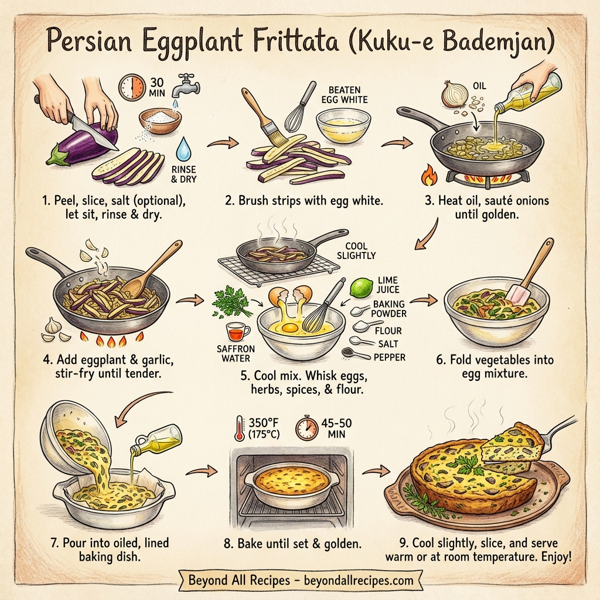
Begin by peeling the eggplants and slicing them lengthwise into quarters. If they are particularly large, slice them into thinner strips. If desired, salt the slices to help draw out any bitterness and let them sit for about 30 minutes, then rinse and pat dry.
2
Once prepared, brush each side of the eggplant strips lightly with the beaten egg white. This will help reduce the amount of oil absorbed during frying.
3
In a large skillet, heat 4 tablespoons of your chosen oil (vegetable oil, butter, or ghee) over medium heat.
4
Add the sliced onions to the skillet and sauté them for about 10 minutes, or until they become translucent and lightly golden.
5
Next, add the prepared eggplant strips and crushed garlic into the skillet. Continue to stir-fry for another 10 minutes, allowing the eggplant to become tender and golden brown on all sides.
6
Once the vegetable mixture is cooked, remove the skillet from heat and allow it to cool slightly.
7
Preheat your oven to 350°F (175°C). Meanwhile, pour the remaining 4 tablespoons of oil into an 8-inch baking dish lined with parchment paper to prevent sticking.
8
In a large mixing bowl, crack the four eggs and beat them together until well combined. Incorporate the chopped parsley, dissolved saffron water, lime juice, baking powder, all-purpose flour, salt, and black pepper. Mix well.
9
Gently fold the cooled eggplant, onion, and garlic mixture into the egg mixture until thoroughly combined.
10
Pour the combined mixture into the prepared baking dish and spread it evenly.
11
Place the baking dish in the preheated oven and bake for 45 to 50 minutes, or until the edges are golden brown and the center is set.
12
Once baked, allow the Kuku to cool for a few minutes. You can serve it directly from the dish, or to unmold, run a knife around the edges and gently invert it onto a serving platter. Remove the parchment paper before serving.
Nutrition Information
Frequently Asked Questions
Frequently Asked Questions
What is Kuku-e Bademjan?
Kuku-e Bademjan is a traditional Persian Eggplant Frittata made with sautéed eggplant, caramelized onions, herbs, and spices.
Is this Persian Eggplant Frittata vegetarian?
Yes, this dish is a flavorful and wholesome vegetarian option.
How many eggplants do I need for this recipe?
You will need either 2 large eggplants or 6 small ones.
How should the eggplants be prepared?
The eggplants should be peeled and cut into thin strips or lengthwise quarters.
Should I salt the eggplant before cooking?
Yes, you can salt the slices for 30 minutes to draw out bitterness, then rinse and pat them dry.
What is the secret to preventing eggplant from absorbing too much oil?
Brushing each side of the eggplant strips with lightly beaten egg white before frying helps reduce oil absorption.
What type of oil is best for frying the vegetables?
You can use vegetable oil, butter, or ghee for frying.
How long should I sauté the onions?
Sauté the onions for about 10 minutes until they are translucent and lightly golden.
When do I add the garlic to the skillet?
Add the crushed garlic at the same time as the eggplant strips, after the onions have sautéed for 10 minutes.
How long does it take to cook the eggplant in the skillet?
Stir-fry the eggplant and garlic for about 10 minutes until the eggplant is tender and golden brown.
Should the vegetable mixture be hot when added to the eggs?
No, you should remove the skillet from the heat and allow the mixture to cool slightly before combining it with the eggs.
What is the required oven temperature for baking?
Preheat your oven to 350 degrees Fahrenheit or 175 degrees Celsius.
How many eggs are used in the frittata mixture?
The recipe calls for 4 whole eggs for the main mixture, plus 1 egg white for brushing the eggplant.
Which fresh herb is used in this Kuku recipe?
The recipe uses 4 tablespoons of chopped fresh parsley.
How do I prepare the saffron for this dish?
Dissolve 1/4 teaspoon of powdered saffron in 1 tablespoon of hot water.
What does lime juice add to the recipe?
The juice of one lime is added to the egg mixture to provide a bright, citrusy balance to the savory flavors.
Why is baking powder included in the ingredients?
Baking powder helps the frittata rise and achieve a fluffy texture.
Is there flour in this frittata?
Yes, one tablespoon of all-purpose flour is mixed into the eggs to help bind the ingredients.
What size baking dish is recommended?
An 8-inch baking dish is the recommended size for this recipe.
How do I prepare the baking dish?
Line the dish with parchment paper and pour 4 tablespoons of oil into it to prevent sticking.
How do I combine the ingredients?
Gently fold the cooled eggplant and onion mixture into the bowl containing the beaten eggs, herbs, and spices.
How long does the Kuku-e Bademjan need to bake?
Bake the dish for 45 to 50 minutes.
How do I know when the frittata is fully cooked?
It is done when the edges are golden brown and the center of the dish is set.
Can I serve this dish at room temperature?
Yes, Kuku-e Bademjan can be served warm or at room temperature.
What is the best way to remove the Kuku from the pan?
Run a knife around the edges and gently invert the dish onto a serving platter, then remove the parchment paper.
What makes this a healthy meal option?
It is a vegetable-forward dish that provides a flavorful way to consume eggplant, onions, and fresh herbs.
Can this recipe be served as a snack?
Yes, it is versatile and works perfectly as a light lunch, side dish, or snack.
What gives the dish its yellow color?
The dissolved saffron water provides a beautiful golden hue and distinct aroma.
How many garlic cloves are needed?
The recipe requires 4 peeled and crushed garlic cloves.
What is the texture of the finished Kuku?
The texture is a combination of tender sautéed vegetables enveloped in a fluffy, light egg base.