Perfectly Tender Slow-Roasted Lamb Shanks
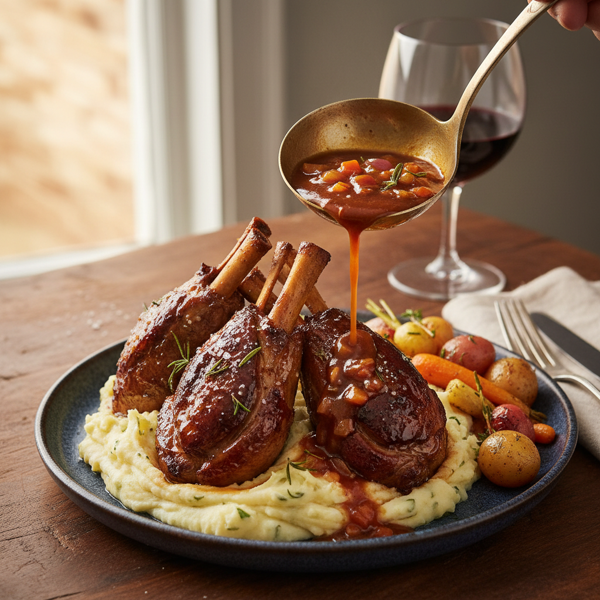
Indulge in the exquisite flavors of perfectly tender slow-roasted lamb shanks, a dish that transforms humble cuts of meat into a culinary masterpiece. This comforting recipe features succulent lamb shanks braised low and slow in a rich blend of aromatic vegetables, herbs, and a dry white wine reduction. Your home will be filled with tantalizing aromas as the lamb cooks to fork-tender perfection. Perfect for special occasions or cozy family dinners, serve these shanks with roasted root vegetables and a drizzle of the savory braising liquid for a dish that will impress everyone at the table.
N/A
Servings
N/A
Calories
19
Ingredients
Ingredients
lamb shanks
6 (about 14 ounces each, seasoned with salt and pepper)
salt
to taste (for seasoning)
pepper
to taste (for seasoning)
onion
1 (chopped)
turnip (or rutabaga)
1 large (peeled and diced)
carrot
1 (peeled and diced)
celery ribs
2 (diced)
garlic
1 head (whole)
olive oil
1/4 cup (for sautéing)
thyme
1 bunch (fresh)
rosemary
1 sprig (fresh)
fennel seed
1 teaspoon (whole)
coriander seed
1 teaspoon (whole)
black peppercorn
1 teaspoon (whole)
bay leaf
1 (dried)
parsley sprigs
3 (fresh for flavoring)
dry white wine
1 (750 ml) bottle (for deglazing)
chicken broth
1 quart (or lamb stock, for braising)
chopped parsley
to garnish (optional)
Instructions
1
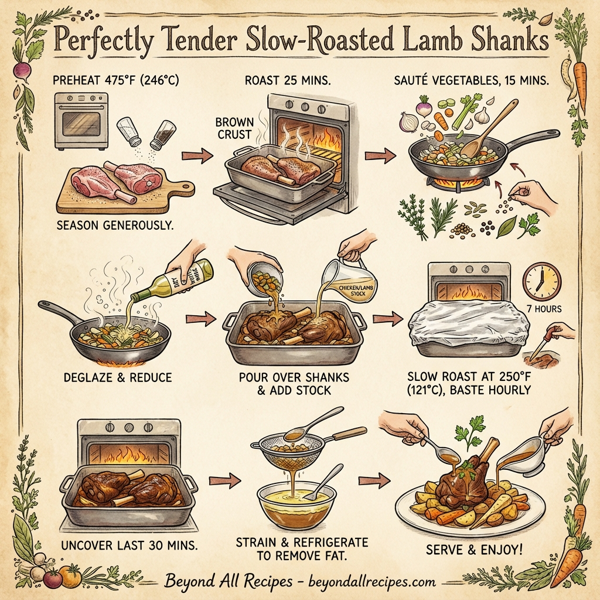
Preheat the oven to 475°F (246°C).
2
Generously season the lamb shanks with salt and pepper, then place them meaty-side up in a large roasting pan.
3
Roast the lamb shanks in the preheated oven for 25 minutes, or until they develop a rich, brown crust.
4
Remove the roasting pan from the oven, and reduce the temperature to 250°F (121°C).
5
In a large sauté pan, heat the olive oil over medium-high heat. Add the chopped onion, turnip (or rutabaga), carrot, celery, and whole garlic cloves. Sauté the vegetables, stirring occasionally, for about 15 minutes, until softened and caramelized.
6
Add the thyme, rosemary, fennel seeds, coriander seeds, black peppercorns, bay leaf, and parsley to the pan. Mix well.
7
Raise the heat to high, pour in the dry white wine, and deglaze the pan by scraping up the browned bits from the bottom. Bring the mixture to a boil and let it reduce by one-third.
8
Pour the aromatic mixture over the browned lamb shanks, making sure to spread the vegetables evenly without fully covering the meat.
9
Add enough chicken broth or lamb stock to the pan to cover the meat almost completely.
10
Cover the roasting pan tightly with aluminum foil and place it back in the oven. Roast for 7 hours, basting the shanks with pan juices every hour and adding more liquid as needed.
11
In the last 30 minutes of cooking, remove the foil to allow the lamb to finish roasting and develop a caramelized exterior.
12
Once done, remove the lamb shanks from the pan and let them cool to room temperature.
13
Strain the braising liquid through a fine-mesh sieve, pressing on the vegetables to extract maximum flavor. Refrigerate overnight to allow the fat to solidify for easier removal.
14
When ready to serve, reheat the lamb shanks gently in the strained braising liquid. Meanwhile, roast your favorite root vegetables until tender.
15
To plate, spoon the roasted root vegetables onto individual serving plates. Center a lamb shank on each plate, and drizzle with the warmed braising liquid.
16
Garnish with freshly chopped parsley if desired.
Nutrition Information
Frequently Asked Questions
Frequently Asked Questions
What is the recommended oven temperature for browning the lamb shanks?
The oven should be preheated to 475°F (246°C) for the initial browning phase.
How long should the lamb shanks roast at the high temperature?
Roast the lamb shanks for 25 minutes or until they develop a rich, brown crust.
What temperature is used for the slow-roasting process?
After the initial browning, reduce the oven temperature to 250°F (121°C) for the remainder of the cooking time.
What vegetables are needed for the aromatic base?
The recipe calls for onion, carrot, celery, garlic, and either turnip or rutabaga.
Can I use rutabaga instead of turnip?
Yes, the recipe suggests using either one large turnip or a rutabaga, peeled and diced.
How long do I need to sauté the vegetables?
Sauté the vegetables for approximately 15 minutes until they are softened and caramelized.
What kind of wine is best for deglazing the pan?
A 750 ml bottle of dry white wine is used to deglaze the pan and create a reduction.
What whole spices are included in the herb mix?
The aromatic mixture includes fennel seeds, coriander seeds, and black peppercorns.
How much chicken broth or stock is required?
You will need 1 quart of chicken broth or lamb stock, enough to cover the meat almost completely.
What is the total slow-roasting time?
The lamb shanks should be roasted low and slow for 7 hours.
How often should the lamb be basted?
Baste the lamb shanks with the pan juices every hour during the roasting process.
When should I remove the aluminum foil from the roasting pan?
Remove the foil during the last 30 minutes of cooking to allow the lamb to develop a caramelized exterior.
What should I do with the lamb shanks once they are finished roasting?
Once done, remove them from the pan and let them cool to room temperature before further processing.
Why is the braising liquid refrigerated overnight?
Refrigerating the liquid overnight allows the fat to solidify on the surface, making it easy to remove for a cleaner sauce.
How do I prepare the braising liquid for serving?
Strain the liquid through a fine-mesh sieve and press on the vegetables to extract maximum flavor before reheating.
What is the best way to reheat the lamb?
Gently reheat the lamb shanks directly in the strained and defatted braising liquid.
What are the suggested side dishes for this recipe?
The recipe recommends serving the shanks with roasted root vegetables.
How many lamb shanks does this recipe make?
This recipe is designed for 6 lamb shanks, each weighing about 14 ounces.
Should the garlic be minced or left whole?
The recipe uses one whole head of garlic, with the cloves used whole in the sauté.
What herbs are used in the roasting process?
Fresh thyme, rosemary, bay leaf, and parsley sprigs are used to flavor the braise.
Is it necessary to season the meat before roasting?
Yes, you should generously season the lamb shanks with salt and pepper before the initial browning.
How much should the wine be reduced?
Bring the wine to a boil and let it reduce by one-third before adding it to the roasting pan.
What garnish is recommended for the final dish?
Freshly chopped parsley is the suggested garnish for the finished plates.
Can I use lamb stock instead of chicken broth?
Yes, lamb stock is an excellent alternative to chicken broth for a deeper lamb flavor.
What is the purpose of deglazing the pan?
Deglazing with wine helps release the browned bits (fond) from the bottom of the pan, adding intense flavor to the sauce.
How should the vegetables be arranged in the roasting pan?
Spread the aromatic vegetable mixture evenly around the shanks without fully covering the meat.
What kind of oil is used for sautéing the vegetables?
The recipe calls for 1/4 cup of olive oil.
Can this recipe be used for special occasions?
Yes, the tender texture and rich flavor make it perfect for special occasions or cozy family dinners.
What happens if the liquid levels drop during the 7-hour roast?
You should add more liquid as needed during the basting process to ensure the meat stays moist.
How is the dish plated?
Spoon roasted root vegetables onto a plate, center a lamb shank on top, and drizzle with the warm braising liquid.