Perfectly Soft Whole Wheat Rotis
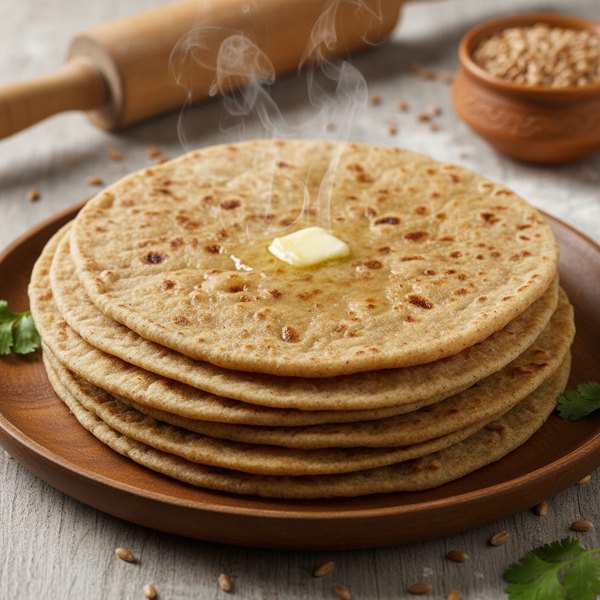
Discover the art of making soft and flavorful whole wheat rotis, also known as chapatis or phulkas. This straightforward yet rewarding 2-ingredient recipe is a staple in Indian households, perfect for accompanying a variety of dishes from curries to salads. The key to achieving the perfect texture lies in the kneading and cooking techniques, making these rotis a delightful addition to any meal. With practice, you can master the craft of rolling and cooking, resulting in fluffy, puffed-up rotis that everyone will love. Enjoy these versatile flatbreads fresh off the skillet, and watch them disappear from the table!
N/A
Servings
N/A
Calories
2
Ingredients
Ingredients
Whole Wheat Flour
1 cup
Water
1/2 cup
Instructions
1
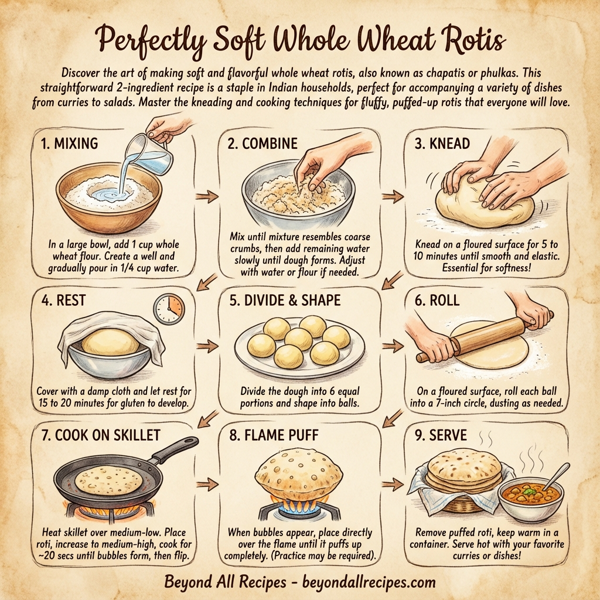
In a large mixing bowl, add 1 cup of whole wheat flour and create a small well in the center.
2
Gradually pour in 1/4 cup of water, mixing it with the flour using your fingers or a fork until the mixture resembles coarse crumbs.
3
Continue adding the remaining water slowly, mixing until the dough comes together. If the mixture is too dry, add more water one tablespoon at a time; if it's too sticky, sprinkle in some additional flour.
4
Once combined, knead the dough on a floured surface for 5 to 10 minutes until it becomes smooth and elastic. This kneading process is essential for achieving soft rotis.
5
Cover the dough with a damp cloth or plastic wrap and let it rest for 15 to 20 minutes to allow the gluten to develop.
6
While the dough rests, heat a heavy skillet or tava over medium-low heat until hot.
7
After resting, divide the dough into 6 equal portions and shape each portion into a lemon-sized ball.
8
On a floured surface, roll each ball into a 7-inch circle using a rolling pin, dusting with flour as needed to prevent sticking.
9
Once the skillet is hot, place one rolled roti on it and increase the heat to medium-high.
10
Cook the roti for about 20 seconds until small bubbles begin to form, then flip it over and cook the other side for another minute or so.
11
When you see small to medium-size bubbles on the surface, remove the skillet from the heat and place the roti directly over the flame until it puffs up completely. This step may require some practice.
12
Once puffed, remove the roti from the flame and place it in a keeping container or on a plate lined with a kitchen towel. Serve hot with your favorite vegetable dishes or curries.
13
Repeat the cooking process for the remaining balls of dough to make 6 rotis in total.
Nutrition Information
Frequently Asked Questions
Frequently Asked Questions
What are the primary ingredients needed to make these rotis?
This recipe requires only two simple ingredients: 1 cup of whole wheat flour and 1/2 cup of water.
What other names are these whole wheat rotis known by?
These flatbreads are also commonly known as chapatis or phulkas.
How long should I knead the dough for the best results?
You should knead the dough on a floured surface for 5 to 10 minutes until it becomes smooth and elastic to ensure soft rotis.
Why is it important to let the dough rest?
Allowing the dough to rest for 15 to 20 minutes is crucial as it allows the gluten to develop, which improves the texture.
How many rotis does this specific recipe yield?
This recipe yields exactly 6 rotis.
What is the recommended size for rolling out each roti?
Each portion of dough should be rolled into a circle approximately 7 inches in diameter.
What type of cooking surface should I use?
A heavy skillet or a traditional Indian tava is recommended for cooking the rotis.
How do I handle dough that is too dry?
If the dough mixture is too dry, you should add more water one tablespoon at a time until the desired consistency is reached.
What should I do if my dough becomes too sticky?
If the dough is too sticky, simply sprinkle in some additional whole wheat flour while kneading.
What is the first step in mixing the dough?
Start by adding the whole wheat flour to a large mixing bowl and creating a small well in the center for the water.
At what temperature should the skillet be heated initially?
The skillet or tava should be heated over medium-low heat until it is hot before you begin cooking.
How long does the first side of the roti take to cook?
The first side should be cooked for about 20 seconds until small bubbles begin to form on the surface.
When should I increase the heat during the cooking process?
Once the skillet is hot and you place the rolled roti on it, you should increase the heat to medium-high.
How do I get the roti to puff up completely?
After bubbles appear on both sides, remove the skillet and place the roti directly over the flame to make it puff up.
What is the best way to keep rotis soft after cooking?
Place the cooked rotis in a keeping container or on a plate lined with a kitchen towel to retain moisture.
Can I use a fork to mix the dough?
Yes, you can use either your fingers or a fork to mix the water into the flour initially.
What size should the dough portions be before rolling?
Divide the rested dough into 6 equal portions and shape each into a lemon-sized ball.
Is this recipe suitable for vegetarians?
Yes, these whole wheat rotis are 100% vegetarian.
What dishes pair well with whole wheat rotis?
They are perfect for accompanying curries, vegetable dishes, or even salads.
How do I prevent the dough from sticking to the rolling pin?
Dust the rolling surface and the dough with additional flour as needed to prevent sticking while rolling.
What should the flour mixture look like before adding all the water?
Initially, the mixture should resemble coarse crumbs as you gradually incorporate the water.
What is the total preparation time for the dough including resting?
Kneading takes 5-10 minutes and resting takes 15-20 minutes, for a total prep time of approximately 20-30 minutes.
Do I need to cover the dough while it rests?
Yes, cover the dough with a damp cloth or plastic wrap to prevent it from drying out during the resting period.
What is the key to achieving the perfect texture for rotis?
The key lies in the specific kneading technique and the proper cooking method on the skillet and flame.
Is it necessary to use a flame to finish the roti?
Placing it directly over the flame is the traditional method to make it puff, though this step requires some practice.
How long do I cook the second side on the skillet?
After flipping, cook the second side for about another minute or until medium-sized bubbles appear.
Are these rotis considered a staple food?
Yes, whole wheat rotis are a staple in many Indian households.
Is this recipe considered healthy?
Yes, these are made from whole wheat and contain no added fats or sugars in the basic dough recipe.
Should the rotis be served hot or cold?
Rotis are best enjoyed fresh and hot off the skillet or flame.
What should I do if the roti doesn't puff up the first time?
The puffing step requires practice; ensure your heat is high enough and the dough was kneaded and rested properly.