Perfectly Seeding a Pomegranate: A Simple Guide

Discover the art of extracting juicy pomegranate seeds with this step-by-step guide. Seeding a pomegranate has never been easier or cleaner, thanks to the bowl of water technique. Not only does this method minimize mess, but it also allows you to enjoy the deliciously sweet seeds known for their health benefits, and vibrant color. Perfect for salads, snacks, or as a garnish, this recipe will ensure you get every bit of goodness from your pomegranate!
N/A
Servings
234
Calories
3
Ingredients
Ingredients
Pomegranate
1 (whole, fresh)
Water
1 bowl (for soaking)
Paper towel
1 (for drying seeds)
Instructions
1
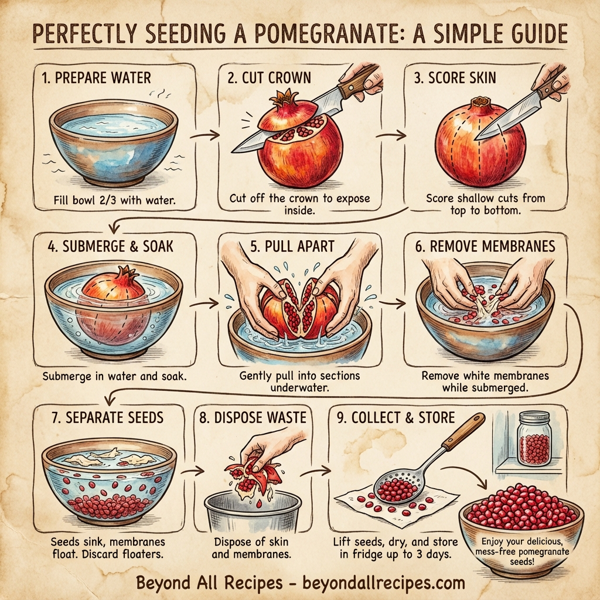
Start by filling a medium to large bowl with water, approximately 2/3 full. This will contain the juice and help separate the seeds while you work.
2
Using a sharp knife, carefully cut off the crown of the pomegranate, which is the tufted end. This will expose the inner sections of the fruit, making it easier to seed.
3
Next, score the skin of the pomegranate, making shallow cuts from the top to the bottom. Be cautious not to cut through the fruit entirely—just make shallow slits.
4
Submerge the pomegranate in the bowl of water, allowing it to soak for a moment.
5
While still under the water, gently pull the pomegranate apart into sections. This will help prevent squirting juice.
6
With the pomegranate sections underwater, carefully remove the internal white membranes. The water will help keep the mess contained.
7
As you remove the seeds, you’ll notice that they sink to the bottom while the white membranes float, making it easy to discard them.
8
Once you've extracted all the seeds, dispose of the outer skin and floating membranes.
9
Carefully lift the seeds from the bottom of the bowl, using a slotted spoon or your hands, and transfer them onto a paper towel to dry.
10
Store any leftover seeds in an airtight container in the refrigerator for up to 3 days.
Nutrition Information
2g
Fat
52g
Carbs
5g
Protein
11g
Fiber
39g
Sugar
Frequently Asked Questions
Frequently Asked Questions
What is the best way to seed a pomegranate?
The best and cleanest way to seed a pomegranate is using the bowl of water technique, which prevents juice from splashing.
Why should I seed a pomegranate underwater?
Submerging the fruit underwater prevents juice from squirting and allows the seeds to sink while the pith floats, making separation easy.
How do I start the pomegranate seeding process?
Start by filling a bowl 2/3 full with water and cutting off the crown or tufted end of the pomegranate with a sharp knife.
How deep should I cut when scoring a pomegranate?
You should only make shallow slits in the skin from top to bottom; do not cut through the fruit entirely.
What happens to the pomegranate seeds in the water?
The seeds are heavier than the water and the membranes, so they sink to the bottom of the bowl.
How do I separate the white membranes from the seeds?
The internal white membranes will float to the top of the water, allowing you to easily skim them off and discard them.
How do I dry the pomegranate seeds?
After lifting the seeds from the water with a slotted spoon or your hands, transfer them onto a paper towel to dry.
How long can I store fresh pomegranate seeds?
Fresh pomegranate seeds can be stored in an airtight container in the refrigerator for up to 3 days.
Are pomegranates a healthy snack?
Yes, they are known for their health benefits, vibrant color, and high fiber content.
What are some uses for pomegranate seeds?
Pomegranate seeds are perfect for salads, as healthy snacks, or as a vibrant garnish for various dishes.
How many calories are in a whole pomegranate according to this guide?
One pomegranate contains approximately 234 calories.
What is the fiber content of a pomegranate?
A pomegranate provides about 11g of fiber.
Is there much fat in a pomegranate?
No, a pomegranate contains only about 2g of fat.
How much sugar is in a pomegranate?
A pomegranate contains approximately 39g of natural sugar.
How many carbohydrates are in a pomegranate?
There are approximately 52g of carbohydrates in one pomegranate.
Does a pomegranate contain protein?
Yes, a pomegranate contains about 5g of protein.
What ingredients do I need for this method?
You only need a fresh pomegranate, a bowl of water, and a paper towel for drying.
Is this recipe suitable for vegans?
Yes, seeding a pomegranate is a completely vegan process.
Does this method prevent staining?
Yes, by pulling the pomegranate apart underwater, the juice is contained, which prevents staining your clothes or countertops.
Can I use a slotted spoon for this process?
Yes, a slotted spoon is very helpful for lifting the seeds out from the bottom of the bowl.
Is this considered a tropical fruit?
Yes, pomegranates are often categorized alongside tropical fruits in culinary contexts.
What should I do with the outer skin?
Once all the seeds have been extracted, the outer skin and membranes should be disposed of.
What tool should I use to remove the crown?
A sharp knife is recommended to carefully cut off the tufted end of the fruit.
How many steps are in this guide?
There are 10 steps in this guide to perfectly seed a pomegranate.
What type of bowl should I use?
A medium to large bowl is best to provide enough space for the pomegranate sections and the water.
Can I prepare pomegranate seeds in advance?
Yes, you can seed them and store them in the fridge for up to 3 days before using.
Does this method work for all pomegranates?
Yes, this water bowl technique is effective for any fresh, whole pomegranate.
Is this a good technique for kitchen beginners?
Absolutely, it is a simple guide designed to make the process easier and cleaner for everyone.
Why do pomegranates have different sections?
Pomegranates naturally grow in sections separated by membranes; scoring the skin helps you pull these sections apart.
What is the primary benefit of the water method?
The primary benefit is that it minimizes mess while efficiently separating the edible seeds from the inedible pith.