Perfectly Roasted High-Heat Holiday Turkey
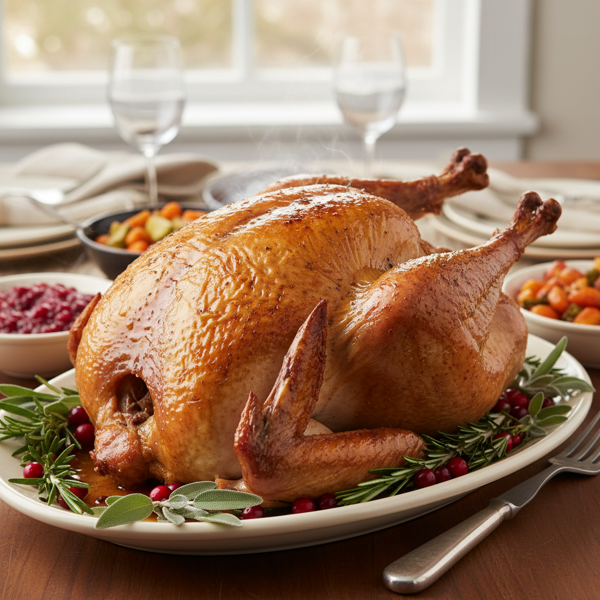
Transform your holiday gatherings with this exceptional high-heat roasted turkey recipe. Perfectly suited for festive occasions, this method ensures a succulent and flavorful turkey without monopolizing valuable oven space. By cooking at a high temperature, the heat penetrates from the inside and out, yielding juicy, tender meat with a beautifully caramelized skin. Who needs traditional seasoning? Choose your favorite herbs and spices to create a crust that locks in flavor and moisture. Cooking breast side down prevents the bird from steaming, using a rack ensures proper roasting. Metal conducts heat efficiently and foil safeguards against over-browning. The liquid in the pan not only prevents burning but also enriches your gravy. Embrace these five essential rules for optimal results: Don’t salt beforehand to keep moisture, ensure the bird is elevated for proper air circulation, resist basting to maintain the pan juices, avoid piercing with a fork, and skip cheesecloth to achieve that golden finish. Follow Chef Marc's stuffing tip for an easy and delicious addition.
N/A
Servings
N/A
Calories
4
Ingredients
Ingredients
fresh whole turkey
16-18 lbs (dried with paper towels)
olive oil
1/2 cup (none)
fresh black pepper
1 tablespoon (to taste)
chicken broth
3 cups (as needed)
Instructions
1
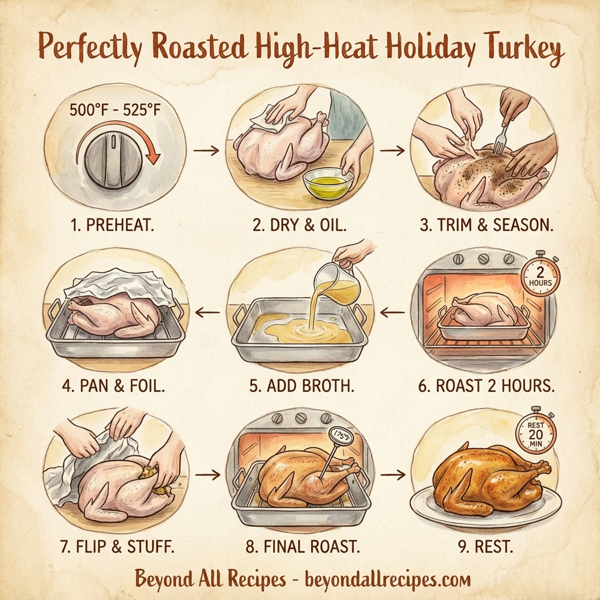
Preheat the oven to 500°F to 525°F (260°C to 274°C).
2
Dry a 16 to 18 lb fresh whole turkey inside and out using paper towels.
3
Coat the turkey inside and out with 1/2 cup of olive oil using your hands.
4
Carefully cut away any excess skin around the cavity opening. Insert a fork to keep the cavity open.
5
Rub 1 tablespoon of fresh black pepper, plus any other chosen spices and herbs, thoroughly into the turkey, ensuring even coverage.
6
Place the turkey, breast side down, on a rack within a large metal roasting pan.
7
Loosely cover the turkey's top, legs, and wings with greased foil.
8
Pour approximately 3/4 inch of chicken broth into the pan. Check every 45 minutes and add more broth if needed to prevent evaporation.
9
Roast the turkey for 2 hours in the preheated oven.
10
Remove the foil, stuff the cavity with cooked stuffing, and return the turkey to the rack, breast side up.
11
Continue cooking for an additional 30 to 45 minutes until an instant-read thermometer reaches 175°F (79°C) when inserted deep into the thigh.
12
Allow the turkey to rest for at least 20 minutes before carving, enabling juices to redistribute through the meat.
Nutrition Information
Frequently Asked Questions
Frequently Asked Questions
What is the main advantage of the high-heat roasting method?
This method ensures a succulent and flavorful turkey while saving oven space by cooking more efficiently at higher temperatures.
What temperature should the oven be preheated to?
The oven should be preheated to between 500°F and 525°F (260°C to 274°C).
What size turkey is recommended for this recipe?
A fresh whole turkey weighing between 16 and 18 lbs is recommended.
How should I prepare the turkey's skin before cooking?
Dry the turkey inside and out thoroughly using paper towels to ensure the skin roasts properly.
What should be used to coat the turkey?
Coat the entire turkey, inside and out, with 1/2 cup of olive oil.
How do I manage the turkey cavity?
Cut away excess skin around the cavity opening and insert a fork to keep it open during the initial roasting.
What seasoning is suggested for the crust?
Rub 1 tablespoon of fresh black pepper plus any other preferred spices and herbs into the turkey.
Why is salting the turkey beforehand discouraged?
Avoiding salt beforehand helps the turkey retain its natural moisture during the high-heat process.
What is the initial roasting position for the turkey?
The turkey should be placed breast side down on a rack in the roasting pan.
Why must the turkey be elevated on a rack?
Elevation ensures proper air circulation for even roasting and prevents the meat from steaming in its own juices.
What kind of roasting pan is best?
A large metal roasting pan is best because metal conducts heat efficiently.
How should I use foil during roasting?
Loosely cover the top, legs, and wings with greased foil to safeguard against over-browning.
What liquid should be added to the roasting pan?
Pour approximately 3/4 inch of chicken broth into the pan.
How often should I check the pan liquid?
Check every 45 minutes and add more broth if it has evaporated to prevent burning.
How long is the initial roasting period?
The turkey should roast for 2 hours at high heat in the initial breast-down position.
When should I add the stuffing?
Add cooked stuffing to the cavity after the initial 2 hours of roasting.
What do I do after adding the stuffing?
Remove the foil and return the turkey to the rack, this time breast side up.
What is the total cooking time for the second stage?
Continue cooking for an additional 30 to 45 minutes after flipping the bird and adding stuffing.
What is the target internal temperature for doneness?
The turkey is done when an instant-read thermometer reaches 175°F (79°C).
Where is the best place to check the turkey's temperature?
Insert the thermometer deep into the thigh for the most accurate reading.
How long should the turkey rest after cooking?
Allow the turkey to rest for at least 20 minutes before carving.
Why is resting the meat important?
Resting enables the juices to redistribute through the meat, ensuring every slice is moist.
Should I baste the turkey while it cooks?
No, you should resist basting to maintain the quality of the pan juices and skin texture.
Is it okay to pierce the turkey with a fork?
No, avoid piercing the meat with a fork to prevent flavorful juices from escaping.
Can I use cheesecloth for this recipe?
No, skip the cheesecloth to achieve a perfectly golden, caramelized finish.
How much chicken broth is needed in total?
The recipe calls for 3 cups, used as needed to maintain the 3/4 inch level in the pan.
Does the high heat dry out the meat?
No, because the heat penetrates quickly and the bird is roasted breast side down initially, the meat remains juicy.
What creates the caramelized skin?
The high temperature combined with the olive oil coating creates the beautiful caramelization.
Is the stuffing cooked inside the bird from the start?
No, cooked stuffing is added near the end of the roasting process for food safety and better texture.
What can the pan liquid be used for?
The broth and drippings in the pan are enriched during roasting and make an excellent base for gravy.