Perfectly Roasted Butter Basted Turkey
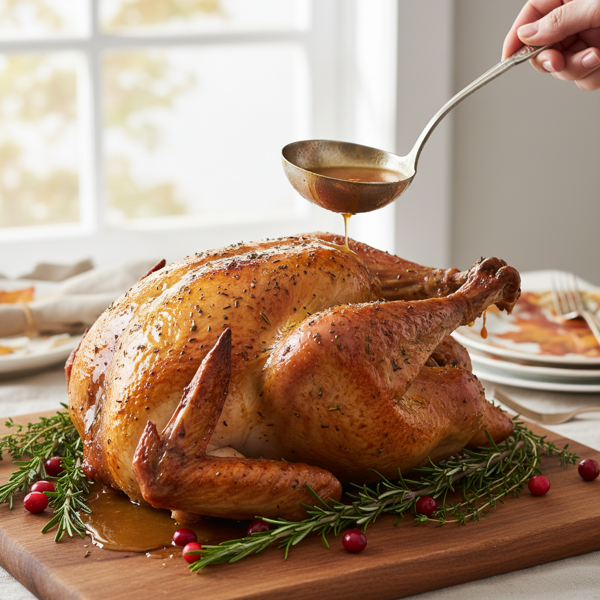
Elevate your holiday meal with this expertly crafted recipe for a perfectly roasted turkey that promises a golden, crispy skin and succulent, juicy meat. Despite many commercially available turkeys claiming to be butter basted, their actual flavor can be lacking. This recipe truly captures the essence of butter basting with a rich blend of herbal seasonings and real butter. Follow my method for guaranteed results that will impress your guests and have them raving about your cooking long after the meal is over. Remember, the cooking time can vary based on the size of your turkey, so keep an eye on the internal temperature to ensure it’s cooked to perfection. Don’t forget to check out my easy recipe #105192 for the best giblet gravy to complement your turkey!
N/A
Servings
450
Calories
13
Ingredients
Ingredients
whole turkey
1 ((12 - 20 lb), thawed and cleaned)
real butter
4 tablespoons (melted (more for the outside for browning))
chicken broth
2 cups (for base of roasting pan)
salt
2 tablespoons
ground black pepper
2 tablespoons
onion powder
1 tablespoon
granulated garlic powder
2 tablespoons
dried tarragon
1 tablespoon
dried parsley flakes
1 tablespoon
dried thyme
1 tablespoon
dried basil
1 tablespoon
sage
1 tablespoon
paprika
2 tablespoons (more for external browning)
Instructions
1
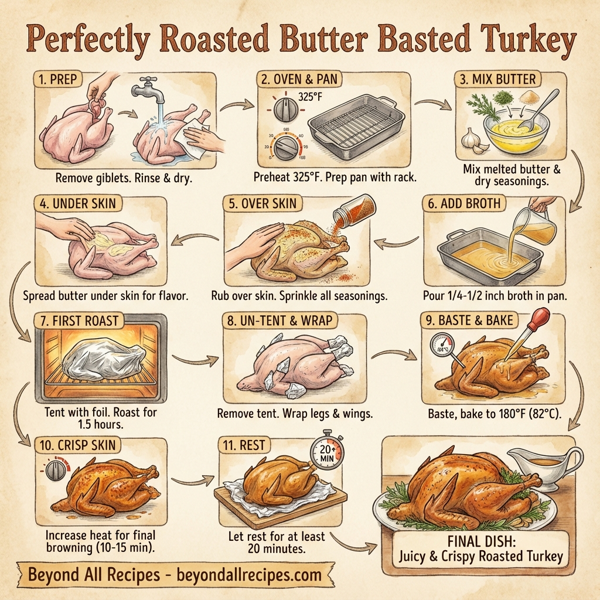
Remove the giblets from both cavities and set them aside for making gravy later, if desired. Rinse the turkey inside and out under cold water, then pat it dry thoroughly with paper towels.
2
Preheat your oven to 325°F (165°C). Place a wire rack in a large roasting pan.
3
In a mixing bowl, combine the melted butter with all the dry seasonings except for the paprika; mix well to create a seasoned butter paste.
4
Carefully slide your hand between the skin and flesh of the turkey from the rear, spreading a generous amount of the seasoned butter mixture directly onto the meat under the skin. This will impart incredible flavor as it cooks.
5
Rub the remaining seasoned butter all over the exterior of the turkey, ensuring an even coating. Generously sprinkle salt, black pepper, onion powder, garlic powder, tarragon, parsley flakes, thyme, basil, and paprika all over the turkey’s surface.
6
Pour about 1/4 to 1/2 inch of chicken broth into the bottom of the roasting pan to keep the environment moist during cooking. Be cautious not to wash off any of the seasonings.
7
Tent the turkey completely with aluminum foil and place it on the rack in the preheated oven. Roast for approximately 1 1/2 hours.
8
After 1 1/2 hours, remove the foil tent and wrap foil around the legs and wings to prevent burning.
9
Baste the turkey with the juices from the bottom of the pan and return it to the oven. Continue baking until the internal temperature reaches 180°F (82°C) in the thickest part of the thigh or until the juices run clear.
10
During the last 10 to 15 minutes of cooking, increase the oven temperature to 375°F (190°C) or 400°F (200°C) for added browning, but watch closely to prevent burning.
11
Once fully cooked, remove the turkey from the oven and let it rest for at least 20 minutes before carving. This allows the juices to redistribute, ensuring each slice is juicy and flavorful.
Nutrition Information
35g
Fat
3g
Carbs
33g
Protein
Frequently Asked Questions
Frequently Asked Questions
What is the best way to prepare a turkey for roasting?
Start by removing the giblets from both cavities and rinsing the turkey inside and out under cold water. Most importantly, pat the turkey thoroughly dry with paper towels to ensure the skin gets crispy.
How do I make the butter seasoning paste?
Combine 4 tablespoons of melted real butter with salt, black pepper, onion powder, granulated garlic powder, dried tarragon, parsley flakes, thyme, basil, and sage. Save the paprika for the exterior browning.
What is the secret to a flavorful roasted turkey?
The secret is spreading the seasoned butter mixture directly onto the meat under the skin. Carefully slide your hand between the skin and flesh from the rear of the turkey to apply the mixture.
What temperature should I roast the turkey at?
The turkey should be roasted in a preheated oven at 325°F (165°C) for the majority of the cooking time.
Why should I add chicken broth to the roasting pan?
Adding 1/4 to 1/2 inch of chicken broth to the bottom of the pan keeps the cooking environment moist and prevents the bird from drying out.
How long should the turkey remain covered with foil?
Tent the turkey completely with aluminum foil for the first 1.5 hours of roasting to prevent the skin from browning too quickly.
How do I prevent the turkey wings and legs from burning?
After the initial 1.5 hours of roasting, remove the main foil tent and wrap small pieces of foil specifically around the legs and wings.
What internal temperature indicates the turkey is fully cooked?
The turkey is done when the internal temperature reaches 180°F (82°C) in the thickest part of the thigh or when the juices run clear.
How do I get the turkey skin extra crispy and brown?
During the last 10 to 15 minutes of cooking, increase the oven temperature to 375°F or 400°F while watching closely to prevent burning.
How long should the turkey rest before carving?
Let the turkey rest for at least 20 minutes after taking it out of the oven to allow the juices to redistribute for a moist result.
What size turkey is suitable for this recipe?
This recipe is designed for a whole turkey weighing between 12 and 20 pounds.
Can I use this recipe for a frozen turkey?
Yes, but ensure the turkey is completely thawed and cleaned before you begin the preparation process.
What seasonings are included in the herb blend?
The blend includes salt, pepper, onion powder, garlic powder, tarragon, parsley, thyme, basil, sage, and paprika.
Do I need to baste the turkey?
Yes, after removing the foil tent at the 1.5-hour mark, you should baste the turkey with the juices from the bottom of the pan.
Is there a recommendation for gravy?
The recipe suggests pairing this turkey with a giblet gravy, specifically referencing recipe number 105192.
How much butter is used in this recipe?
The recipe calls for 4 tablespoons of melted real butter for the paste, plus extra for the outside to aid in browning.
What kind of roasting pan is recommended?
A large roasting pan equipped with a wire rack is recommended to allow for even heat circulation.
What are the nutritional facts for this turkey?
A serving contains approximately 450 calories, 35g of fat, 3g of carbohydrates, and 33g of protein.
Can I use dried herbs for this recipe?
Yes, the recipe specifically calls for dried tarragon, parsley flakes, thyme, and basil.
Is it necessary to rinse the turkey?
The recipe instructs to rinse the turkey inside and out under cold water before patting it dry.
What should I do with the giblets?
Remove the giblets from the cavities and set them aside if you plan to make gravy later.
How much chicken broth is needed for the pan?
You will need 2 cups of chicken broth to create the moisture base in the roasting pan.
When do I apply the paprika?
Paprika is sprinkled over the exterior of the turkey along with the other seasonings before it goes into the oven, and more can be added later for browning.
Is onion powder required?
Yes, 1 tablespoon of onion powder is used in the seasoning mix to enhance the flavor of the butter baste.
Can I substitute the butter?
The recipe emphasizes using real butter for the best flavor, as commercial butter-basted turkeys often lack depth.
What part of the turkey should I check for temperature?
You should check the thickest part of the thigh, ensuring the thermometer does not hit the bone for an accurate reading.
Does this turkey recipe include stuffing?
This recipe focuses on the roasting and basting method for the bird itself and does not provide instructions for stuffing.
What is the total number of ingredients?
There are 13 main ingredients used to prepare this butter-basted roasted turkey.
How do I ensure the meat is juicy?
The combination of the broth in the pan, the foil tenting, the butter under the skin, and the post-cook resting period all ensure juicy meat.
What happens if I don't dry the turkey skin?
If the skin is wet, it will steam rather than roast, preventing it from reaching that desired golden, crispy texture.