Perfectly Pan-Seared Rib Eye Steak
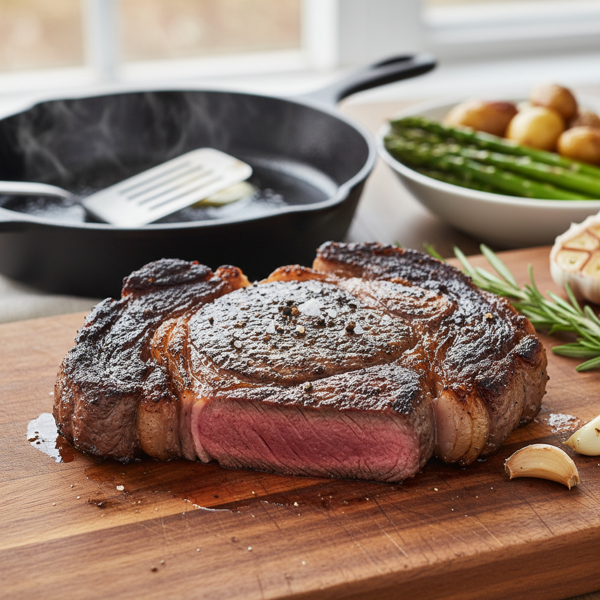
Indulge in a beautifully cooked rib eye steak that boasts a rich, buttery flavor and a perfect sear every time. This recipe brings the classic technique of pan-searing to your kitchen, providing you with a tender, juicy steak that's crisp on the outside and beautifully medium-rare within. Ideal for a special occasion or a delightful weeknight dinner, this rib eye is sure to impress your family and friends. Adjust the cooking time to achieve your preferred doneness, and serve it whole or sliced thinly for a sophisticated presentation that highlights its marbling and depth of flavor.
1
Servings
N/A
Calories
4
Ingredients
Ingredients
Boneless Rib Eye Steak
1 (1 1/2-inch thick)
Canola Oil
as needed (for coating)
Kosher Salt
to taste (for seasoning)
Fresh Ground Pepper
to taste (for seasoning)
Instructions
1
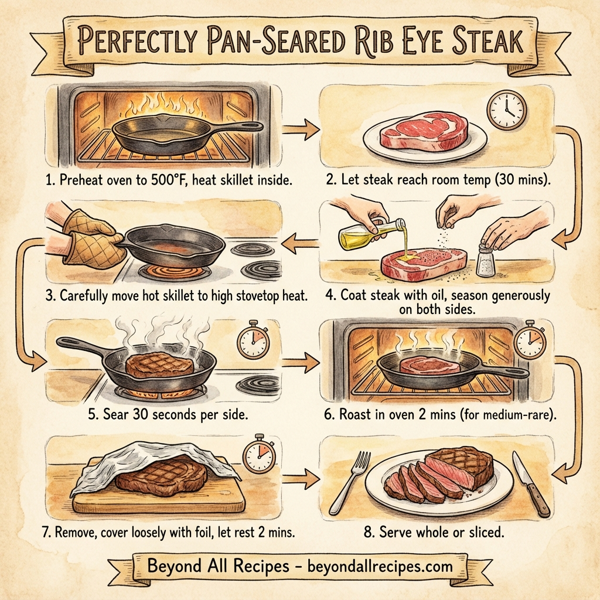
Preheat your oven to 500 degrees Fahrenheit and place a 10 to 12-inch cast iron skillet inside to heat it up.
2
Take the rib eye steak out of the refrigerator and let it come to room temperature for about 30 minutes before cooking.
3
Once the oven reaches the desired temperature, carefully remove the hot skillet and place it over high heat on the stovetop.
4
Lightly coat the steak with canola oil, ensuring an even coverage, then season generously with kosher salt and freshly ground black pepper on both sides.
5
Place the seasoned steak in the center of the hot skillet and let it sear without moving for 30 seconds. After that, flip it with tongs and sear the other side for another 30 seconds.
6
Immediately transfer the skillet to the preheated oven and roast for 2 minutes for medium-rare. For medium, add an additional minute to both oven times.
7
Carefully remove the skillet from the oven and, using tongs, take the steak out of the pan and cover it loosely with aluminum foil to rest for 2 minutes. This allows the juices to redistribute within the meat.
8
Finally, serve the steak whole or slice it thinly against the grain and fan it onto a plate for a stunning presentation.
Nutrition Information
Frequently Asked Questions
Frequently Asked Questions
What is the best cut of beef to use for this recipe?
This recipe is designed specifically for a boneless rib eye steak, ideally 1 1/2-inch thick, to ensure a perfect sear and juice retention.
How long should the steak sit out before cooking?
You should let the rib eye steak come to room temperature for approximately 30 minutes before you begin the cooking process.
What is the recommended oven temperature?
Preheat your oven to 500 degrees Fahrenheit for this high-heat roasting technique.
What type of skillet is best for pan-searing?
A 10 to 12-inch cast iron skillet is recommended because it retains heat effectively for a superior sear.
Why do I need to preheat the skillet in the oven?
Preheating the skillet in a 500-degree oven ensures it is uniformly hot enough to sear the meat instantly upon contact.
What kind of oil should I use for the steak?
Canola oil is recommended because it has a high smoke point, which is necessary for high-heat pan-searing.
Can I use butter instead of canola oil?
It is better to use canola oil for the initial sear due to the high temperature; butter has a lower smoke point and may burn at 500 degrees.
How much salt and pepper should I use?
Season the steak generously on both sides with kosher salt and freshly ground black pepper to enhance the flavor.
Do I need to grease the skillet before cooking?
No, you should lightly coat the steak itself with canola oil rather than oiling the pan.
How long do I sear the steak on the stovetop?
Sear the steak for 30 seconds on one side, then flip it and sear the other side for another 30 seconds.
Should I move the steak around while it is searing?
No, let the steak sit undisturbed for the full 30 seconds per side to develop a proper crust.
How long does the steak roast in the oven for medium-rare?
For a medium-rare finish, roast the steak in the oven for 2 minutes.
How do I adjust the time for a medium steak?
To achieve medium doneness, add one additional minute to the oven roasting time.
What tool should I use to flip the steak?
Use tongs to flip the steak carefully to avoid piercing the meat and losing juices.
Is resting the steak necessary?
Yes, resting is crucial as it allows the juices to redistribute throughout the meat, resulting in a juicier steak.
How long should the steak rest after cooking?
Let the steak rest for 2 minutes after removing it from the skillet.
What should I use to cover the steak while it rests?
Cover the steak loosely with aluminum foil while it sits on a plate or cutting board.
How should I slice the rib eye for serving?
Slice the steak thinly against the grain to ensure every bite is tender.
What is the serving size for this recipe?
This recipe is portioned for 1 serving using a single boneless rib eye steak.
Can I use this method for other types of steak?
While designed for rib eye, this high-heat pan-sear-to-roast method works well for other thick-cut steaks like New York Strip.
What is the purpose of the 500-degree oven?
The extreme heat creates a professional-grade crust while cooking the inside quickly to maintain tenderness.
Does this recipe require a lot of ingredients?
No, it only requires four main ingredients: rib eye steak, canola oil, kosher salt, and fresh ground pepper.
How do I know when the skillet is ready?
The skillet is ready once it has been preheated in a 500-degree oven and then placed over high heat on the stovetop.
Why is kosher salt preferred over table salt?
Kosher salt has larger grains that are easier to distribute evenly and provide a better texture for the crust.
Should the steak be bone-in or boneless?
This specific recipe calls for a boneless rib eye steak.
Can I cook the steak entirely on the stovetop?
This recipe uses a hybrid method of stovetop searing and oven roasting for the most even results.
Is a 1.5-inch thickness mandatory?
A 1.5-inch thickness is ideal for this timing; thinner steaks will cook much faster and may overcook.
What temperature is considered medium-rare?
While the recipe uses timing, medium-rare is typically reached at an internal temperature of about 130-135 degrees Fahrenheit.
How do I present the steak for a special occasion?
Slice the steak thinly and fan the pieces out on the plate to showcase the internal color and marbling.
Is this recipe considered easy?
Yes, it is tagged as an easy recipe that relies on simple techniques and high-quality heat management.