Perfectly Juicy Roast Turkey
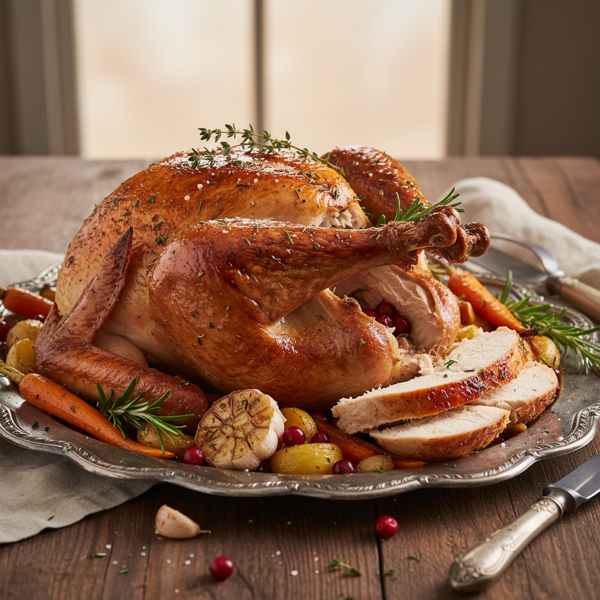
Create an unforgettable feast with this Perfectly Juicy Roast Turkey recipe. Infused with aromatic herbs and a hint of sherry wine, this turkey is roasted to golden perfection. Ideal for holiday gatherings, this recipe ensures a moist and flavorful bird that will delight all your guests.
10
Servings
N/A
Calories
11
Ingredients
Ingredients
whole turkey
1 (rinsed and patted dry, wings and tail trimmed)
fresh onions
2 (peeled and halved)
parsley
2 bunches (1 bunch chopped, 1 bunch left whole)
poultry seasoning
2 tablespoons (mixed into herb butter)
cream sherry wine
2-3 cups (divided use)
celery top
1 (whole)
sea salt
2 tablespoons (mixed into herb butter)
fresh ground pepper
1 tablespoon (mixed into herb butter)
olive oil
1/4 cup (mixed into herb butter)
water
1 cup (added to pan bottom)
melted butter
1 cup (divided, mixed into herb butter and poured over breasts)
Instructions
1
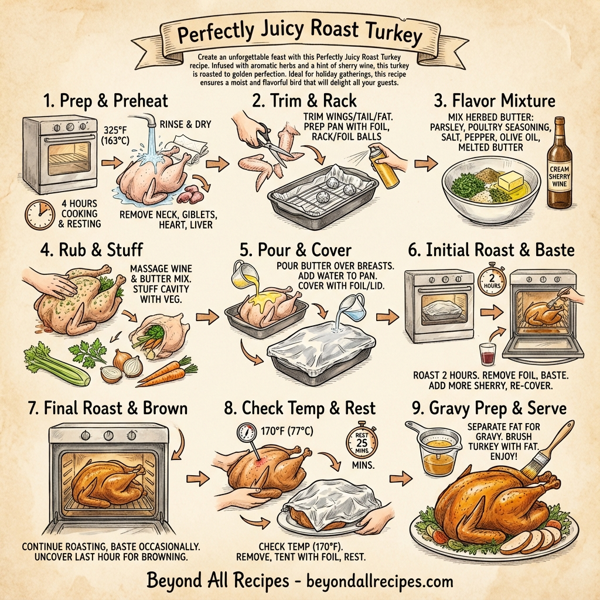
Preheat the oven to 325°F (163°C). Adjust the oven racks to ensure the turkey will be 6 to 8 inches from the top heating element.
2
Allow approximately 4 hours for cooking and resting before serving.
3
Rinse the turkey thoroughly with cold water and pat it dry with paper towels.
4
Remove the neck, giblets, heart, and liver from the cavity. Save them for stock, if desired, but avoid using the liver for stock as it can cause bitterness.
5
Trim the wings and tail from the turkey and remove any visible fat pads.
6
Line a roasting pan with aluminum foil and spray with non-stick cooking spray for easier cleanup. Place a rack in the pan or create foil balls to support the turkey.
7
Place the turkey on the rack or foil balls in the pan, breast side up.
8
In a bowl, combine chopped parsley, poultry seasoning, sea salt, freshly ground pepper, olive oil, and half of the melted butter. Mix well to create a herbed butter mixture.
9
Massage half of the cream sherry wine over the turkey skin, then rub the herbed butter mixture over the entire turkey, including inside the cavities.
10
Fill the cavity with a celery stalk, some parsley, and the peeled and halved onions. Add optional peeled and halved carrots if desired.
11
Pour the remaining melted butter over the turkey breasts and add 1 cup of water to the bottom of the roasting pan (do not pour water over the turkey).
12
Cover the pan loosely with aluminum foil or place a lid on the pan.
13
Roast the turkey for 2 hours, then carefully remove it from the oven. Remove the foil and baste the turkey with its juices. If needed, add more water for basting.
14
Add another cup of cream sherry wine over the turkey, re-cover with foil, and return to the oven.
15
Continue roasting, occasionally basting the turkey with pan juices. During the last hour of roasting, remove the foil to allow the turkey to develop a golden brown color.
16
Check the turkey’s internal temperature using a meat thermometer inserted into the thickest part of the breast. The temperature should reach 170°F (77°C) to ensure proper cooking.
17
Once cooked, remove the turkey from the oven, transfer it to a serving platter, and loosely tent with aluminum foil. Allow it to rest for at least 25 minutes before carving.
18
Use a gravy separator to skim fat from the pan juices, reserving the remaining juices for gravy. Brush the resting turkey with the reserved fat for extra flavor.
Nutrition Information
Frequently Asked Questions
Frequently Asked Questions
What is the recommended oven temperature for this roast turkey?
The oven should be preheated to 325°F (163°C) for roasting the turkey.
How much total time should I allow for this recipe?
Allow approximately 4 hours for both cooking and resting the turkey before you plan to serve it.
Should I rinse the turkey before cooking?
Yes, rinse the turkey thoroughly with cold water and pat it dry with paper towels before starting.
What should I do with the turkey neck and giblets?
Remove the neck, giblets, heart, and liver from the cavity. You can save the neck, heart, and giblets for stock, but avoid using the liver.
Why shouldn't I use the turkey liver for stock?
Avoid using the liver for stock because it can cause the stock to have a bitter flavor.
What parts of the turkey should be trimmed?
Trim the wings and tail from the turkey and remove any visible fat pads before roasting.
How do I prepare the roasting pan if I don't have a rack?
Line the pan with foil and spray with non-stick spray. If you don't have a rack, you can create foil balls to support the turkey.
Should the turkey be breast side up or down?
Place the turkey in the roasting pan with the breast side facing up.
What ingredients make up the herbed butter mixture?
The herbed butter mixture consists of chopped parsley, poultry seasoning, sea salt, freshly ground pepper, olive oil, and half of the melted butter.
How is the cream sherry wine applied to the turkey?
Massage half of the cream sherry over the turkey skin initially, and pour the remaining cup over the bird after 2 hours of roasting.
What aromatics should be placed inside the turkey cavity?
Fill the cavity with a celery stalk, a bunch of whole parsley, and peeled, halved onions.
Can I add carrots to the turkey?
Yes, you can add optional peeled and halved carrots into the cavity along with the onions and celery.
Where do I put the water in the roasting pan?
Add 1 cup of water to the bottom of the roasting pan, making sure not to pour it directly over the turkey.
How should the turkey be covered while in the oven?
Cover the pan loosely with aluminum foil or use a lid during the initial roasting period.
When should I first baste the turkey?
Remove the turkey from the oven after 2 hours to baste it with its juices and add more cream sherry.
How do I get the turkey skin to be golden brown?
Remove the aluminum foil during the last hour of roasting to allow the skin to brown and become golden.
What is the target internal temperature for a cooked turkey?
The internal temperature should reach 170°F (77°C) to ensure the turkey is properly cooked.
Where is the best place to check the turkey's temperature?
Insert a meat thermometer into the thickest part of the turkey breast for an accurate reading.
How long should the turkey rest after roasting?
The turkey should rest for at least 25 minutes before carving to keep the juices inside.
How do I keep the turkey warm while it rests?
Once removed from the oven, transfer the bird to a platter and loosely tent it with aluminum foil.
How many servings does this recipe provide?
This Perfectly Juicy Roast Turkey recipe is designed to provide approximately 10 servings.
What can I do with the pan juices after roasting?
Use a gravy separator to skim the fat from the juices. Save the remaining juices to make gravy.
How can I add extra flavor to the turkey while it rests?
You can brush the resting turkey with the reserved fat skimmed from the pan juices for extra flavor.
What kind of salt is used in the herb butter?
The recipe calls for 2 tablespoons of sea salt mixed into the herbed butter.
How much poultry seasoning is required?
You will need 2 tablespoons of poultry seasoning for the herb butter mixture.
What is the purpose of the olive oil in this recipe?
The 1/4 cup of olive oil is mixed into the herbed butter to help massage the seasonings onto the bird.
How much butter is needed in total?
The recipe requires 1 cup of melted butter, which is divided between the herb mixture and pouring over the breasts.
What type of parsley is used?
The recipe uses two bunches of parsley: one bunch is chopped for the butter and the other is left whole for the cavity.
How much cream sherry is used in total?
The recipe uses a total of 2 to 3 cups of cream sherry wine throughout the preparation and roasting process.
How high should the turkey be placed in the oven?
Adjust your oven racks so that the turkey will be approximately 6 to 8 inches from the top heating element.