Perfectly Hard-Cooked Eggs
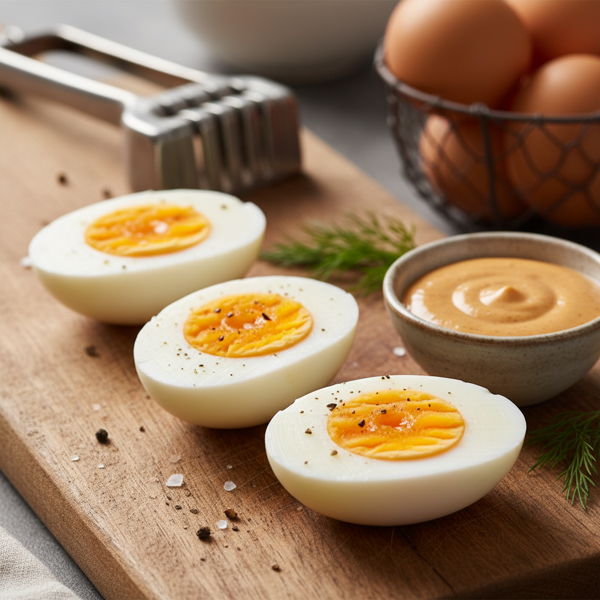
Discover the secrets to achieving perfectly hard-cooked eggs that are tender, easy to peel, and devoid of that unsightly greenish halo around the yolk. This method avoids the common pitfalls of boiling, which can result in rubbery texture and difficulty peeling. By using a controlled simmer and cooling technique, you'll create eggs that are deliciously creamy and delightful for any meal or snack. Whether you're preparing them for a salad, deviled eggs, or simply enjoying them as they are, these hard-cooked eggs are a culinary staple that will impress with their flawless texture and flavor. Enjoy this reliable method that has been perfected over decades, ensuring your eggs come out perfectly every time!
N/A
Servings
70
Calories
2
Ingredients
Ingredients
Large Eggs
6 (none)
Cold Water
3 quarts (none)
Instructions
1
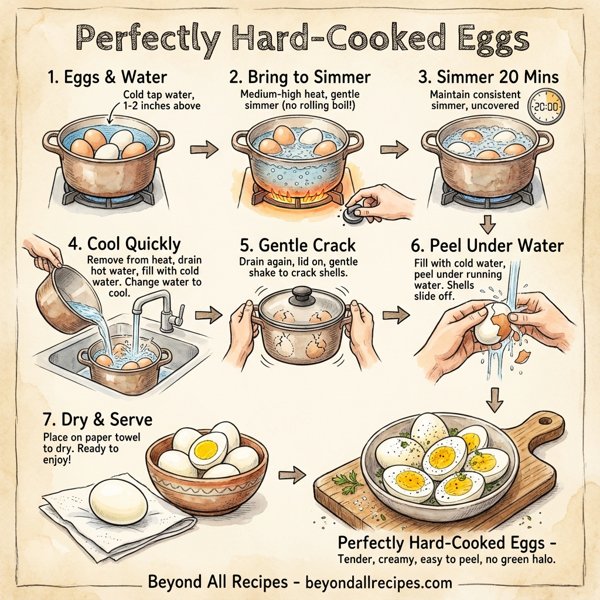
Start by placing the large eggs in a pot and covering them completely with cold tap water. Make sure the water is about 1-2 inches above the eggs to allow for even cooking.
2
Set the pot over medium-high heat and gradually bring the water to a gentle simmer. Keep a keen eye on the pot to ensure that it does not reach a rolling boil, as this can cause the eggs to become rubbery.
3
Once the water is simmering, reduce the heat slightly to maintain a consistent simmer (not a boil) and continue cooking the eggs uncovered for 20 minutes.
4
After 20 minutes, promptly remove the pot from the heat. Carefully drain the hot water from the pot and immediately fill it with cold water, ensuring the eggs are submerged. Change the cold water a couple of times over the next few minutes to cool the eggs down quickly, which helps with peeling.
5
Drain the water again, then place the lid back on the pot. With great care, give the pot a gentle shake, allowing the eggs to crack against each other inside the shell. You'll hear a soft sound as the shells begin to crack.
6
Remove the lid and again fill the pot with cold water to cover the cracked eggs. Under a slow, steady stream of cold running water, begin peeling the eggs. The shells should slide off easily, coming off in larger pieces for quicker clean-up.
7
Once peeled, place the eggs on a paper towel to absorb any excess moisture before incorporating them into your desired dish.
Nutrition Information
5g
Fat
0.5g
Carbs
6g
Protein
Frequently Asked Questions
Frequently Asked Questions
How long should I simmer the eggs for the perfect hard-cooked result?
You should simmer the eggs uncovered for exactly 20 minutes to achieve a perfectly hard-cooked texture.
Should the water be boiling when I cook the eggs?
No, you should avoid a rolling boil. Bring the water to a gentle simmer and maintain that level to prevent the eggs from becoming rubbery.
How much water is needed to cook the eggs?
You should use enough cold tap water to cover the eggs by about 1 to 2 inches.
What is the secret to making hard-cooked eggs easy to peel?
The secret is immediate cooling in cold water after cooking and gently shaking the pot to crack the shells before peeling under running water.
How do I avoid the greenish halo around the yolk?
The greenish halo is avoided by using a controlled simmer rather than a hard boil and cooling the eggs quickly in cold water once the timer is up.
What size eggs does this recipe call for?
This recipe is designed for large eggs.
How many calories are in one of these hard-cooked eggs?
Each egg contains approximately 70 calories.
How much protein is in a single hard-cooked egg?
There are 6 grams of protein in one egg.
Are these eggs suitable for a low-carb diet?
Yes, with only 0.5g of carbohydrates per egg, they are excellent for low-carb diets.
Do I start with hot or cold water?
You should always start by placing the eggs in a pot and covering them with cold tap water.
How many ingredients are required for this recipe?
Only two ingredients are required: large eggs and cold water.
What is the fat content of one hard-cooked egg?
Each egg contains 5 grams of fat.
Should the pot be covered while the eggs are simmering?
No, the instructions specify to cook the eggs uncovered during the 20-minute simmer.
How should I cool the eggs after the 20 minutes are up?
Immediately drain the hot water and fill the pot with cold water, changing it a few times to ensure they cool down rapidly.
What is the benefit of shaking the pot after cooling the eggs?
Shaking the pot gently allows the eggshells to crack against each other, which makes the peeling process much easier.
What is the best way to peel the eggs?
Peel the eggs under a slow, steady stream of cold running water to help the shells slide off easily.
What should I do with the eggs once they are peeled?
Place them on a paper towel to absorb any excess moisture before using them in your dish.
Can I use these eggs for meal prep?
Yes, these eggs are ideal for meal prep as they can be stored and used throughout the week.
What type of dishes are these eggs best for?
They are perfect for salads, deviled eggs, breakfast, or as a simple snack.
What heat setting should I use to bring the water to a simmer?
Set the pot over medium-high heat to gradually bring the water to a gentle simmer.
How much water is recommended for 6 eggs?
The recipe suggests using approximately 3 quarts of cold water for 6 large eggs.
Why does the recipe emphasize a gentle simmer?
A gentle simmer ensures the eggs stay tender and avoids the rubbery texture caused by high-heat boiling.
What is the texture of the yolk in this recipe?
The yolk comes out perfectly creamy and delicious.
What is the texture of the egg white?
The egg white is tender and devoid of the rubberiness associated with boiled eggs.
Is there any special preparation needed for the eggs?
No special preparation is needed; you can use them straight from the carton.
How long does it take for the shells to start cracking when shaking the pot?
You will hear a soft sound as the shells begin to crack almost immediately upon gentle shaking.
Is this method reliable?
Yes, this method has been perfected over decades to ensure consistent results every time.
Can I cook more than 6 eggs at once?
Yes, as long as you have a large enough pot to keep the eggs in a single layer covered by 1-2 inches of water.
Does this recipe include salt in the water?
No, this specific method only requires eggs and water.
What is the main goal of this cooking technique?
The goal is to create tender, easy-to-peel eggs with creamy yolks and no green rings.