Perfectly Golden Herb-Butter Roast Chicken
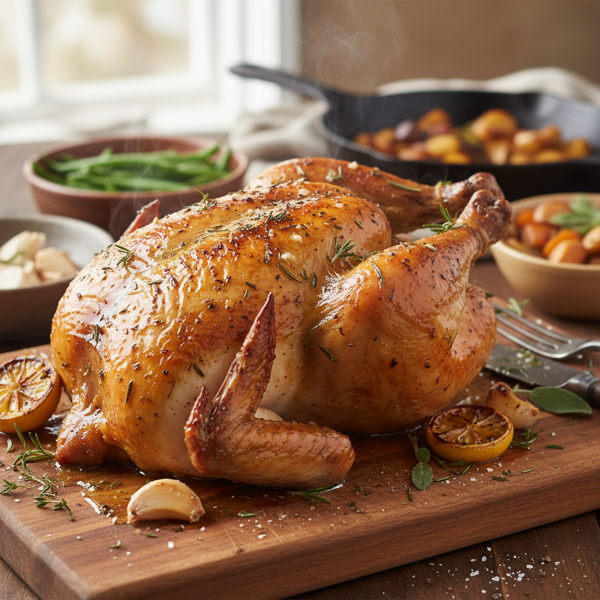
Experience the rich flavors of a perfectly roasted chicken infused with aromatic herbs and rich butter. This recipe combines traditional roasting techniques with a touch of elegance, making it an ideal centerpiece for any dinner gathering. While the chicken roasts, its succulent juices blend with the fresh vegetables, creating a mouthwatering aroma that fills your kitchen. This dish not only shines on its own but also serves as a versatile base for numerous recipes, whether you're looking to add shredded chicken to salads, sandwiches, or casseroles. The secret lies in the meticulous basting during roasting, resulting in deeply flavorful and moist meat that your family and guests won't be able to resist. Prepare to impress with this timeless classic that embodies comfort and sophistication.
4
Servings
300
Calories
8
Ingredients
Ingredients
Roasting chicken
3 lbs (whole, cleaned and dried)
Salt
3/4 tsp (divided, for seasoning)
Butter
6 tbsp (softened)
Carrot
1 small (sliced)
Onion
1 small (sliced)
Cooking oil
1 tbsp (for basting)
Shallots
1/2 tbsp (minced)
Brown chicken stock
1 cup (canned or homemade, for sauce)
Instructions
1
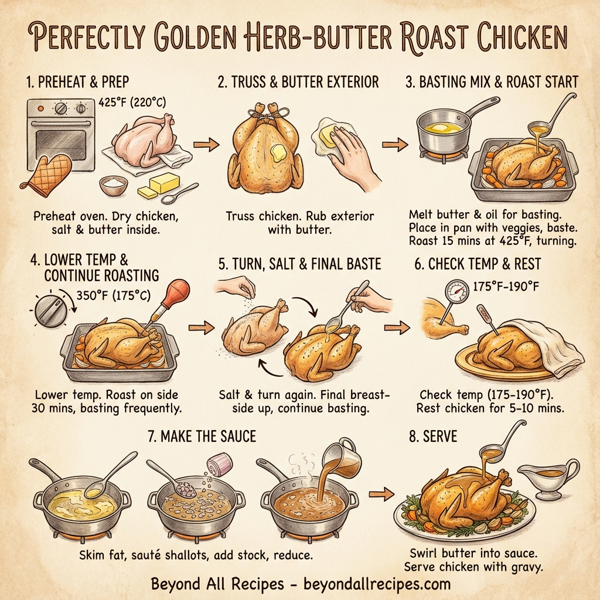
Preheat your oven to 425°F (220°C).
2
Thoroughly pat the inside of the chicken dry, then sprinkle it with 1/4 teaspoon of salt and rub in 1 tablespoon of softened butter.
3
Truss the chicken to ensure even cooking and dry its skin with paper towels.
4
Rub the entire exterior of the chicken with 1 tablespoon of softened butter, creating a rich, golden crust.
5
In a small saucepan, melt 2 tablespoons of butter alongside 1 tablespoon of cooking oil. Once melted, set aside this basting mixture.
6
Place the chicken, breast side up, in a shallow roasting pan. Scatter the sliced carrot and onion around the chicken, adding a depth of flavor as they roast.
7
Transfer the pan to the middle rack of the preheated oven. Allow the chicken to roast for 15 minutes, turning it first on one side for 5 minutes, then onto the other side for an additional 5 minutes. Baste the chicken with the butter and oil mixture after each turn.
8
Lower the oven temperature to 350°F (175°C).
9
Continue roasting the chicken on its side for an additional 30 minutes, basting every 8 to 10 minutes with the pan drippings when the basting mixture is finished.
10
After about 40 minutes of cooking, sprinkle the remaining 1/4 teaspoon of salt over the chicken and turn it onto its opposite side, continuing to baste.
11
With 15 minutes left to go, again salt the chicken and turn it breast side up for the final cooking phase. Maintain basting for optimal flavor.
12
Check for doneness by inserting a meat thermometer into the thickest part of the thigh; it should read between 175°F and 190°F (80°C and 88°C) according to your preference.
13
Once cooked, remove the trussing strings and transfer the chicken to a warm platter. Allow it to rest at room temperature for 5 to 10 minutes before carving, allowing the juices to redistribute.
14
While the chicken rests, skim off all but 2 tablespoons of fat from the roasting pan. Stir in the minced shallots and cook slowly for about 1 minute.
15
Add the brown chicken stock to the pan, bringing it to a rapid boil. Let it reduce to about 1/2 cup.
16
Season the sauce with salt and pepper to taste, then swirl in the last 1 to 2 tablespoons of butter for added richness.
17
Serve the chicken with a generous spoonful of the sauce on top, and present the remaining gravy at the table for guests.
Nutrition Information
20g
Fat
2.5g
Carbs
25g
Protein
Frequently Asked Questions
Frequently Asked Questions
What is the primary flavor profile of this roast chicken recipe?
The chicken is infused with aromatic herbs and rich butter, creating a succulent and savory profile with a golden, buttery crust.
What is the secret to making the meat deeply flavorful and moist?
The secret lies in the meticulous basting process during roasting, using both a butter-oil mixture and the chicken's own pan drippings.
At what temperature should the oven be preheated?
The oven should be initially preheated to 425°F (220°C) for the first stage of roasting.
Why is it important to pat the chicken dry before cooking?
Thoroughly drying the skin with paper towels is essential for creating a rich, golden, and crispy crust.
What is the purpose of trussing the chicken?
Trussing the chicken helps ensure that the bird cooks evenly throughout.
What ingredients are used for the basting mixture?
The initial basting mixture consists of 2 tablespoons of melted butter and 1 tablespoon of cooking oil.
Which vegetables are added to the roasting pan?
One small sliced carrot and one small sliced onion are scattered around the chicken to add depth of flavor.
How long does the chicken roast at the high 425°F temperature?
The chicken roasts for 15 minutes at 425°F, during which it is turned and basted every 5 minutes.
What should the oven temperature be lowered to for the second phase?
After the initial 15 minutes, the oven temperature should be lowered to 350°F (175°C).
How often should you baste the chicken while it roasts at 350°F?
You should baste the chicken every 8 to 10 minutes using the pan drippings.
When should the final applications of salt be added to the chicken?
Sprinkle salt over the chicken after 40 minutes of total cooking time, and then again when there are 15 minutes of cooking left.
What is the target internal temperature for a fully cooked chicken?
The internal temperature at the thickest part of the thigh should read between 175°F and 190°F (80°C and 88°C).
Why does the chicken need to rest for 5 to 10 minutes after cooking?
Resting allows the internal juices to redistribute, ensuring the meat stays moist when carved.
How do you prepare the pan sauce while the chicken rests?
Skim the fat, cook minced shallots, reduce brown chicken stock by half, and finish by swirling in butter.
What type of stock is recommended for the sauce?
The recipe calls for 1 cup of brown chicken stock, which can be either homemade or canned.
How much butter is used in the entire recipe?
The recipe uses a total of 6 tablespoons of softened butter distributed across the chicken, basting, and sauce.
How many servings does this recipe provide?
This recipe is designed to serve 4 people.
What are the nutritional values per serving?
Each serving contains approximately 300 calories, 20g of fat, 2.5g of carbohydrates, and 25g of protein.
Can the leftovers be used for other dishes?
Yes, this roasted chicken is a versatile base for salads, sandwiches, or casseroles.
Where in the oven should the roasting pan be placed?
The pan should be placed on the middle rack of the preheated oven.
What size chicken does this recipe require?
The recipe calls for a 3 lb roasting chicken.
What is the purpose of adding shallots to the pan sauce?
Minced shallots provide a delicate onion-like flavor and serve as the aromatic base for the reduced stock sauce.
How much fat should be left in the pan before making the sauce?
You should skim off all but 2 tablespoons of fat from the roasting pan before adding shallots.
Is this dish considered comfort food?
Yes, it is tagged as comfort food and a classic one-dish dinner centerpiece.
What is the final volume of the reduced pan sauce?
The chicken stock should be boiled and reduced down to about 1/2 cup.
How long do you cook the shallots?
The minced shallots should be cooked slowly for approximately 1 minute.
What is the very last step before serving the sauce?
Season with salt and pepper to taste and swirl in 1 to 2 tablespoons of butter for extra richness.
What are the suggested ways to present the sauce?
Serve a spoonful of sauce directly on the chicken and present the remaining gravy in a bowl at the table.
Can you use this recipe for a dinner party?
Yes, the recipe description notes it is an ideal centerpiece for any dinner gathering due to its elegance and sophistication.
Does the recipe require many ingredients?
No, it features a simple list of 8 primary ingredients focused on quality and technique.