Perfectly Flaky Pie Crust
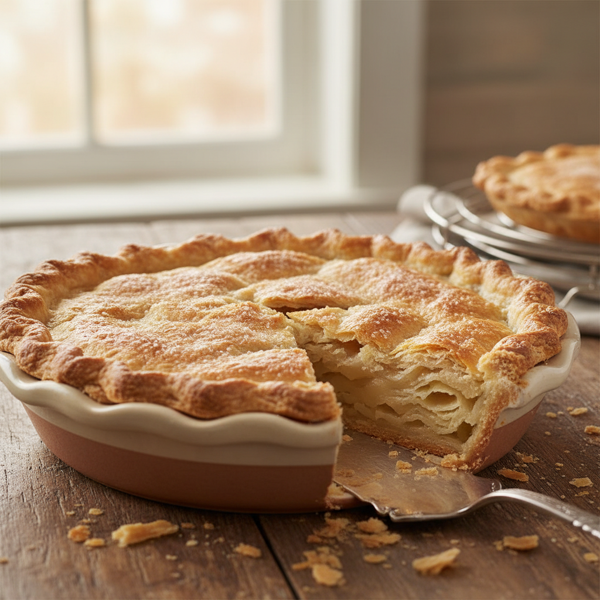
Discover the secret to achieving a perfectly flaky pie crust that is sure to impress! This recipe, passed down from my talented sister-in-law, Steph, will take your pie-making skills to the next level. Forget those dry, rubbery, or mushy crusts that leave you disappointed; this recipe consistently delivers a golden-brown, buttery crust that's perfect for both sweet and savory pies. Whether you're preparing a fruit pie, a decadent cream pie with a pre-baked shell, or a comforting chicken pot pie, this crust will provide the ideal base. The addition of vinegar, resulting in curdled milk, plays a crucial role in creating a delicate flakiness that you'll savor with every bite. Plus, any leftover dough can be transformed into a delightful treat by baking with cinnamon and sugar. As you embark on this baking journey, remember to keep an eye on the crust to prevent over-browning, and enjoy the tantalizing aroma that fills your kitchen. This recipe is sure to become a beloved staple in your dessert repertoire!
N/A
Servings
150
Calories
5
Ingredients
Ingredients
All-purpose flour
2 cups (measured)
Salt
1 teaspoon (measured)
Shortening
1 cup (cut into small pieces)
Milk
1/3 cup (curdled with vinegar)
Vinegar
1 tablespoon (mixed with milk)
Instructions
1
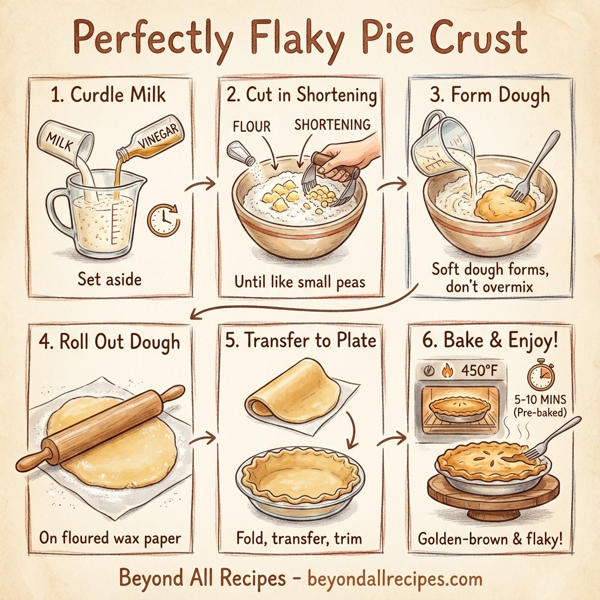
Preheat your oven to 450°F (232°C). Depending on your pie recipe, follow the specific directions for baking times.
2
In a measuring cup, combine the vinegar with the milk and set it aside to curdle while you prepare the dough.
3
In a large mixing bowl, add the flour and create a shallow well in the center.
4
Sprinkle the salt into the well and add the shortening, cutting it into the flour with a pastry cutter or fork until the mixture resembles small peas.
5
Pour the curdled milk mixture into the flour mixture, stirring gently with a fork until a soft dough forms. Be careful not to overmix.
6
On a lightly floured piece of wax paper or a clean surface, divide the dough in half. Roll out one half to your desired thickness, adding flour as needed to prevent sticking.
7
Carefully fold the wax paper over the rolled dough like a book and transfer it to your pie plate, unfolding it gently to fit the shape.
8
Trim any excess dough and create a decorative edge if desired.
9
If your pie recipe requires a pre-baked crust, bake it for 5-10 minutes until lightly golden. Keep an eye on the crust as it bakes, and cover the edges with foil if they start to brown too quickly.
10
If using the crust for a filled pie, proceed with the baking instructions specific to your recipe.
Nutrition Information
10g
Fat
13g
Carbs
1.5g
Protein
Frequently Asked Questions
Frequently Asked Questions
What is the secret to making this pie crust so flaky?
The secret lies in combining vinegar with milk to create a curdled mixture that ensures a delicate flakiness.
Who provided this recipe?
This recipe was passed down from the creator's sister-in-law, Steph.
Is this crust suitable for sweet pies?
Yes, it is perfect for sweet pies like fruit pies or decadent cream pies.
Can I use this recipe for savory dishes?
Absolutely, it serves as an ideal base for savory dishes like chicken pot pie.
What temperature should the oven be set to?
The oven should be preheated to 450 degrees Fahrenheit or 232 degrees Celsius.
How do I prepare the milk mixture?
Combine one tablespoon of vinegar with one-third cup of milk and let it sit to curdle.
How do I incorporate the shortening?
Cut the shortening into the flour and salt mixture using a pastry cutter or fork until it looks like small peas.
What is the best way to stir the dough?
Pour the milk mixture into the flour and stir gently with a fork until a soft dough forms.
What should I avoid when mixing the dough?
You should be careful not to overmix the dough once the liquid is added.
How should the dough be rolled out?
Divide the dough in half and roll it out on a lightly floured piece of wax paper to your desired thickness.
How do I transfer the dough to the pie plate?
Carefully fold the wax paper over the rolled dough like a book, move it to the plate, and unfold it gently.
What should I do with excess dough?
Trim any excess dough and use it to create a decorative edge or bake it with cinnamon and sugar.
How long does a pre-baked crust take?
If your recipe requires a pre-baked shell, bake it for 5 to 10 minutes until lightly golden.
How do I prevent the edges from burning?
Cover the edges of the crust with foil if they start to brown too quickly during baking.
What can I make with leftover pie dough scraps?
Leftover dough can be transformed into a delightful treat by baking it with cinnamon and sugar.
What are the nutritional facts for one serving?
One serving contains 150 calories, 10g of fat, 13g of carbohydrates, and 1.5g of protein.
How much flour is needed for this recipe?
The recipe calls for 2 cups of measured all-purpose flour.
How much salt is included?
One teaspoon of measured salt is required.
How much shortening is used?
The recipe uses 1 cup of shortening, cut into small pieces.
What type of milk is used?
The recipe calls for 1/3 cup of milk that has been curdled with vinegar.
What is the amount of vinegar needed?
One tablespoon of vinegar is mixed with the milk.
How many ingredients are in this recipe?
There are 5 main ingredients: flour, salt, shortening, milk, and vinegar.
What kind of texture does this crust have?
This recipe consistently delivers a golden-brown, buttery, and flaky crust.
Does this recipe help avoid common pie crust issues?
Yes, it is designed to prevent dry, rubbery, or mushy crusts.
How do I start the dough preparation?
In a large mixing bowl, add the flour and create a shallow well in the center for the salt and shortening.
Can I use this for a cream pie?
Yes, it is excellent for cream pies that require a pre-baked shell.
What tool is best for cutting in shortening?
A pastry cutter or a fork is recommended for cutting shortening into the flour.
How do I know the crust is done?
The crust should be lightly golden-brown and emit a tantalizing aroma.
How do I handle the dough during rolling?
Add extra flour as needed to prevent the dough from sticking to the surface or wax paper.
Is this recipe considered a staple?
Yes, this recipe is likely to become a beloved staple in any dessert repertoire.