Perfectly Flaky All-Butter Pie Crust
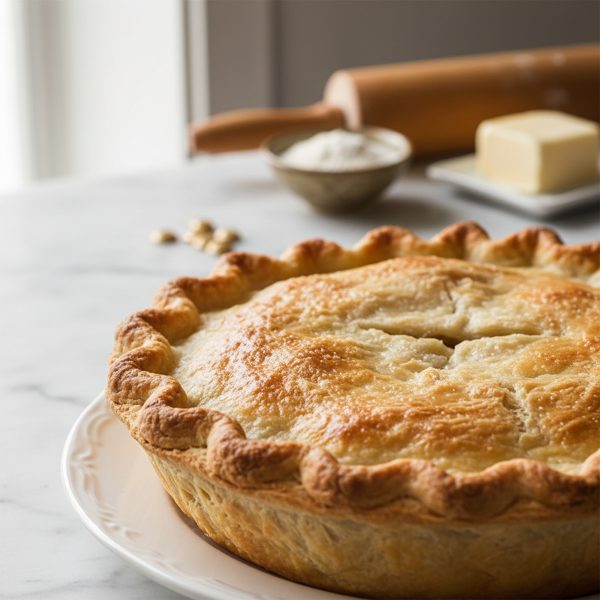
This Perfectly Flaky All-Butter Pie Crust is the ultimate pastry for any dessert lover. It's crafted to be incredibly flaky and tender, yet resilient enough to hold its texture under even the most challenging filling conditions. Whether you’re baking a classic fruit pie or an indulgent cream-filled tart, this crust delivers a golden-brown, deliciously buttery flavor that pairs beautifully with any filling. You'll impress your family and friends with your baking prowess, all while enjoying the ease and forgiveness of this pastry dough. Plus, it can be made ahead of time and stored for later, making your baking endeavors even more convenient!
N/A
Servings
N/A
Calories
6
Ingredients
Ingredients
Unbleached All-Purpose Flour
2 1/2 cups (none)
Table Salt
1 teaspoon (none)
Granulated Sugar
1 tablespoon (none)
Unsalted Butter
16 tablespoons (cut into 1/2-inch cubes)
Sour Cream
3 tablespoons (none)
Ice Water
1/3 cup (or more) (none)
Instructions
1
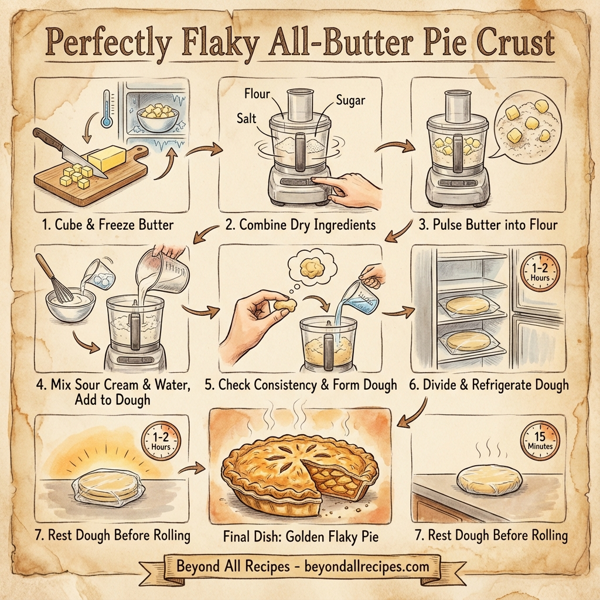
Cut the unsalted butter into 1/2-inch cubes and place them in the freezer for about 10 minutes to firm up.
2
In a food processor, combine the unbleached all-purpose flour, table salt, and granulated sugar. Process them together for about 3 seconds until uniformly mixed.
3
Add the chilled butter cubes to the flour mixture and pulse until the butter pieces resemble large peas, which should take about ten 1-second pulses.
4
In a small bowl, whisk together the sour cream and 1/3 cup of ice water until smooth. Gradually add half of this mixture to the flour blend and pulse for three 1-second pulses, then repeat with the remaining sour cream mixture.
5
Check the consistency of the dough by pinching it between your fingers. If it feels dry or crumbly and doesn’t hold together, gradually add 1 to 2 tablespoons of ice water, pulsing after each addition until the dough forms large clumps and no dry flour remains. This should take 3 to 5 one-second pulses.
6
Once the dough has formed, divide it into two equal portions and shape each into a 4-inch disk. Wrap each disk in plastic wrap and refrigerate for 1 to 2 hours until it's firm but not overly hard.
7
Before rolling, if chilled for more than 2 hours or if frozen, allow the dough to sit at room temperature for 15 minutes to soften slightly, making it easier to roll out.
Nutrition Information
Frequently Asked Questions
Frequently Asked Questions
What makes this pie crust 'perfectly flaky'?
The flakiness comes from using chilled unsalted butter pulsed into the flour until it resembles large peas, and the addition of sour cream for a tender texture.
What type of flour is best for this recipe?
This recipe specifically calls for 2 1/2 cups of unbleached all-purpose flour.
Should the butter be room temperature or cold?
The butter must be cold; it should be cut into 1/2-inch cubes and placed in the freezer for about 10 minutes before use.
Why is sour cream used in the dough?
Sour cream is whisked with ice water to add moisture and acidity, which helps create a tender and resilient crust.
How much ice water should I use?
Start with 1/3 cup of ice water mixed with the sour cream, and add 1 to 2 additional tablespoons if the dough remains dry or crumbly.
How do I know if the dough consistency is correct?
Check the consistency by pinching the dough between your fingers. It should hold together and form large clumps without any dry flour remaining.
How long should I pulse the butter into the flour?
Pulse the chilled butter cubes about ten 1-second pulses until they are the size of large peas.
Can I make this pie crust ahead of time?
Yes, the dough can be made ahead of time and stored in the refrigerator or freezer until you are ready to bake.
How many pie crusts does this recipe yield?
This recipe makes enough dough for two 4-inch disks, which can be used for a double-crust pie or two single-crust pies.
What is the recommended chilling time for the dough?
The dough disks should be refrigerated for 1 to 2 hours until firm.
How do I handle the dough if it has been in the fridge for more than 2 hours?
If chilled for more than 2 hours, let the dough sit at room temperature for about 15 minutes to soften slightly before rolling.
Can this crust be used for cream-filled tarts?
Yes, the crust is resilient enough to hold its texture even under challenging conditions like cream-filled tarts.
Is there sugar in the crust?
Yes, the recipe includes 1 tablespoon of granulated sugar to enhance the flavor.
What kind of salt should I use?
The recipe calls for 1 teaspoon of standard table salt.
What should the butter pieces look like after processing?
The butter pieces should be uneven and resemble the size of large peas for maximum flakiness.
What happens if I over-process the dough?
Over-processing can lead to a tough crust. It is important to use short, 1-second pulses as directed.
Do I need a food processor to make this?
The instructions are written for a food processor, which helps quickly mix ingredients while keeping the butter cold.
Is this an all-butter crust?
Yes, it uses 16 tablespoons (2 sticks) of unsalted butter and no shortening.
How do I shape the dough before refrigerating?
Divide the dough into two equal portions and shape each into a 4-inch disk, then wrap them in plastic wrap.
Why is unbleached flour preferred?
Unbleached all-purpose flour provides a good structure and flavor for this specific flaky pastry.
Can I use this for a fruit pie?
Absolutely, it is designed to pair beautifully with classic fruit fillings.
What is the final texture of the baked crust?
The crust becomes golden-brown, buttery, flaky, and tender.
How long do I mix the dry ingredients initially?
Process the flour, salt, and sugar together for about 3 seconds until uniformly mixed.
How should I add the liquid mixture to the flour?
Gradually add half of the sour cream mixture and pulse three times, then repeat with the remaining half.
What size should the butter cubes be cut into?
The unsalted butter should be cut into 1/2-inch cubes.
What if the dough is too crumbly after the initial water is added?
Add 1 to 2 additional tablespoons of ice water, pulsing after each addition, until it forms clumps.
Why do I freeze the butter for 10 minutes?
Freezing ensures the butter stays cold during the mixing process, which is essential for creating steam pockets that lead to flakiness.
Is this dough forgiving for beginners?
Yes, the recipe description notes that the pastry dough is easy and forgiving to work with.
How do I prevent the dough from sticking when rolling?
While not explicitly in the steps, letting it sit for 15 minutes after long chilling helps the texture be more manageable for rolling.
Can I use this recipe for a savory pie?
While it contains a tablespoon of sugar, it can be used for many savory dishes, though it is optimized for desserts and tarts.