Perfectly Crispy French Baguettes
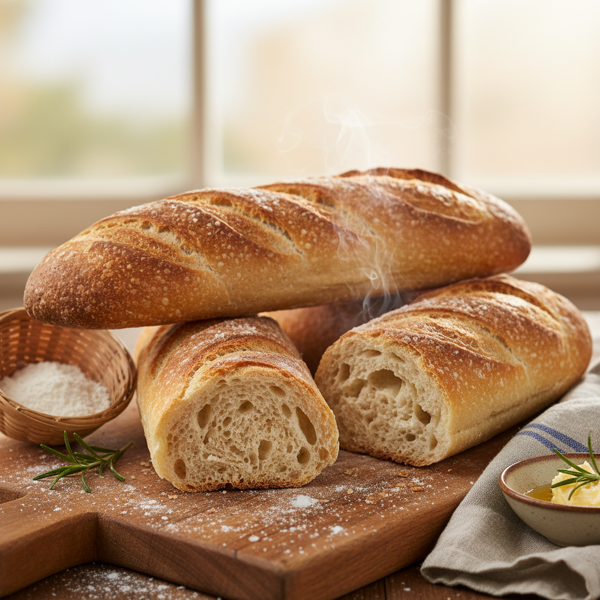
Experience the delight of freshly baked French baguettes with an irresistible golden crust and a soft, airy interior. This failproof recipe utilizes a bread machine for effortless mixing and kneading, ensuring consistency every time. Perfect for sandwiches, served alongside meals, or just enjoyed with butter, these flavorful baguettes are bound to impress your family and friends. With just a few simple ingredients, you'll be able to craft two delightful loaves of artisan-style French bread right in your kitchen!
N/A
Servings
N/A
Calories
4
Ingredients
Ingredients
Bread Flour
3 1/2 cups (Measure out using a dry measuring cup.)
Salt
1 teaspoon (Use fine table or kosher salt.)
Active Dry Yeast
1 (1/4 ounce) package (Ensure yeast is fresh for best results.)
Warm Water
1 1/4 cups (Should be between 100°F to 110°F for optimal yeast activation.)
Instructions
1
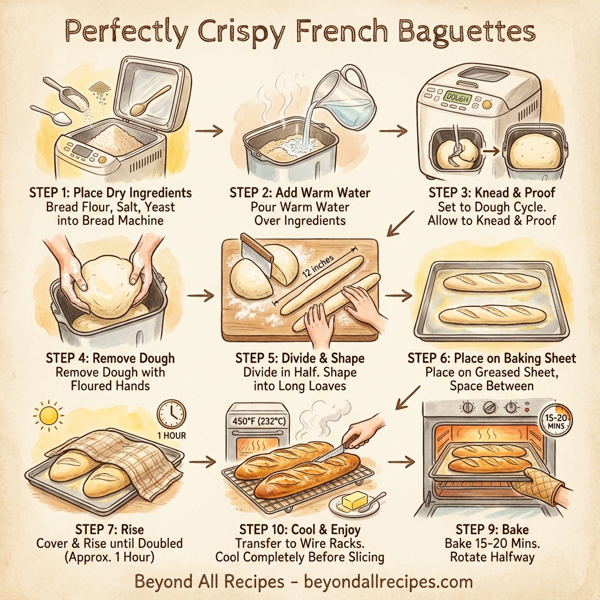
Begin by placing the bread flour, salt, and active dry yeast into the bread machine in the order recommended by the manufacturer.
2
Pour the warm water over the dry ingredients, making sure it evenly covers the flour.
3
Set the bread machine to the dough setting and start it. Allow the machine to knead and proof the dough until the cycle is complete.
4
Once the dough cycle finishes, carefully remove the dough from the bread machine using floured hands.
5
Transfer the dough to a floured surface and divide it in half. Gently shape each half into a long loaf approximately 12 inches in length.
6
Place the formed loaves onto a greased baking sheet, ensuring there is space between them.
7
Cover the loaves with a clean towel and allow them to rise in a warm place until they are doubled in size, typically about 1 hour.
8
Preheat your oven to 450°F (232°C) while the dough is rising.
9
Once risen, place the baking sheet in the preheated oven and bake for 15 to 20 minutes. Halfway through baking, rotate the pan to ensure even browning.
10
When the loaves are golden brown, remove them from the oven and transfer them to wire racks to cool completely before slicing.
Nutrition Information
Frequently Asked Questions
Frequently Asked Questions
How many loaves does this French baguette recipe make?
This recipe makes two delightful loaves of artisan-style French bread, each approximately 12 inches in length.
What type of flour should I use for French baguettes?
Bread flour is recommended for this recipe as it provides the necessary protein content to create a chewy texture and a sturdy crust.
Can I make these baguettes without a bread machine?
While this recipe is optimized for a bread machine to simplify mixing and kneading, you can perform these steps by hand or with a stand mixer and then follow the proofing and baking instructions.
What is the ideal water temperature for activating the yeast?
The water should be warm, ideally between 100°F and 110°F, to ensure the active dry yeast is properly activated without being killed by high heat.
How long does the second rise take?
The shaped loaves should rise in a warm place for approximately 1 hour, or until they have doubled in size.
What oven temperature is required for baking French baguettes?
The oven should be preheated to 450°F (232°C) to achieve a perfectly crispy and golden crust.
How long do the baguettes need to bake?
Bake the loaves for 15 to 20 minutes, rotating the pan halfway through the baking time to ensure even browning.
Why do I need to rotate the baking sheet?
Rotating the pan halfway through ensures that both loaves brown evenly, as many ovens have hot spots.
What is the purpose of the salt in this recipe?
Salt enhances the flavor of the bread and helps control the yeast fermentation process for a better structure.
Can I use instant yeast instead of active dry yeast?
Yes, you can use instant yeast. If using instant yeast, you may not need to dissolve it in water first, and the rise times might be slightly faster.
How do I know when the bread is finished baking?
The baguettes are done when they have a deep golden-brown crust and sound hollow when tapped on the bottom.
Should I grease the baking sheet?
Yes, placing the formed loaves onto a greased baking sheet prevents them from sticking during the rising and baking process.
How should I cool the baguettes?
Transfer the baked loaves to wire racks to cool completely. This prevents the bottom of the crust from becoming soggy.
What makes these baguettes crispy?
The high baking temperature of 450°F combined with the bread flour and proper kneading creates the signature crispy crust.
How do I shape the dough into baguettes?
Divide the dough in half and gently roll each portion into a long, thin cylinder approximately 12 inches long on a floured surface.
What bread machine setting should I use?
Use the 'dough' setting on your bread machine, which handles the mixing, kneading, and the first rise.
Can I add herbs to this recipe?
Yes, you can add dried herbs like rosemary or thyme to the dry ingredients for a flavored artisan bread.
How do I store leftover French baguettes?
Store them in a paper bag at room temperature for up to one day. For longer storage, wrap them tightly and freeze.
How do I reheat the baguettes to keep them crispy?
Reheat the bread in a 350°F oven for 5-10 minutes until warmed through and the crust crisps up again.
Can I use all-purpose flour?
You can, but the texture will be softer and less chewy than bread made with bread flour.
What should I do if my dough is too sticky to handle?
Use floured hands and a lightly floured surface to manage the dough after removing it from the bread machine.
How do I get a deeper golden color on the crust?
Ensure your oven is fully preheated to 450°F and do not skip the step of rotating the pan.
Is this recipe vegan-friendly?
Yes, this recipe contains only flour, salt, yeast, and water, making it naturally vegan.
Why did my dough not rise?
This could be due to expired yeast or water that was too hot (killing the yeast) or too cold (not activating it).
Can I make sandwich rolls with this dough?
Absolutely! Instead of two long loaves, divide the dough into smaller portions and shape them into individual rolls.
What is the best way to slice the baguette?
Use a long serrated bread knife to slice the baguette without crushing the airy interior.
Do I need to score the tops of the loaves?
While not explicitly required in these instructions, making 3-4 diagonal slashes with a sharp knife before baking helps the bread expand and gives it a classic look.
How much yeast is in a standard 1/4 ounce package?
A standard 1/4 ounce package of yeast contains approximately 2 1/4 teaspoons.
What can I serve with these baguettes?
They are perfect for sandwiches, serving with soups or stews, or simply enjoying with high-quality butter.
Can I freeze the raw dough?
Yes, you can freeze the dough after the first rise. Thaw it in the refrigerator overnight, then shape and let it rise again before baking.