Perfectly Crispy Buttermilk Chicken Breasts
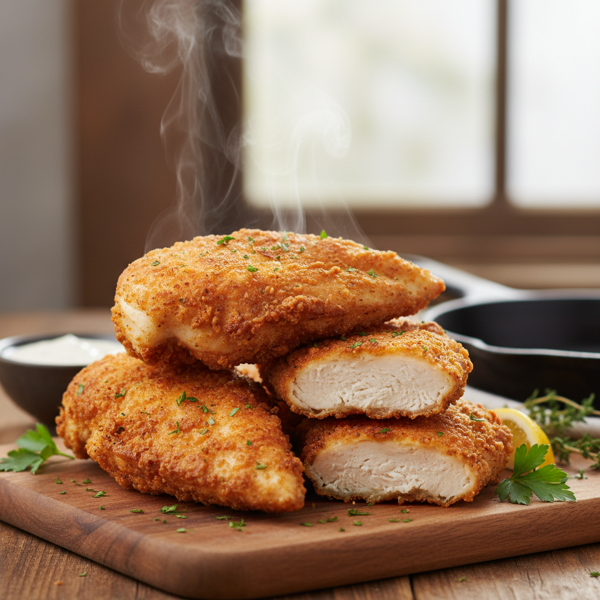
Get ready to indulge in the ultimate crispy chicken experience! This recipe combines the rich flavors of buttermilk with a touch of spice, ensuring each bite is juicy and bursting with flavor. The marinating process allows the chicken to absorb the tanginess of the buttermilk, while a mixture of flour, cornmeal, and cornstarch creates the perfect crunchy coating when fried. Ideal for a cozy dinner or a delightful meal paired with a fresh salad, this crowd-pleaser is a must-try. Keep in mind that a bit of planning is essential due to the marinating and resting times, but the impressive results will be worth every minute spent!
2
Servings
390
Calories
9
Ingredients
Ingredients
Chicken breasts
2 (Skinless and boneless, flattened)
Buttermilk
1/2 cup (For marination)
Garlic
1 clove (Crushed)
Hot sauce or cayenne pepper
To taste (Optional spice addition)
All-purpose flour
1/4 cup (For coating)
Cornmeal
1/4 cup (For coating)
Cornstarch
1/4 cup (For coating)
Salt
To taste (Or any other seasoning of your choice)
Vegetable oil
For frying (Enough to cover the bottom of the pan)
Instructions
1
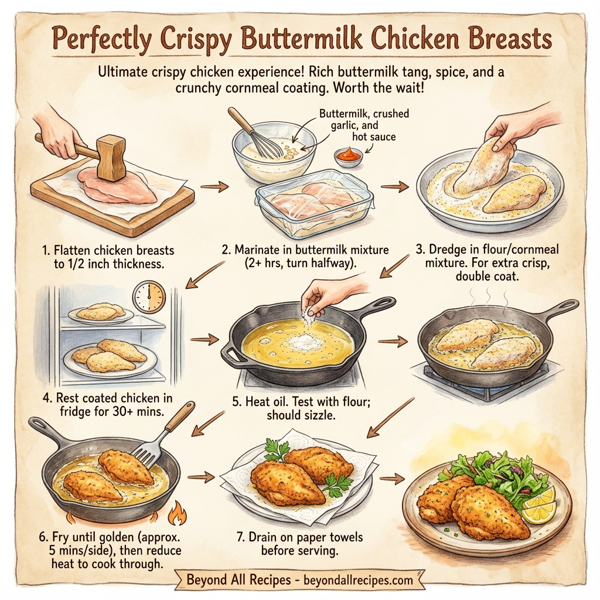
Begin by placing the chicken breasts between two layers of parchment paper or plastic wrap. Use a meat mallet or rolling pin to gently flatten them to an even thickness, about 1/2 inch.
2
In a bowl, whisk together the buttermilk, crushed garlic, and your choice of hot sauce or cayenne pepper for an added kick. Place the flattened chicken in a non-metallic dish and pour the buttermilk mixture over the top, ensuring it's well coated. Cover with plastic wrap and marinate in the refrigerator for at least two hours, turning the chicken halfway through.
3
After marination, set up a dredging station by mixing the all-purpose flour, cornmeal, cornstarch, and chosen seasonings in a shallow dish. Remove each chicken breast from the marinade, allowing excess buttermilk to drip off, and thoroughly coat it in the flour mixture. Repeat this process for both breasts, ensuring an even coating. For an extra crispy finish, return the coated chicken to the dredge and coat once more, especially on any moist spots.
4
Once coated, place the chicken back in the refrigerator to rest for a minimum of 30 minutes. This step helps the coating adhere better during frying.
5
In a large skillet, heat about 1/4 inch of vegetable oil over medium-high heat. To check if the oil is ready, drop a small piece of the flour mixture into the pan; it should sizzle.
6
Carefully add the coated chicken breasts to the hot oil, frying until golden brown on each side, approximately 5 minutes per side. After browning, reduce the heat to medium-low and continue cooking until the chicken is cooked through and no longer pink in the center, about an additional 5 minutes, depending on thickness.
7
Once cooked, remove the chicken from the oil and place it on a plate lined with paper towels to absorb excess oil before serving.
Nutrition Information
22.5g
Fat
30g
Carbs
20g
Protein
Frequently Asked Questions
Frequently Asked Questions
What is the main dish described in this recipe?
The recipe is for Perfectly Crispy Buttermilk Chicken Breasts, which are juicy chicken pieces with a crunchy cornmeal and cornstarch coating.
How many servings does this recipe provide?
This recipe is designed to serve 2 people.
How long should the chicken marinate?
The chicken should marinate in the refrigerator for at least two hours.
What is the purpose of flattening the chicken breasts?
Flattening the chicken to an even thickness of about 1/2 inch ensures that it cooks evenly and quickly.
What ingredients are used for the buttermilk marinade?
The marinade consists of buttermilk, crushed garlic, and an optional choice of hot sauce or cayenne pepper for spice.
What components make up the crispy coating?
The dredging station uses a mixture of all-purpose flour, cornmeal, cornstarch, and salt or other seasonings.
How do I ensure the coating stays on the chicken during frying?
After coating the chicken, let it rest in the refrigerator for at least 30 minutes to help the dredge adhere better.
How do I get an extra crispy finish?
Return the already coated chicken to the flour mixture and coat it once more, specifically focusing on any moist spots.
What kind of oil should be used for frying?
The recipe recommends using vegetable oil.
How much oil is needed in the skillet?
You should add about 1/4 inch of vegetable oil, or enough to cover the bottom of the pan.
How can I tell if the oil is hot enough for frying?
Drop a small piece of the flour mixture into the pan; if it sizzles, the oil is ready.
How long should each side of the chicken be fried?
Fry each side for approximately 5 minutes until they are golden brown.
What should I do after the chicken is browned?
Reduce the heat to medium-low and continue cooking for about 5 more minutes until the chicken is cooked through.
How do I remove excess oil from the finished chicken?
Place the cooked chicken on a plate lined with paper towels to absorb any extra oil before serving.
What are the nutritional facts for one serving?
Each serving contains 390 calories, 22.5g of fat, 30g of carbohydrates, and 20g of protein.
Is the hot sauce or cayenne pepper mandatory?
No, the hot sauce or cayenne pepper is an optional addition for those who want an added kick of spice.
What preparation is needed for the garlic?
The garlic should be crushed before being whisked into the buttermilk mixture.
Should the chicken be skinless and boneless?
Yes, the recipe specifically calls for skinless and boneless chicken breasts.
Why is cornstarch included in the flour mixture?
Cornstarch helps create a lighter and crunchier texture in the fried coating.
What type of container should be used for marinating?
A non-metallic dish should be used for marinating the chicken in the buttermilk mixture.
How many grams of protein are in this recipe?
There are 20 grams of protein per serving.
What is the carbohydrate count for this dish?
Each serving contains 30 grams of carbohydrates.
Can I use different seasonings in the flour?
Yes, you can use salt or any other seasoning of your choice in the dredging mixture.
How thick should the chicken be after flattening?
The chicken should be flattened to a thickness of approximately 1/2 inch.
What tools are recommended for flattening the chicken?
You can use a meat mallet or a rolling pin.
Is there a specific amount of salt to use?
Salt should be added to taste according to your preference.
Does the recipe contain fiber or sugar?
The provided nutritional information indicates that fiber and sugar levels are negligible or not specified.
What is the total fat content?
The recipe contains 22.5g of fat per serving.
How often should I turn the chicken during marination?
You should turn the chicken halfway through the two-hour marinating process.
Why is planning essential for this recipe?
Planning is necessary because the chicken requires at least two hours of marinating and 30 minutes of resting time after coating.