Pandan Coconut Sticky Rice Pudding
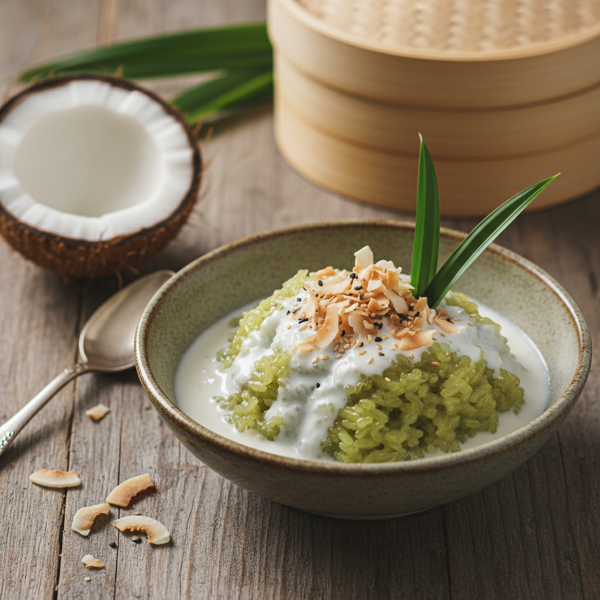
Experience the rich and decadent flavors of Pandan Coconut Sticky Rice Pudding, a beloved Thai dessert known for its luscious texture and delightful sweetness. Inspired by David Thompson's Classic Thai Cuisine, this dessert draws its essence from the unique pandanus leaves, which impart a subtle woody and nutty flavor. This creamy pudding, made with rice and tapioca flours, is infused with rich coconut cream and sweet palm sugar, capturing the heart of traditional Thai street food. Enjoy it chilled or at room temperature, rolled in freshly grated coconut for an indulgent finish. This pudding is not only delicious but also filling, making it the perfect way to conclude a meal or as a snack any time of day.
N/A
Servings
N/A
Calories
8
Ingredients
Ingredients
rice flour
100 g (sifted)
tapioca flour
2 tablespoons (sifted)
salt
1 teaspoon (mixed with flour)
coconut cream
500 ml (fresh or canned)
palm sugar
500 g (chopped)
pandanus leaves
2 (optional, whole)
coconut
100 g (freshly grated)
coconut cream
125 ml (for serving)
Instructions
1
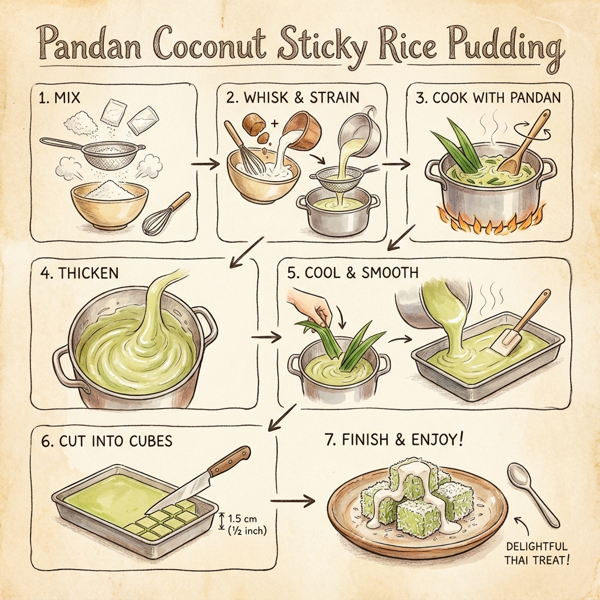
In a mixing bowl, sift together the rice flour, tapioca flour, and salt until well combined.
2
Gradually whisk in the coconut cream and palm sugar, ensuring that no lumps remain. Strain the mixture into a medium-sized pot to achieve a smooth texture.
3
Add the pandanus leaves to the pot and place it over medium heat. Stir constantly with a wooden spoon or spatula to prevent sticking and burning.
4
Cook the mixture for 15-20 minutes, or until it transforms into a thick pudding-like consistency that is neither floury nor grainy. The pudding is ready when it leaves the sides of the pot easily.
5
Remove the pot from heat and take out the pandanus leaves. Pour the pudding mixture into a greased tray to help with easy removal after cooling. Smooth the surface with a spatula.
6
Allow the pudding to cool to room temperature. Once cooled, cut into 1.5 cm (1/2 inch) cubes for serving.
7
For an extra touch, roll the pudding cubes in freshly grated coconut and drizzle with additional coconut cream before serving. Enjoy your delightful Thai treat!
Nutrition Information
Frequently Asked Questions
Frequently Asked Questions
What is Pandan Coconut Sticky Rice Pudding?
It is a decadent Thai dessert known for its luscious texture and sweetness, often inspired by classic Thai cuisine and served as street food.
Is this Pandan Coconut Sticky Rice Pudding recipe gluten-free?
Yes, this recipe is gluten-free as it uses rice flour and tapioca flour as its base.
What flavor do pandanus leaves add to the pudding?
Pandanus leaves impart a unique, subtle woody and nutty flavor to the coconut pudding.
What are the primary flours used in this recipe?
The recipe uses 100g of rice flour and 2 tablespoons of tapioca flour.
Can I use canned coconut cream for this pudding?
Yes, you can use either fresh or canned coconut cream for both the pudding base and the serving drizzle.
How should I prepare the flour mixture?
Sift together the rice flour, tapioca flour, and salt in a mixing bowl until they are well combined.
Why do I need to strain the coconut and flour mixture?
Straining the mixture into the pot ensures that no lumps remain, resulting in a perfectly smooth pudding texture.
How long does it take to cook the pudding?
The pudding needs to be cooked over medium heat for approximately 15 to 20 minutes.
How do I know when the pudding is finished cooking?
The pudding is ready when it reaches a thick consistency that is not grainy and it leaves the sides of the pot easily.
What heat setting should be used for cooking?
You should cook the mixture over medium heat while stirring constantly.
Why is constant stirring necessary?
Constant stirring with a wooden spoon or spatula prevents the rice flour mixture from sticking to the pot or burning.
When should I remove the pandanus leaves?
Remove the pandanus leaves from the pot immediately after taking the pudding off the heat, before pouring it into a tray.
How should I prepare the cooling tray?
The tray should be greased to help with the easy removal of the pudding once it has cooled.
How long should the pudding cool before serving?
Allow the pudding to cool completely to room temperature before cutting it into cubes.
What is the recommended size for the pudding cubes?
The pudding should be cut into approximately 1.5 cm or 1/2 inch cubes.
How do I garnish the Pandan Coconut Sticky Rice Pudding?
Roll the pudding cubes in freshly grated coconut and drizzle them with additional coconut cream.
Can this dessert be served chilled?
Yes, the pudding can be enjoyed either chilled or at room temperature.
What type of sugar is best for this recipe?
The recipe calls for 500g of chopped palm sugar to provide a traditional sweet flavor.
How much coconut cream is needed for the pudding base?
You will need 500 ml of coconut cream to whisk into the flour and sugar mixture.
How much salt is used in the recipe?
The recipe requires 1 teaspoon of salt, which should be mixed with the flours.
Are pandanus leaves mandatory?
The recipe lists 2 pandanus leaves as optional, though they are highly recommended for the authentic woody flavor.
What is the role of freshly grated coconut in this recipe?
Freshly grated coconut is used to coat the pudding cubes, adding texture and an indulgent finish.
Who is the inspiration behind this specific recipe?
This dessert is inspired by the classic Thai cuisine techniques shared by David Thompson.
Is this pudding suitable for a snack?
Yes, because it is quite filling, it makes an excellent snack at any time of day or a perfect conclusion to a meal.
How many ingredients are in this recipe?
There are 8 ingredients total: rice flour, tapioca flour, salt, coconut cream, palm sugar, pandanus leaves, and fresh coconut.
What tools do I need to smooth the pudding surface?
A spatula is recommended for smoothing the surface of the pudding once it is poured into the tray.
Is the coconut cream for serving different from the base?
It is the same type of cream, but a separate 125 ml portion is reserved specifically for drizzling over the finished cubes.
What should the final texture of the pudding be like?
The final texture should be thick, smooth, and pudding-like, neither floury nor grainy.
How many pandanus leaves are used?
The recipe calls for 2 whole pandanus leaves to be infused into the mixture during cooking.
Can I use a different type of sugar?
While palm sugar is traditional for Thai desserts, you could substitute it, though it may alter the authentic flavor profile.