Pan-Seared Duck Breast with Fig-Port Reduction

Indulge in the exquisite flavors of Pan-Seared Duck Breast with a luscious Fig-Port Reduction sauce, a dish that’s sure to impress even the most discerning palates. This recipe evolved from a blend of culinary inspirations to create a balanced harmony of savory duck, sweet figs, and the rich depth of port wine. Perfectly cooked duck breast, with its crisp skin and tender meat, is complemented by a velvety sauce that balances sweet, salty, and umami notes. Ideal for special occasions or an intimate dinner, serve this dish alongside wild rice or creamy mashed potatoes to elevate the experience. It’s a guaranteed crowd-pleaser that has become a staple in my household, often requested by my husband for its sublime flavor and elegance.
N/A
Servings
550
Calories
13
Ingredients
Ingredients
Duck breast halves
2 large (Score the fat side lightly in a diamond pattern)
Olive oil
1 tablespoon (For searing the duck)
Fresh thyme
1/2 teaspoon (Minced)
Garlic powder
1/2 teaspoon (For seasoning)
Paprika
1/4 teaspoon (For seasoning)
Salt & pepper
To taste (For seasoning)
Beef stock or broth
1 cup (For reduction)
Chicken stock or broth
1 cup (For reduction)
Butter
3 tablespoons (For sauce)
Shallot
1 large (Minced)
Port wine
1/2 cup (For sauce)
Fig preserves
4 tablespoons (For sauce)
Flour
1 tablespoon (For thickening sauce)
Instructions
1
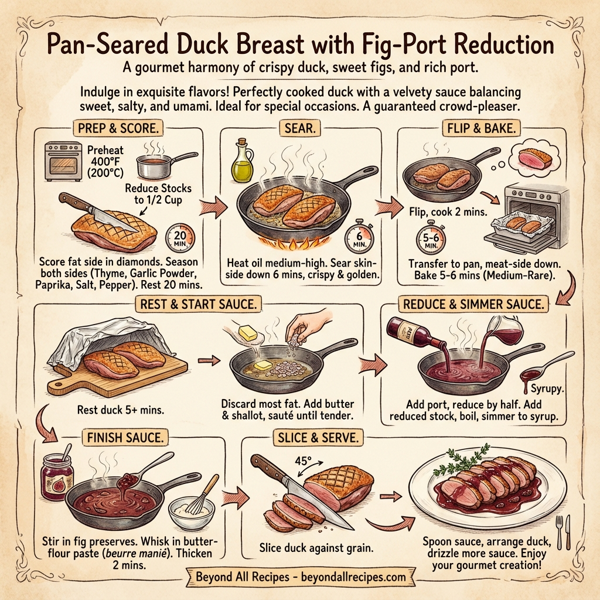
Preheat your oven to 400°F (200°C).
2
In a saucepan, combine the beef and chicken stocks and bring to a boil. Reduce the heat and let it simmer until the mixture is reduced to about 1/2 cup. Once done, set the stock reduction aside.
3
While the stock is reducing, prepare the duck breasts. Use a sharp knife to lightly score the fat side of the duck in a diamond pattern. Season both sides with fresh thyme, garlic powder, paprika, salt, and pepper. Let the duck rest at room temperature for about 20 minutes to enhance the flavors.
4
Heat a skillet over medium-high heat and add the olive oil. Once hot, place the duck breast in the pan, skin side down. Sear for 6 minutes or until the skin is crispy and golden brown.
5
Carefully flip the duck breasts over and cook for an additional 2 minutes.
6
Transfer the duck, meat side down, to a foil-lined baking pan. Bake in the preheated oven for 5-6 minutes for a medium-rare doneness. Once done, remove from the oven and let the duck rest on a cutting board for at least 5 minutes to retain the juices.
7
While the duck is resting, discard most of the fat from the skillet. Add 2 tablespoons of butter and let it melt over medium heat. Add the minced shallot to the pan and sauté until tender and fragrant.
8
Pour in the port wine and bring it to a boil, allowing it to reduce by half.
9
Add the reserved stock reduction to the pan and bring this mixture to a rapid boil. Let it simmer until reduced by one-third, achieving a syrupy consistency.
10
Stir in the fig preserves until completely melted and incorporated into the sauce.
11
In a small bowl, combine the remaining tablespoon of flour with the tablespoon of butter to form a beurre manié. Gradually add this mixture to the sauce, stirring constantly until the sauce thickens, which should take about 2 minutes. Remove the sauce from heat once thickened.
12
Slice the rested duck breast at a 45-degree angle, cutting against the grain into 1/2-inch slices.
13
To serve, spoon the fig-port sauce onto the plate and elegantly arrange several slices of duck breast on top. Finish with a light drizzle of sauce over the duck. Repeat for all serving plates.
14
Serve immediately and enjoy your gourmet creation.
Nutrition Information
34g
Fat
20g
Carbs
35g
Protein
Frequently Asked Questions
Frequently Asked Questions
What is the main protein in this recipe?
The main protein in this recipe is duck breast halves.
How should the duck skin be prepared before cooking?
You should use a sharp knife to lightly score the fat side of the duck in a diamond pattern.
What seasonings are used for the duck breast?
The duck is seasoned with fresh thyme, garlic powder, paprika, salt, and pepper.
How long should the duck rest at room temperature after seasoning?
The duck should rest at room temperature for about 20 minutes to enhance the flavors.
What temperature should the oven be preheated to?
The oven should be preheated to 400°F (200°C).
What types of stock are used for the sauce reduction?
The sauce uses a combination of beef and chicken stocks.
To what volume should the stock mixture be reduced?
The mixture of beef and chicken stocks should be reduced to about 1/2 cup.
How long do you sear the skin side of the duck?
The duck breast should be seared skin side down for 6 minutes or until the skin is crispy and golden brown.
How long do you sear the meat side of the duck?
After searing the skin, flip the duck and cook the meat side for an additional 2 minutes.
How long does the duck bake in the oven for medium-rare doneness?
The duck should bake for 5-6 minutes in the preheated oven.
Why must the duck rest after cooking?
Resting for at least 5 minutes allows the duck to retain its juices.
What aromatic is used to start the fig-port sauce?
A large minced shallot is sautéed in butter to start the sauce.
What type of wine is required for the reduction?
The recipe calls for 1/2 cup of port wine.
How much should the port wine be reduced?
The port wine should be brought to a boil and reduced by half.
What provides the sweetness in the reduction sauce?
Four tablespoons of fig preserves are stirred into the sauce for sweetness and flavor.
How is the sauce thickened?
The sauce is thickened using a beurre manié, which is a mixture of one tablespoon of flour and one tablespoon of butter.
How should the duck breast be sliced for serving?
Slice the duck at a 45-degree angle against the grain into 1/2-inch slices.
What are the recommended side dishes for this meal?
This dish is ideally served alongside wild rice or creamy mashed potatoes.
What is the calorie count per serving?
This recipe contains approximately 550 calories per serving.
How much protein is in this duck dish?
There are 35 grams of protein per serving.
What is the fat content of the recipe?
The recipe contains 34 grams of fat per serving.
How many carbohydrates are in this dish?
There are 20 grams of carbohydrates per serving.
What oil is used for searing the duck?
One tablespoon of olive oil is used to sear the duck.
How many ingredients are required for this recipe?
The recipe requires 13 distinct ingredients.
What consistency should the sauce reach before adding the fig preserves?
The sauce should be simmered until it reaches a syrupy consistency.
Should the duck be baked skin side up or down?
The duck should be placed meat side down on a foil-lined baking pan for the oven stage.
Is this recipe suitable for special occasions?
Yes, it is described as an elegant, gourmet dish perfect for special occasions or intimate dinners.
How long does it take to thicken the sauce with the beurre manié?
It takes about 2 minutes of constant stirring for the sauce to thicken.
What is the flavor profile of the final dish?
The dish features a harmony of savory duck, sweet figs, and the rich depth of port wine with umami notes.
How do you plate the final dish?
Spoon the sauce onto the plate, arrange the duck slices on top, and finish with a light drizzle of sauce.