Overnight Soaked Multigrain Sourdough Delight
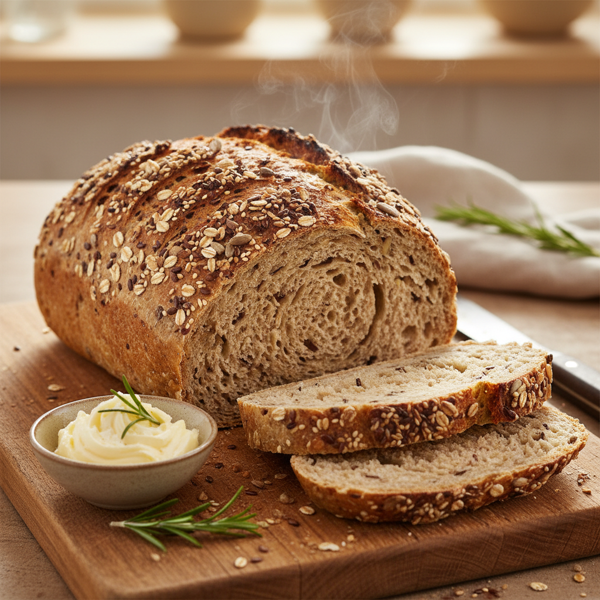
Experience the rich, tangy flavor of this Overnight Soaked Multigrain Sourdough Delight! This unique recipe takes multigrain bread to the next level by incorporating a variety of nutrient-dense grains and seeds soaked overnight in a bubbly sourdough starter. The overnight soak encourages a deeper flavor profile and a delightful chewiness, while the long cold fermentation enhances the sour notes, creating a loaf that’s as nutritious as it is delicious. Perfect for toast, sandwiches, or simply slathered with butter, this dense and grainy bread is a crowd-pleaser for any time of day.
N/A
Servings
N/A
Calories
10
Ingredients
Ingredients
Proofed sourdough starter
2 cups (Allow to proof overnight or up to 12 hours.)
Harvest grain blend for bread
3/4 cup (Soak overnight with the sourdough starter.)
Butter or olive oil
2 tablespoons (Melt before adding to the mixture.)
Milk
1/2 cup (Use room temperature.)
Salt
1 teaspoon (Mix into the dough.)
Honey
1/4 cup (Stir into the mixture.)
Multigrain flour
2 cups (Add to the dough.)
Whole wheat flour
1 cup (Add to the dough.)
All-purpose flour
1/2-1 cup (Use as needed for consistency.)
Harvest grain blend for topping
To taste (Sprinkle on top before baking.)
Instructions
1
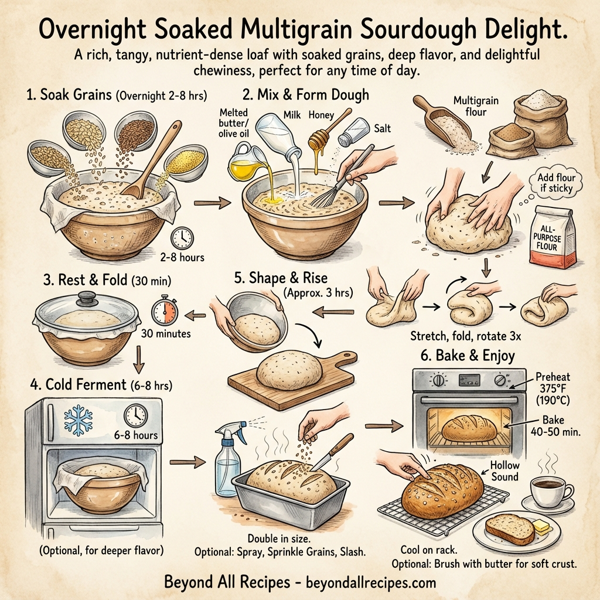
In a large mixing bowl, combine 2 cups of proofed sourdough starter with the harvest grain blend. Cover and let soak for 2 to 8 hours, allowing the flavors to meld.
2
Once the grains have soaked, mix in the melted butter (or olive oil), milk, salt, and honey. Stir until well combined.
3
Gradually add in the multigrain flour and whole wheat flour. Mix until a cohesive dough forms. If the dough is too sticky, add all-purpose flour, a little at a time, until it reaches a workable consistency.
4
Allow the dough to rest for 30 minutes; this step helps to develop gluten.
5
Perform the folding technique by stretching and folding the dough like a letter. Do this three times, rotating the dough 90 degrees between each fold.
6
Transfer the dough to a lightly oiled bowl, ensuring it is coated with oil to prevent sticking. Cover with a damp cloth and place in the refrigerator to retard for 6 to 8 hours. (This step can be omitted if you’re short on time.)
7
After refrigerating, gently remove the dough and shape it into a loaf. Place the shaped loaf into a greased loaf pan or onto a cornmeal-dusted cookie sheet.
8
Let the loaf rise in a warm area until it doubles in size, usually about 3 hours. If desired, lightly spray the top with water, sprinkle with additional harvest grain blend, and make 2-3 shallow slashes on the surface.
9
Preheat your oven to 375°F (190°C). Bake the loaf for 40 to 50 minutes, or until it is golden brown and sounds hollow when tapped. Remove from the pan and cool on a wire rack.
10
For an extra touch, brush the top with melted butter for a soft crust.
Nutrition Information
Frequently Asked Questions
Frequently Asked Questions
What is Overnight Soaked Multigrain Sourdough Delight?
It is a nutrient-dense multigrain bread made with a sourdough starter and a variety of grains and seeds soaked overnight for enhanced flavor and texture.
How long should I soak the harvest grain blend?
The harvest grain blend should be soaked in the sourdough starter for 2 to 8 hours to allow the grains to soften and the flavors to meld.
Can I use olive oil instead of butter in this recipe?
Yes, you can substitute the 2 tablespoons of melted butter with an equal amount of olive oil.
What type of sourdough starter is required?
The recipe calls for 2 cups of proofed sourdough starter that has been allowed to proof overnight or for up to 12 hours.
How many grams or cups of flour are used in total?
The recipe uses 2 cups of multigrain flour, 1 cup of whole wheat flour, and an additional 1/2 to 1 cup of all-purpose flour as needed for consistency.
Why is honey used in this sourdough bread?
Honey is added to the dough to provide a hint of sweetness and to help feed the yeast, aiding in the fermentation process.
What should I do if my sourdough dough is too sticky?
If the dough is too sticky to work with, gradually add all-purpose flour a little at a time until it reaches a workable consistency.
How long should the dough rest to develop gluten?
After mixing the flours, allow the dough to rest for 30 minutes to facilitate gluten development.
What is the folding technique mentioned in the instructions?
The folding technique involves stretching and folding the dough like a letter, repeating this three times while rotating the dough 90 degrees between each fold.
How long should the dough be refrigerated?
The dough should be placed in the refrigerator to retard for 6 to 8 hours, though this step can be omitted if you are short on time.
What is the purpose of refrigerating the dough?
Retarding the dough in the refrigerator enhances the sourdough's sour notes and improves the overall flavor profile.
How do I shape the sourdough loaf?
After refrigeration, gently remove the dough from the bowl and shape it into a loaf before placing it in a pan or on a cookie sheet.
What should I use to dust the cookie sheet?
If you are not using a loaf pan, you should use a cornmeal-dusted cookie sheet to prevent the bread from sticking.
How long does the final rise take?
The shaped loaf should rise in a warm area until it doubles in size, which typically takes about 3 hours.
Should I score the top of the bread?
Yes, it is recommended to make 2-3 shallow slashes or scores on the surface of the loaf before baking.
What is the recommended baking temperature?
The oven should be preheated to 375 degrees Fahrenheit (190 degrees Celsius) for baking this loaf.
How long does the bread need to bake?
The bread should bake for 40 to 50 minutes until it is golden brown and sounds hollow when tapped.
How can I achieve a soft crust on my sourdough bread?
To get a soft crust, brush the top of the loaf with melted butter immediately after removing it from the oven.
What grains are included in the harvest grain blend?
While specific brands vary, a harvest grain blend typically includes a mix of seeds and grains like oats, flax, sunflower seeds, and cracked wheat.
Is this bread suitable for sandwiches?
Yes, its dense and grainy texture makes it perfect for sandwiches, toast, or eating with butter.
Why is the dough folded instead of kneaded?
Folding is a gentler way to build strength in a wet sourdough dough without degassing it too much.
Does the recipe require milk?
Yes, 1/2 cup of room temperature milk is included to add richness to the dough.
Can I add extra grains to the top of the bread?
Yes, you can lightly spray the top with water and sprinkle an additional harvest grain blend over the loaf before baking.
What happens if I skip the grain soaking step?
If you skip soaking, the grains may remain hard and crunchy in the finished bread rather than being pleasantly chewy.
How do I store the finished sourdough loaf?
Once cooled on a wire rack, store the bread in a paper bag or airtight container to maintain freshness.
Can I use only whole wheat flour?
The recipe uses a mix of flours for balance; using only whole wheat might result in a much denser and heavier loaf.
What does it mean if the bread sounds hollow when tapped?
A hollow sound indicates that the internal structure is set and the moisture has evaporated sufficiently, meaning the bread is fully baked.
Is this a vegan-friendly recipe?
The recipe contains butter, milk, and honey, but these can be substituted with plant-based oil, non-dairy milk, and maple syrup to make it vegan.
How much salt is used in this recipe?
The recipe calls for 1 teaspoon of salt to be mixed into the dough.
What temperature should the milk be when added?
The milk should be at room temperature to ensure it doesn't shock the sourdough starter's wild yeast.