Nutty Pine and Sesame Rice Pilaf
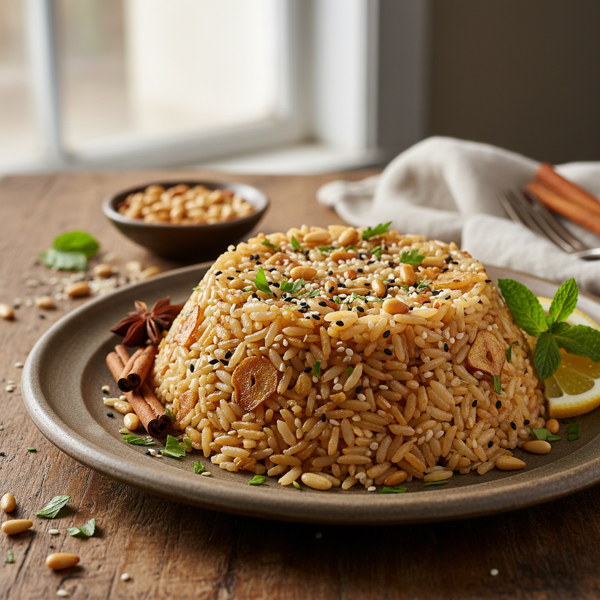
This Nutty Pine and Sesame Rice Pilaf is a delightful Armenian dish that elegantly marries the rich flavors of lightly roasted pine nuts and sesame seeds with perfectly cooked rice. Traditionally served as a complementary side dish to roasted meats, this pilaf boasts a subtle, nutty essence that enhances any meal. With roots tracing back to Arabian influences during historical conquests, this recipe reflects the culinary heritage shared across regions. Whether you're hosting a grand dinner or simply looking to elevate a weeknight meal, this pilaf offers a warm, comforting experience that speaks of tradition and flavor.
4
Servings
N/A
Calories
9
Ingredients
Ingredients
Butter
3 tablespoons (melted)
Rice
1 cup (rinsed and drained)
Vegetable broth
1 cup (or chicken/beef broth)
Water
1 cup
Pine nuts
1/2 cup (lightly roasted)
Sesame seeds
1/4 cup (lightly roasted)
Salt
1 teaspoon
Pepper
1/2 teaspoon
Fenugreek leaves
1 teaspoon
Instructions
1
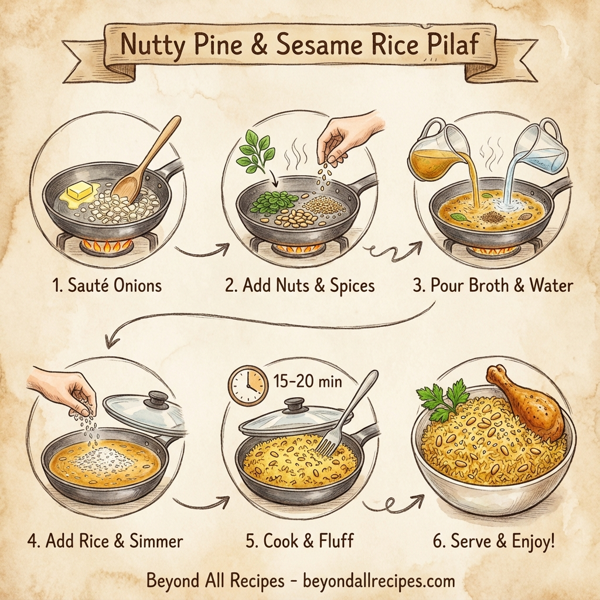
In a large sauté pan, melt the butter over medium heat. Add the chopped onion and sauté until it softens and starts to caramelize, approximately 10 minutes.
2
Stir in the fenugreek leaves, roasted pine nuts, and sesame seeds. Cook for an additional 10 minutes until the onions are completely wilted and the mixture is fragrant.
3
Season with salt and pepper. Pour in the vegetable broth and water, bringing the mixture to a gentle boil.
4
Once boiling, add the rinsed rice, and return to a boil. Lower the heat to a simmer and cover the pan.
5
Cook for 15-20 minutes until the rice is fully cooked. If using brown rice, extend the cooking time by an additional 15-20 minutes.
6
Fluff the pilaf with a fork before serving. Enjoy warm as a delightful side to roasted meats or enjoy it on its own!
Nutrition Information
Frequently Asked Questions
Frequently Asked Questions
What is Nutty Pine and Sesame Rice Pilaf?
It is a traditional Armenian side dish featuring rice cooked with butter, caramelized onions, roasted pine nuts, and sesame seeds.
What are the primary flavors in this dish?
The dish has a rich, nutty essence derived from lightly roasted pine nuts and sesame seeds, complemented by savory caramelized onions and fenugreek leaves.
How many servings does this recipe provide?
This recipe is designed to yield 4 servings.
Is this recipe suitable for vegetarians?
Yes, as long as you use vegetable broth as the liquid base, this recipe is entirely vegetarian.
Can I use brown rice instead of white rice?
Yes, you can use brown rice, but you will need to extend the cooking time by an additional 15 to 20 minutes.
How long should I sauté the onions?
The onions should be sautéed in butter for approximately 10 minutes until they soften and begin to caramelize.
What is the historical origin of this pilaf?
This Armenian dish has roots tracing back to Arabian influences during historical conquests and the era of the Silk Road.
Do I need to roast the pine nuts and sesame seeds?
Yes, the recipe calls for the pine nuts and sesame seeds to be lightly roasted to enhance their flavor.
What type of broth should I use?
You can use vegetable broth, chicken broth, or beef broth depending on your preference.
What are fenugreek leaves?
Fenugreek leaves are a fragrant herb used in this recipe to add a unique, slightly nutty and savory flavor.
Should the rice be rinsed before cooking?
Yes, the rice should be rinsed and drained before being added to the pan to ensure a better texture.
How much butter is required for this recipe?
The recipe requires 3 tablespoons of melted butter.
What is the ratio of liquid to rice?
This recipe uses 2 cups of liquid (1 cup broth and 1 cup water) for 1 cup of rice.
How long does the rice take to cook?
Standard white rice takes 15 to 20 minutes to cook once it reaches a simmer.
What should I do once the rice is finished cooking?
You should fluff the pilaf with a fork before serving to separate the grains.
What are the recommended seasonings?
The recipe is seasoned with 1 teaspoon of salt and 1/2 teaspoon of pepper.
What does this pilaf pair well with?
It is traditionally served as a side dish to roasted meats but can also be enjoyed on its own.
Can I substitute the pine nuts if I have an allergy?
While pine nuts are traditional, you could substitute them with slivered almonds or omit them if necessary.
Is this recipe gluten-free?
Yes, rice is naturally gluten-free; however, ensure your broth is certified gluten-free to be certain.
Can I use oil instead of butter?
Yes, you can substitute butter with olive oil or another cooking oil, though the flavor profile will change slightly.
How long do I cook the nut and seed mixture with the onions?
After adding the fenugreek, pine nuts, and sesame seeds, cook the mixture for an additional 10 minutes.
Why is the heat lowered to a simmer?
Lowering the heat ensures the rice absorbs the liquid evenly without burning the bottom of the pan.
Can I make this dish in advance?
Yes, it can be made ahead and reheated, though it is best served fresh and warm.
What is the texture of the finished pilaf?
The pilaf should be fluffy with individual grains of rice and a slight crunch from the nuts and seeds.
What is the significance of the Silk Road tag?
It indicates the recipe's heritage and the historical exchange of ingredients like sesame and pine nuts across regions.
Do I cover the pan while the rice cooks?
Yes, the pan should be covered while the rice simmers to trap the steam.
Is this recipe spicy?
No, this is a savory and nutty dish with no heat or spicy ingredients.
What is the preparation for the onion?
The onion should be chopped before being sautéed in the butter.
Can I add other vegetables to this pilaf?
While not in the traditional recipe, you can add peas or small diced carrots for extra color and nutrition.
How do I reheat leftovers?
Reheat in a pan on the stove with a splash of water or broth to keep the rice from drying out.