Nutty Millet-Oat Gluten-Free Sandwich Bread
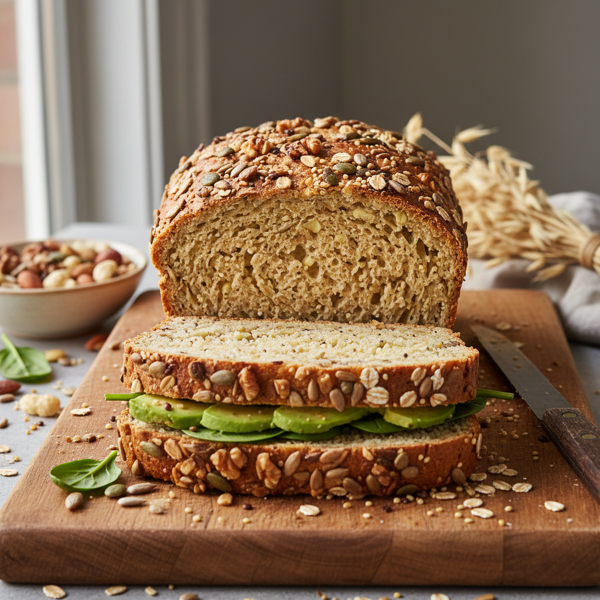
This Nutty Millet-Oat Gluten-Free Sandwich Bread is a delightful, wholesome loaf that has become a staple in my kitchen. Inspired by my mother's relentless quest for the perfect gluten-free sandwich bread, this recipe showcases a harmonious blend of nutritious flours including brown rice, oat, and millet. It rises beautifully, providing a soft yet sturdy structure ideal for sandwiches or enjoyed toasted with your favorite spread. With an optimal balance of taste and health, this bread is made without excessive starches, making it more nutritious than most gluten-free options. Freezing slices with wax paper ensures you can enjoy this freshly baked bread anytime, simply defrosting each slice in seconds for optimal texture. This recipe yields either one generous 10-inch loaf or two 8-inch loaves, perfect for family meals or to share with friends.
N/A
Servings
N/A
Calories
16
Ingredients
Ingredients
Brown rice flour
1 cup (Sifted)
Oat flour
1/2 cup (Can be made from pulverized oats)
Millet flour
3/4 cup (Sifted)
Arrowroot
1/3 cup (Can substitute with cornstarch)
Sweet rice flour
1/3 cup (Sifted)
Flax seed meal
1/4 cup (Sifted)
Xanthan gum
1 tablespoon (Sifted)
Eggs
3 (Room temperature)
Apple cider vinegar
1 teaspoon (N/A)
Active dry yeast
1/4 ounce (1 packet or about 2 1/4 tsp)
Granulated sugar
1 teaspoon (For proofing yeast)
Molasses
1 tablespoon (N/A)
Brown sugar
3 tablespoons (N/A)
Salt
1 1/2 teaspoons (N/A)
Butter
4 tablespoons (Melted)
Water
1/4 cup and 1 cup (Heated to ~120°F)
Instructions
1
Ensure all dry ingredients and eggs are at room temperature for optimal mixing.
2
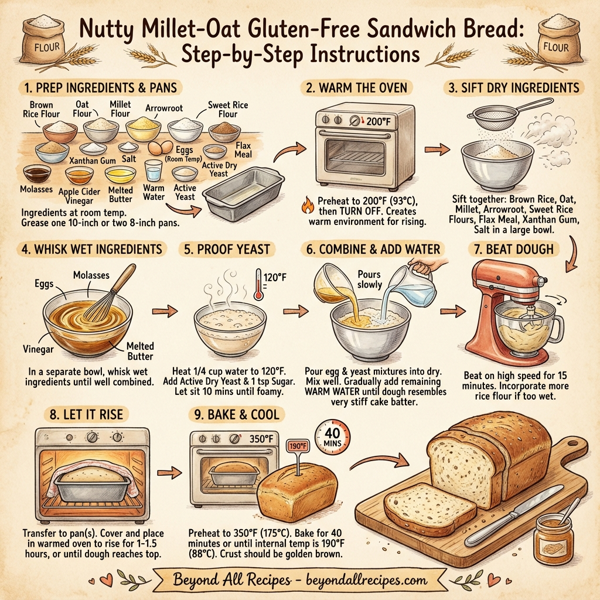
Grease the bottom of one 10-inch loaf pan or two 8-inch loaf pans. Preheat your oven to 200°F (93°C), then turn it off; this creates a warm environment for the dough to rise.
3
In the bowl of a stand mixer, sift together all the dry ingredients: brown rice flour, oat flour, millet flour, arrowroot (or cornstarch), sweet rice flour, flax seed meal, xanthan gum, and salt.
4
In a separate medium bowl, whisk together the eggs, molasses, apple cider vinegar, and melted butter until well combined.
5
To proof the yeast, heat 1/4 cup of water to approximately 120°F (49°C). In a small bowl, combine the active dry yeast with 1 teaspoon of granulated sugar. Pour in the heated water and stir gently. Let it sit for 10 minutes until foamy; if it doesn't foam, use a fresh packet of yeast.
6
Once the yeast is ready, pour the egg mixture into the dry ingredients and mix well. Gradually add the remaining warm water, checking the consistency until the dough resembles very stiff cake batter—add water slowly as different flours absorb moisture differently.
7
Beat the dough in the mixer on high speed for about 15 minutes; if the mixture is too wet, incorporate more rice flour to reach the desired consistency.
8
Transfer the dough into the prepared pan(s) and cover with plastic wrap or a clean towel. Place the pan(s) in the warmed oven to rise for 1 to 1.5 hours, or until the dough rises to the top of the pan.
9
Preheat your oven to 350°F (175°C). Once risen, bake the bread for 40 minutes or until the internal temperature reaches 190°F (88°C). The crust should be golden brown and the bread should sound hollow when tapped.
Nutrition Information
Frequently Asked Questions
Frequently Asked Questions
What is Nutty Millet-Oat Gluten-Free Sandwich Bread?
It is a wholesome, nutritious gluten-free loaf made with a blend of brown rice, oat, and millet flours, designed to be soft yet sturdy enough for sandwiches.
What flours are used in this gluten-free bread recipe?
The recipe uses brown rice flour, oat flour, millet flour, and sweet rice flour.
Is this bread suitable for a gluten-free diet?
Yes, this recipe is specifically designed to be gluten-free.
What size loaf pan should I use?
You can use one generous 10-inch loaf pan or two 8-inch loaf pans.
What temperature should the ingredients be before mixing?
All dry ingredients and eggs should be at room temperature for optimal mixing.
How do I create a warm environment for the dough to rise?
Preheat your oven to 200°F (93°C), then turn it off before placing the dough inside to rise.
Can I substitute arrowroot in this recipe?
Yes, arrowroot can be substituted with an equal amount of cornstarch.
How do I proof the yeast for this bread?
Combine active dry yeast with 1 teaspoon of granulated sugar and 1/4 cup of water heated to 120°F (49°C). Let it sit for 10 minutes until foamy.
What temperature should the water be for proofing the yeast?
The water should be approximately 120°F (49°C).
What should I do if my yeast does not foam during proofing?
If the yeast mixture does not foam after 10 minutes, you should discard it and use a fresh packet of yeast.
What consistency should the bread dough have?
The dough should resemble a very stiff cake batter.
How long should I beat the dough in the stand mixer?
Beat the dough on high speed for about 15 minutes.
What if my dough mixture is too wet after mixing?
If the mixture is too wet, you can incorporate more rice flour until you reach the desired consistency.
How long does the dough need to rise?
The dough needs to rise for 1 to 1.5 hours, or until it reaches the top of the pan.
At what temperature should the bread be baked?
The bread should be baked at 350°F (175°C).
How long does it take to bake the loaf?
The baking time is approximately 40 minutes.
What is the target internal temperature for the finished bread?
The internal temperature should reach 190°F (88°C).
How can I tell the bread is done without a thermometer?
The crust should be golden brown and the loaf should sound hollow when tapped.
Can I freeze this gluten-free bread?
Yes, you can freeze slices of this bread with wax paper between them to enjoy later.
How do I defrost the frozen bread slices?
Frozen slices can be defrosted in seconds to maintain an optimal texture.
Is this bread healthier than store-bought gluten-free options?
This bread is considered more nutritious because it is made without excessive starches and uses whole-grain flours like millet and oat.
What is the purpose of adding molasses to the recipe?
Molasses is whisked with the wet ingredients to contribute to the flavor and texture of the bread.
Should the dry ingredients be sifted?
Yes, the recipe recommends sifting together all the dry ingredients including flours, starches, flax meal, and xanthan gum.
Does this recipe contain xanthan gum?
Yes, it uses 1 tablespoon of xanthan gum to provide structure in the absence of gluten.
Can I make my own oat flour for this recipe?
Yes, oat flour can be made by pulverizing oats until they reach a flour consistency.
How many eggs are required?
The recipe requires 3 room-temperature eggs.
What role does flax seed meal play?
Flax seed meal adds nutritional value and helps with the nutty flavor and structure of the bread.
Is there any vinegar in the recipe?
Yes, 1 teaspoon of apple cider vinegar is included in the wet ingredients.
Does this bread use butter?
Yes, it uses 4 tablespoons of melted butter.
How many total dry ingredients are sifted together?
There are 8 dry ingredients sifted together: brown rice flour, oat flour, millet flour, arrowroot, sweet rice flour, flax seed meal, xanthan gum, and salt.