Nutritious Quinoa Noodles
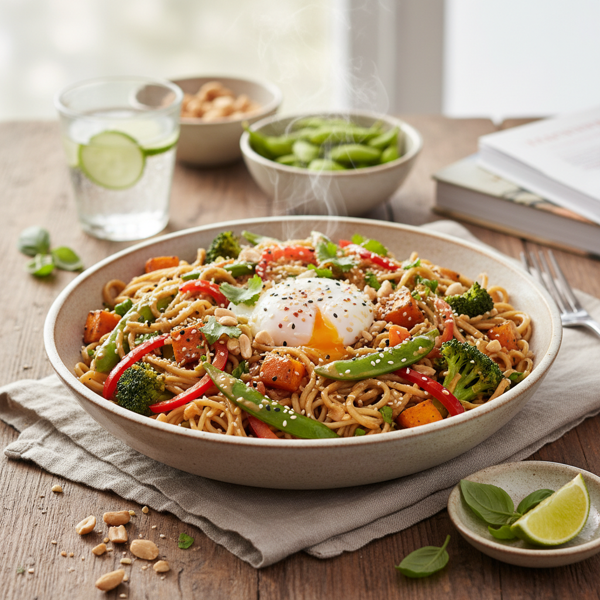
Delight in the goodness of these Nutritious Quinoa Noodles! This innovative recipe proves that you can enjoy homemade pasta without grains while packing a punch with complete protein from quinoa. Perfect for families seeking healthy meals, these noodles are versatile, allowing you to shape them in various forms such as fettuccine, lasagna, or even shapes loved by kids. Enjoy them in your favorite sauce or tossed with fresh veggies for a delightful dish that the whole family will adore!
3
Servings
180
Calories
5
Ingredients
Ingredients
Quinoa flour
1 cup (Finely ground)
Arrowroot flour
1/2 cup (Plain)
Sea salt
1/2 teaspoon (Fine)
Eggs
2 (Large, beaten)
Olive oil
2 tablespoons (Extra virgin)
Instructions
1
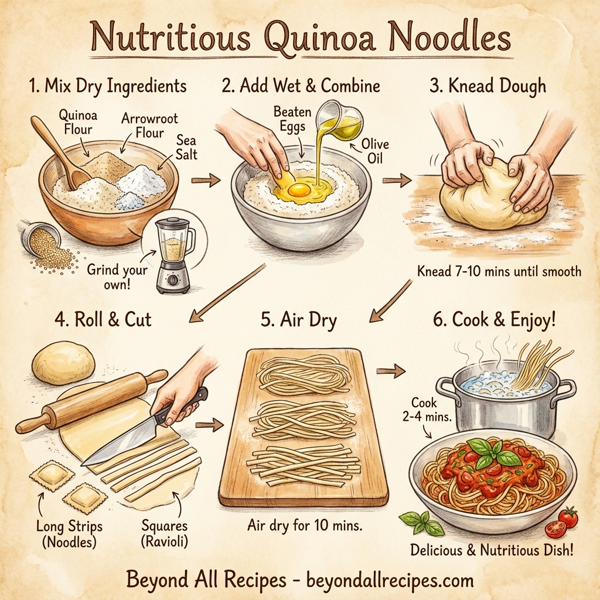
In a large mixing bowl, combine the quinoa flour, arrowroot flour, and sea salt. To make your own quinoa flour, simply grind quinoa grains in a high-speed blender or clean coffee grinder until finely ground.
2
Create a well in the center of the flour mixture and add the beaten eggs and olive oil.
3
Mix the ingredients with a fork until combined, then knead the dough by hand for approximately 7-10 minutes until it becomes smooth and no longer crumbles.
4
Divide the dough into two equal halves. Roll out one half on a lightly floured surface to your desired thickness (aim for the thickness of cardboard).
5
Using a sharp chef’s knife, cut the rolled dough into long strips of your preferred width. For a classic noodle shape, aim for about a quarter of an inch thick. Feel free to experiment with shapes, like squares for ravioli or wider strips for lasagna.
6
Let the cut pasta air dry on a clean surface for 10 minutes to firm up slightly.
7
At this point, you can choose to cook the pasta immediately or store it in the refrigerator for up to two days.
8
When ready to cook, bring a pot of salted water to a boil. Fresh quinoa noodles will typically cook in about 2-4 minutes, so keep an eye on them to prevent overcooking.
Nutrition Information
6g
Fat
30g
Carbs
8g
Protein
2.67g
Fiber
Frequently Asked Questions
Frequently Asked Questions
What are Nutritious Quinoa Noodles?
Nutritious Quinoa Noodles are an innovative, grain-free homemade pasta alternative made primarily from quinoa flour and arrowroot flour, providing a complete protein source.
How long does it take to cook fresh quinoa noodles?
Fresh quinoa noodles typically cook very quickly, usually in about 2 to 4 minutes once added to boiling water.
Are these quinoa noodles gluten-free?
Yes, these noodles are gluten-free as they use quinoa and arrowroot flours instead of wheat.
What ingredients are needed for this recipe?
You will need 1 cup of quinoa flour, 1/2 cup of arrowroot flour, 1/2 teaspoon of sea salt, 2 large beaten eggs, and 2 tablespoons of extra virgin olive oil.
How many servings does this recipe yield?
This recipe makes approximately 3 servings.
Can I make my own quinoa flour?
Yes, you can make your own by grinding quinoa grains in a high-speed blender or clean coffee grinder until they reach a fine powder consistency.
How long should I knead the quinoa dough?
You should knead the dough by hand for approximately 7 to 10 minutes until it is smooth and no longer crumbles.
How thin should I roll the dough?
Aim for a thickness similar to a piece of cardboard for the best noodle texture.
Do I need to dry the noodles before cooking?
Yes, let the cut pasta air dry on a clean surface for about 10 minutes to help it firm up before boiling.
Can I store the uncooked dough?
Yes, you can store the prepared dough or cut noodles in the refrigerator for up to two days.
Is this recipe kid-friendly?
Yes, these noodles are designed to be kid-friendly and can be cut into fun shapes or served with any sauce kids enjoy.
What is the calorie count for a serving of these noodles?
Each serving contains approximately 180 calories.
How much protein is in these quinoa noodles?
There are 8 grams of protein per serving, making them a high-protein pasta alternative.
What types of pasta shapes can I make with this dough?
The dough is versatile and can be used for fettuccine, lasagna sheets, ravioli squares, or thin noodles.
What is the role of arrowroot flour in this recipe?
Arrowroot flour acts as a starch that helps bind the grain-free dough and gives the noodles a better texture.
How much fat is in one serving?
Each serving contains 6 grams of fat.
Are these noodles considered grain-free?
Yes, as quinoa is technically a pseudo-cereal and arrowroot is a tuber, these are grain-free.
Can I use these for lasagna?
Yes, simply cut the rolled dough into wide strips to use as lasagna noodles.
What is the carbohydrate content?
One serving provides 30 grams of carbohydrates.
Is this recipe suitable for vegetarians?
Yes, this recipe is vegetarian-friendly as it contains eggs but no meat products.
How much fiber is in the noodles?
Each serving provides 2.67 grams of dietary fiber.
What kind of oil is best for this recipe?
Extra virgin olive oil is recommended for its flavor and healthy fat content.
Should the eggs be beaten before adding to the flour?
Yes, the 2 large eggs should be beaten before being added to the well in the flour mixture.
What tools do I need to cut the noodles?
You can use a sharp chef's knife to manually cut the rolled dough into strips.
Can I use sea salt in this recipe?
Yes, 1/2 teaspoon of fine sea salt is included in the dry ingredient mix for seasoning.
How do I prevent the noodles from overcooking?
Monitor them closely while boiling; they are done in just a few minutes and should be removed once they reach an al dente texture.
What should the water be like before adding the noodles?
The water should be at a full boil and generously salted.
How do I mix the wet and dry ingredients initially?
Create a well in the center of the flour, add the oil and eggs, and use a fork to combine them before switching to hand kneading.
Are these noodles high in protein?
Yes, because of the quinoa and eggs, they are a great source of complete protein.
What is the best way to serve these noodles?
They are delicious when tossed with your favorite sauce or sautéed with fresh vegetables.