Nutrient-Rich Sprouted Brown Rice
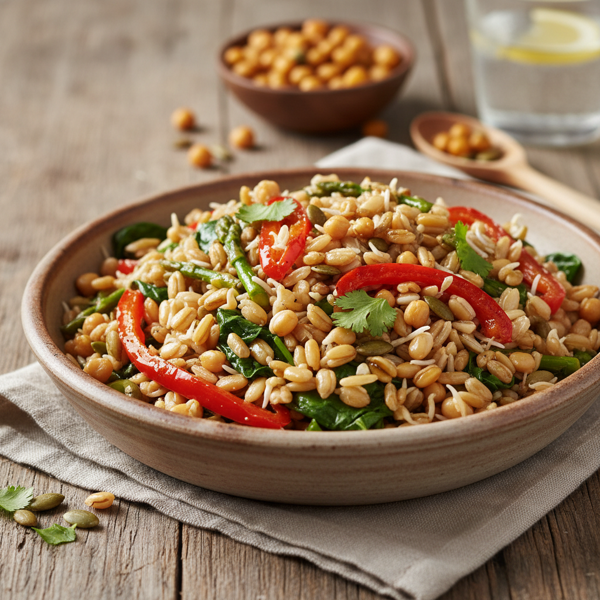
Sprouting brown rice brings an incredible boost to its nutritional profile by enhancing the bioavailability of vitamins and minerals while reducing anti-nutrients found in the hull. This simple yet effective method unlocks flavors and textures, making your dishes more delicious and healthful. Perfect for salads, stir-fries, or as a wholesome side dish, sprouted brown rice is versatile and can be made with any type of whole grain brown rice, from short to long grain, or even specialty varieties like sweet or sushi rice. Enjoy the benefits of this ancient practice in your modern kitchen!
1
Servings
N/A
Calories
2
Ingredients
Ingredients
Whole brown rice
1 cup (Rinsed)
Water
2 cups (For soaking)
Instructions
1
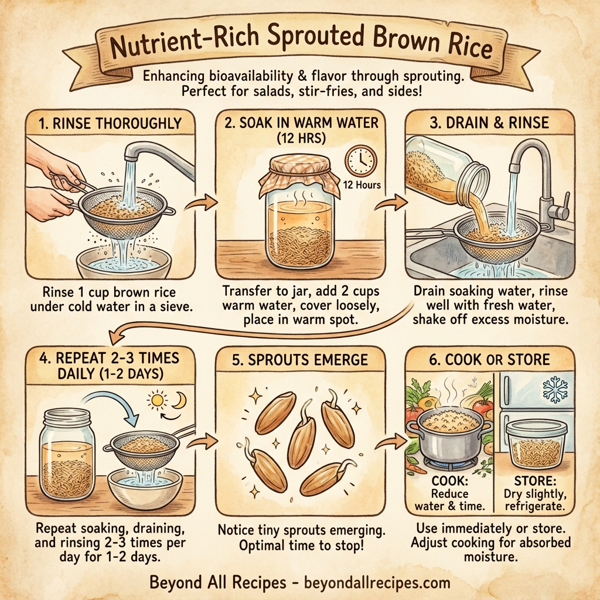
Begin by rinsing 1 cup of whole brown rice thoroughly in a sieve under cold running water. This removes any dust or impurities from the grains.
2
Transfer the rinsed rice into a clean glass jar or bowl. Add 2 cups of warm water (enough to fully submerge the rice), cover the container loosely with a towel to deter pests and place it in a warm area of your kitchen for approximately 12 hours.
3
After soaking, pour the rice back into the sieve and drain off the soaking liquid. Rinse the rice well under fresh water, and shake off any excess moisture before returning it to your soaking vessel.
4
Settle the rice again with water and repeat the process of draining, rinsing, and soaking 2 to 3 times per day. Alternatively, you can keep the rice in the sieve over a bowl and continue with the rinsing and draining routine.
5
In 1 to 2 days, you’ll notice tiny sprouts emerging from the end of the rice grains. This is the ideal time to stop the sprouting process to ensure optimal flavor and freshness.
6
Use the sprouted rice immediately in your favorite dishes, or store it in the refrigerator after allowing it to dry out slightly. When cooking sprouted brown rice, remember to reduce the amount of water used and shorten the cooking time, as the grains have already absorbed moisture during the sprouting process.
Nutrition Information
Frequently Asked Questions
Frequently Asked Questions
What is Nutrient-Rich Sprouted Brown Rice?
It is brown rice that has been germinated to enhance its nutritional profile, bioavailability of vitamins, and minerals.
What are the benefits of sprouting brown rice?
Sprouting enhances vitamin and mineral bioavailability while reducing anti-nutrients found in the hull.
What type of rice can I use for this recipe?
You can use any whole grain brown rice, including short grain, long grain, sweet rice, or sushi rice.
How much rice do I need to start?
The recipe calls for 1 cup of whole brown rice.
How much water is needed for soaking?
You will need 2 cups of warm water for the initial soaking process.
Why should I rinse the rice first?
Rinsing thoroughly in a sieve removes any dust or impurities from the grains.
How long should the rice soak initially?
The rice should soak in a warm area for approximately 12 hours.
What kind of container should I use for sprouting?
A clean glass jar or a bowl is ideal for the soaking and sprouting process.
Should I cover the container during soaking?
Yes, cover the container loosely with a towel to deter pests.
What is the rinsing routine after the initial soak?
After the first 12 hours, drain the liquid and rinse the rice well with fresh water.
How many times a day should I rinse and drain the rice?
You should repeat the draining, rinsing, and soaking process 2 to 3 times per day.
Can I leave the rice in a sieve?
Yes, you can keep the rice in the sieve over a bowl while continuing the rinsing routine.
How long does it take for the sprouts to emerge?
Tiny sprouts typically emerge within 1 to 2 days.
When is the best time to stop the sprouting process?
Stop the process as soon as you see tiny sprouts emerging to ensure optimal flavor.
Is sprouted brown rice gluten-free?
Yes, sprouted brown rice is a gluten-free whole grain.
Is this recipe suitable for vegetarians?
Yes, this is a vegetarian and vegan-friendly recipe.
How should I store sprouted rice?
Store it in the refrigerator after allowing it to dry out slightly if not using it immediately.
Can I use sprouted rice in salads?
Yes, it is versatile and perfect for salads, stir-fries, or as a side dish.
Do I need to change the water when cooking sprouted rice?
Yes, when cooking, remember to use fresh water and reduce the amount compared to regular rice.
Does sprouted rice cook faster?
Yes, you should shorten the cooking time as the grains have already absorbed moisture.
What does sprouting do to the texture?
Sprouting unlocks better textures and enhances the natural flavors of the grain.
What are anti-nutrients?
They are substances in grains that can block mineral absorption; sprouting helps reduce them.
Can I use cold water for the initial soak?
The recipe recommends warm water to help kickstart the germination process.
Where is the best place to keep the sprouting jar?
Place it in a warm area of your kitchen for the best results.
Is sprouted rice considered an ancient grain?
Sprouting itself is an ancient practice applied to grains like brown rice.
How many servings does this recipe make?
This recipe is based on 1 serving of prepared rice.
Can I sprout sushi rice specifically?
Yes, specialty varieties like sushi rice can be sprouted using this method.
What happens if I sprout the rice for too long?
It is best to stop when sprouts are tiny to maintain the best flavor and freshness.
Is the rinsing water reusable?
No, you should drain off the soaking liquid and use fresh water for each rinse.
Is sprouted brown rice low in protein?
It is categorized as a low protein food relative to other high-protein sources.