Nourishing Gluten-Free Brown Rice Sourdough Starter
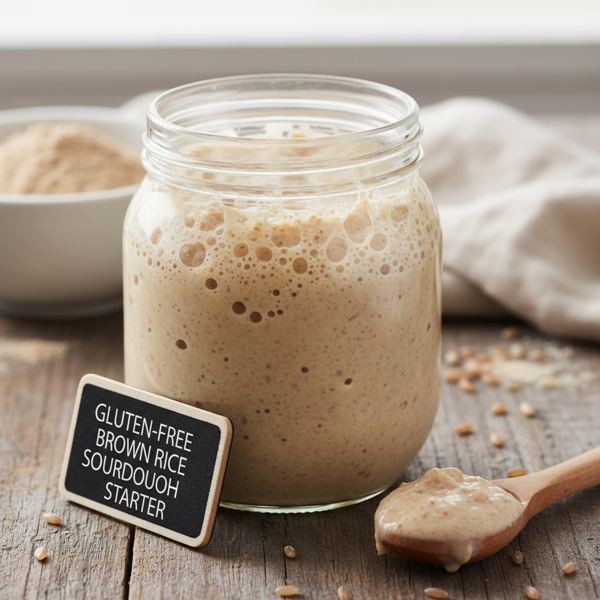
Embrace the tangy delight of sourdough with this nourishing gluten-free brown rice sourdough starter. Perfect for those avoiding gluten, this recipe harnesses the power of commercial yeast to cultivate a lively starter that can be transformed into delectable baked goods. With just a few simple ingredients, including brown rice flour for a wholesome flavor and brown sugar for an enticing hint of sweetness, you can recreate the classic sourdough experience without gluten. While this starter uses commercial yeast for reliability, it lays the groundwork for potentially exploring wild yeast fermentation in the future. Whether you're a seasoned baker or new to the sourdough world, this starter is your gateway to delectable gluten-free bread, pancakes, and more. Get ready to enjoy the joy of sourdough baking again with this versatile starter!
N/A
Servings
N/A
Calories
4
Ingredients
Ingredients
Commercial yeast
2 tablespoons (Unactivated (dry))
Warm filtered water
2 cups (Around 110°F (43°C))
Brown rice flour
2 cups (Unbleached, gluten-free)
Brown sugar
2 tablespoons (Unrefined or light)
Instructions
1
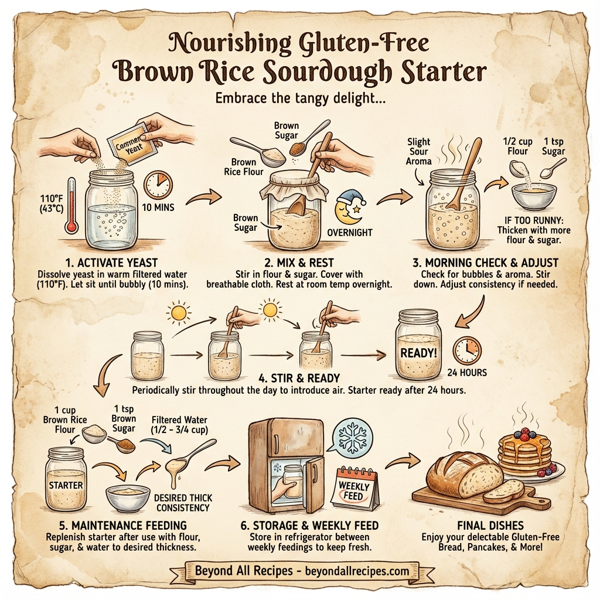
Begin by dissolving the commercial yeast in warm filtered water in a sterilized glass jar or crock. Ensure the water is around 110°F (43°C) to create an ideal environment for the yeast to activate. Allow the mixture to sit for about 10 minutes until it's bubbly.
2
Once bubbling, gently stir in the brown rice flour and brown sugar until fully combined. The mixture will be thick; cover the jar with a breathable cloth or lid that allows airflow and let it rest at room temperature overnight.
3
The next morning, check your starter. It should have developed a slightly sour aroma and some bubbles. Stir down the mixture with a clean wooden spoon. If the mixture appears too runny, stir in an additional 1/2 cup of brown rice flour and 1 teaspoon of brown sugar to thicken it.
4
Throughout the day, periodically give the starter a few gentle stirs to introduce air. After 24 hours, your starter will be ready to use in your favorite sourdough recipes.
5
To maintain your starter, follow these feeding guidelines: if you use 1 cup of your starter, replenish the remaining starter with 1 cup of brown rice flour, 1 teaspoon of brown sugar, and enough filtered water to achieve your desired consistency, usually around 1/2 to 3/4 cup. I prefer keeping my starter on the thicker side for better flavor.
6
Feed your starter weekly, and remember to store it in the refrigerator between feedings to keep it fresh and active.
Nutrition Information
Frequently Asked Questions
Frequently Asked Questions
What is the Nourishing Gluten-Free Brown Rice Sourdough Starter?
It is a starter made with brown rice flour and commercial yeast, designed for those who want a reliable gluten-free sourdough experience.
Is this sourdough starter gluten-free?
Yes, it is specifically designed for gluten-free baking using brown rice flour.
What kind of flour should I use for this recipe?
The recipe calls for unbleached, gluten-free brown rice flour.
Does this starter use wild yeast?
No, this version uses commercial yeast for reliability, though it lays the groundwork for future wild yeast exploration.
What is the purpose of brown sugar in the starter?
Brown sugar provides a hint of sweetness and helps cultivate the starter environment.
What temperature should the water be for the yeast?
The filtered water should be around 110 degrees Fahrenheit or 43 degrees Celsius.
How long does the yeast need to sit in water initially?
Allow the yeast and warm water mixture to sit for about 10 minutes until it becomes bubbly.
What type of container is best for the starter?
A sterilized glass jar or a crock is recommended.
How should I cover the jar?
Use a breathable cloth or a lid that allows for airflow.
Where should the starter rest during the first night?
The starter should rest at room temperature overnight.
What should the starter look like the morning after it is made?
It should have developed some bubbles and a slightly sour aroma.
What if the starter appears too runny?
You can stir in an additional 1/2 cup of brown rice flour and 1 teaspoon of brown sugar to thicken it.
Why do I need to stir the starter periodically during the day?
Periodic stirring introduces air into the mixture, which is beneficial for the cultivation process.
When is the starter ready to be used in recipes?
The starter is ready to use after 24 hours.
How do I replenish the starter after use?
Replenish it with 1 cup of brown rice flour, 1 teaspoon of brown sugar, and filtered water.
What is the feeding ratio for maintenance?
If you use 1 cup of starter, replace it with 1 cup of flour and 1 teaspoon of sugar.
How much water is needed when feeding the starter?
Usually 1/2 to 3/4 cup of filtered water is used to achieve the desired consistency.
What is the ideal consistency for this sourdough starter?
The starter is better when kept on the thicker side for improved flavor.
How often should the starter be fed?
The starter should be fed weekly.
Where should the starter be stored between feedings?
It should be stored in the refrigerator to keep it fresh and active.
Is this recipe suitable for vegans?
Yes, the ingredients used in this starter are vegan-friendly.
What can I make with this gluten-free starter?
It can be used for gluten-free bread, pancakes, and other sourdough-based baked goods.
What kind of yeast is used?
The recipe uses 2 tablespoons of unactivated dry commercial yeast.
What type of brown sugar is recommended?
Unrefined or light brown sugar is recommended for this recipe.
Should I use a specific type of spoon for stirring?
The instructions suggest using a clean wooden spoon.
Is it necessary to use filtered water?
Yes, the recipe specifically calls for filtered water for best results.
Does the brown rice flour need to be bleached?
No, you should use unbleached brown rice flour.
Can I use this for wild yeast fermentation later?
Yes, this starter provides a great foundation for those looking to eventually explore wild yeast.
How many ingredients are in this recipe?
This recipe requires 4 main ingredients: yeast, water, flour, and sugar.
What category of food is this?
This is categorized as a sourdough starter for gluten-free baking.