Northern Croatian Beef Schnitzel Stew
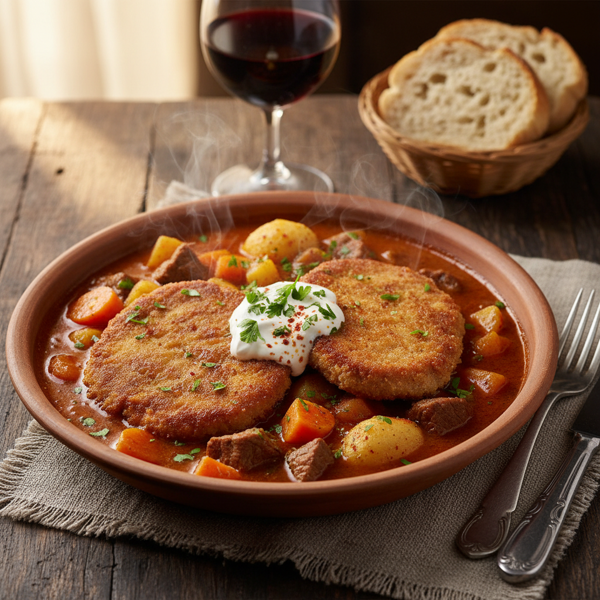
Indulge in a hearty Northern Croatian Beef Schnitzel Stew, a rustic dish that embodies the culinary traditions passed down through generations. This recipe focuses on whole beef schnitzels, tenderly sautéed with rich onions, aromatic spices, and a splash of dry white wine. Unlike typical goulash, this dish highlights the satisfying texture and full flavor of the schnitzels, simmered to perfection in a comforting stew. Serve it over your favorite pasta or creamy mashed potatoes for a complete meal that tells a story of family heritage and rich Croatian cuisine.
4
Servings
N/A
Calories
13
Ingredients
Ingredients
Beef Schnitzels
1000 g (Cut into flattened pieces)
Onions
500 g (Finely minced)
Lard (or Oil)
15 g (For sautéing)
Dried Sweet Paprika
2 teaspoons (For seasoning)
Dried Hot Paprika
1/2 teaspoon (For seasoning)
Salt
15 g (To taste)
Pepper
10 g (To taste)
Dry White Wine
1 cup (For deglazing)
Water
2 cups (As needed for simmering)
Dried Thyme
1/2 teaspoon (For seasoning)
Flour
1 tablespoon (To thicken)
Caraway Seed (optional)
1/4 teaspoon (For seasoning)
Sour Cream (optional)
50 g (For serving)
Instructions
1
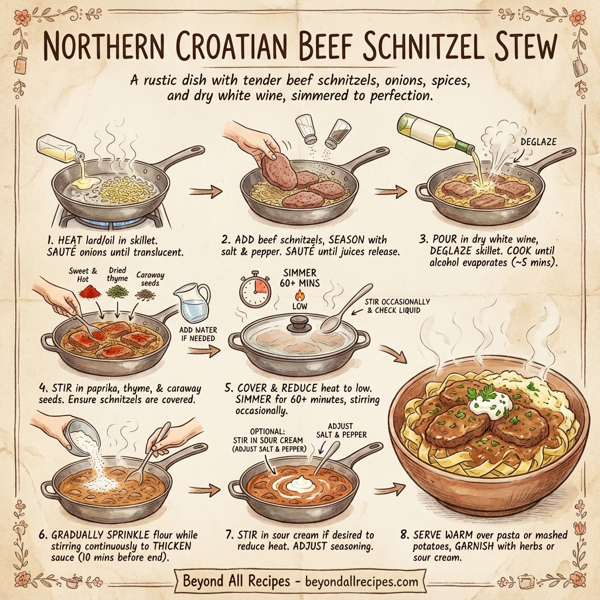
In a large skillet, heat the lard (or oil) over medium heat. Add the finely minced onions and sauté until they become translucent and fragrant.
2
Gently add the prepared beef schnitzels to the skillet, seasoning them with salt and pepper. Sauté until the meat begins to release its juices.
3
Pour in the dry white wine, allowing it to deglaze the skillet. Cook until the alcohol evaporates, about 5 minutes.
4
Stir in the sweet and hot paprika, thyme, and optional caraway seeds, mixing well. Ensure the schnitzels are covered in the mixture; add water if necessary.
5
Cover the skillet and reduce the heat to low. Simmer the beef for at least 60 minutes, stirring occasionally and checking to make sure there’s enough liquid.
6
About 10 minutes before the end of cooking, gradually sprinkle in the flour while stirring continuously to thicken the sauce. Be careful not to add it too quickly.
7
If desired, stir in the sour cream to reduce the heat from the hot paprika. Adjust seasoning with additional salt and pepper if needed.
8
Serve warm over pasta or mashed potatoes, garnished with fresh herbs or a dollop of sour cream.
Nutrition Information
Frequently Asked Questions
Frequently Asked Questions
What is Northern Croatian Beef Schnitzel Stew?
It is a rustic, heritage-inspired dish featuring whole beef schnitzels simmered in a savory sauce of onions, paprika, and white wine.
What cut of beef is best for this recipe?
Beef schnitzels, which are thin pieces of beef flattened for quick cooking and tenderizing, are ideal for this stew.
Can I use oil instead of lard?
Yes, you can substitute the 15g of lard with an equal amount of your preferred cooking oil.
How many onions are required for this dish?
The recipe calls for 500g of finely minced onions to create a rich, thick base for the sauce.
Is the Northern Croatian Beef Schnitzel Stew spicy?
It has a mild heat due to the 1/2 teaspoon of dried hot paprika, which can be adjusted to your preference.
What type of wine should be used?
A dry white wine is used to deglaze the skillet and add a subtle acidity to the stew.
How long does the beef need to simmer?
The beef should simmer on low heat for at least 60 minutes to ensure it is tender and flavorful.
What is the purpose of the flour in the recipe?
One tablespoon of flour is added near the end of the cooking process to thicken the stew sauce.
Are caraway seeds mandatory?
No, caraway seeds are optional but recommended for adding a traditional earthy flavor characteristic of the region.
When should I add the sour cream?
Optional sour cream can be stirred in at the very end to reduce the heat of the paprika and add creaminess.
What are the traditional side dishes for this stew?
This dish is best served over pasta or creamy mashed potatoes to soak up the flavorful sauce.
How many servings does this recipe make?
This recipe is designed to provide 4 generous servings.
Can I make this stew in advance?
Yes, like most stews, the flavors often deepen and improve the next day when reheated gently.
What herbs are used for seasoning?
The primary herb used is dried thyme, which complements the beef and paprika perfectly.
How do I prevent the flour from forming lumps?
Gradually sprinkle the flour into the skillet while stirring continuously to ensure it integrates smoothly into the sauce.
Can I substitute the white wine?
If you prefer not to use wine, you can use a splash of beef broth or water with a teaspoon of vinegar for acidity.
What is the difference between this and regular goulash?
Unlike goulash which uses cubed meat, this recipe uses whole flattened schnitzels for a different texture and presentation.
Is this recipe considered a one-pot meal?
Yes, the entire stew is prepared in a single large skillet, making cleanup easier.
How much water is needed for simmering?
The recipe suggests 2 cups of water, but you can add more if needed to keep the meat covered during the long simmer.
Can I use sweet paprika only?
Yes, if you prefer no heat at all, you can replace the hot paprika with additional sweet paprika.
What should I do if the sauce is too thick?
Simply stir in a small amount of water or beef broth until you reach your desired consistency.
How do I prepare the onions?
Onions should be finely minced so they break down during the long cooking time, thickening the sauce naturally.
Can I use chicken schnitzels instead?
While the flavor profile will change, chicken can be used, though it will require a much shorter simmering time.
What is the role of lard in Croatian cuisine?
Lard is a traditional fat used in Northern Croatia for its high smoke point and the rich flavor it adds to savory dishes.
Is this a family-friendly recipe?
Yes, it is a comforting, hearty meal that is a staple in many Croatian households.
Can I freeze the leftovers?
Yes, the stew freezes well in an airtight container for up to three months.
How do I know when the meat is done?
The meat is done when it is fork-tender after simmering for at least an hour.
Can I add vegetables like carrots?
While not traditional for this specific schnitzel stew, adding carrots or bell peppers is a common variation.
What should I garnish the dish with?
You can garnish with fresh parsley, additional herbs, or a dollop of fresh sour cream.
What is the origin of this recipe?
This recipe originates from Northern Croatia, known for its rich, warming meat-based stews and Central European influences.