Nobu-Style Asian Matsuhisa Dressing
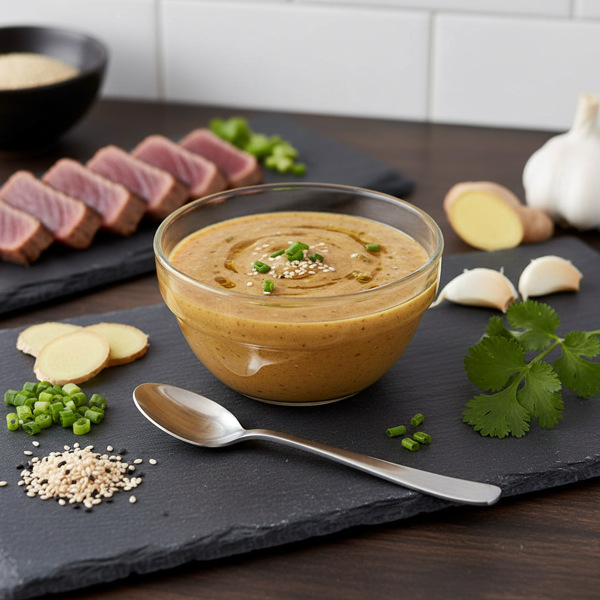
This exquisite dressing hails from the legendary Nobu restaurant, known for its creative fusion of Japanese and Peruvian cuisine. Traditionally served over a delicate salad of lightly seared ahi tuna, this dressing can effortlessly elevate any salad to a culinary masterpiece. With its perfect balance of acidity, sweetness, and umami, it beautifully complements fresh greens, grilled vegetables, or even sushi. Explore its versatility and enjoy the rich flavors that make this dressing a favorite among food enthusiasts!
N/A
Servings
N/A
Calories
10
Ingredients
Ingredients
finely chopped onion
3/4 cup (finely chopped)
rice vinegar
2 tablespoons
water
2 teaspoons
granulated sugar
1/2 teaspoon
sea salt
1 pinch
mustard powder
1/4 teaspoon
ground black pepper
1/4 teaspoon
grapeseed oil
4 teaspoons
sesame oil
4 teaspoons
soy sauce
3 tablespoons
Instructions
1
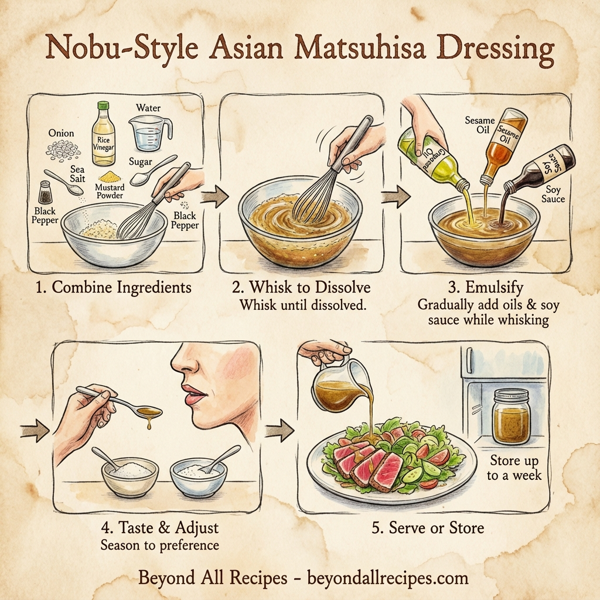
In a mixing bowl, combine the finely chopped onion, rice vinegar, water, granulated sugar, sea salt, mustard powder, and ground black pepper.
2
Whisk the mixture until the sugar, salt, and mustard powder are fully dissolved and combined.
3
Gradually add in the grapeseed oil, sesame oil, and soy sauce. Continue to whisk until all ingredients are thoroughly integrated and the dressing reaches a smooth consistency.
4
Taste and adjust seasoning as necessary, adding more salt or sugar to suit your preference.
5
Serve immediately over your favorite salad, or store in the refrigerator for up to a week to allow the flavors to meld.
Nutrition Information
Frequently Asked Questions
Frequently Asked Questions
What is Nobu-Style Asian Matsuhisa Dressing?
It is an exquisite dressing from the legendary Nobu restaurant, known for its creative fusion of Japanese and Peruvian culinary styles.
Who created the original recipe for this dressing?
The recipe originates from Chef Nobu Matsuhisa's famous Nobu restaurants.
What are the primary flavors in this dressing?
The dressing features a perfect balance of acidity, sweetness, and umami flavors.
What dish is this dressing traditionally served with?
It is traditionally served over a delicate salad featuring lightly seared ahi tuna.
Can I use this dressing for other dishes besides tuna salad?
Yes, it is highly versatile and complements fresh greens, grilled vegetables, and even sushi.
How much onion is required for the recipe?
The recipe calls for 3/4 cup of finely chopped onion.
What kind of vinegar is used in Matsuhisa Dressing?
The recipe uses 2 tablespoons of rice vinegar.
Does the recipe contain any sugar?
Yes, it includes 1/2 teaspoon of granulated sugar to balance the acidity.
What type of salt is recommended for this dressing?
A pinch of sea salt is recommended for the best flavor profile.
Is there mustard in Nobu-Style Asian Matsuhisa Dressing?
Yes, the recipe requires 1/4 teaspoon of mustard powder.
What oils are used in this recipe?
The dressing uses a combination of 4 teaspoons of grapeseed oil and 4 teaspoons of sesame oil.
How much soy sauce is needed?
The recipe calls for 3 tablespoons of soy sauce.
What is the first step in preparing the dressing?
The first step is to combine the finely chopped onion, rice vinegar, water, sugar, sea salt, mustard powder, and black pepper in a mixing bowl.
How do I ensure the dry ingredients are properly mixed?
Whisk the mixture until the sugar, salt, and mustard powder are fully dissolved before adding the oils.
How should the oils be added to the mixture?
Gradually add the grapeseed oil, sesame oil, and soy sauce while continuing to whisk for a smooth consistency.
Can I adjust the seasoning of the dressing?
Yes, you should taste the final product and add more salt or sugar as necessary to suit your preference.
How long can I store this dressing?
The dressing can be stored in the refrigerator for up to a week.
Does the flavor change over time?
Storing it in the refrigerator allows the flavors to meld, often enhancing the overall taste.
Is this dressing considered healthy?
Yes, it is tagged as a healthy, light, and refreshing dressing option.
What is the total number of ingredients in this recipe?
There are 10 total ingredients in this recipe.
What is the preparation required for the onion?
The onion should be finely chopped before being added to the mixture.
Is there water in the dressing recipe?
Yes, the recipe includes 2 teaspoons of water.
What kind of pepper should I use?
The recipe specifies using 1/4 teaspoon of ground black pepper.
Is this a Japanese-style dressing?
It is a Japanese-Peruvian fusion style dressing, often referred to as Nikkei cuisine.
Can I serve the dressing immediately?
Yes, it can be served immediately over your favorite salad.
Does this recipe use grapeseed oil specifically for a reason?
Grapeseed oil is chosen for its neutral flavor, which allows the other ingredients to shine.
What role does the sesame oil play?
Sesame oil provides a rich, nutty aroma and adds to the umami profile of the dressing.
Is this dressing suitable for fusion cuisine?
Yes, it is a prime example of fusion cuisine, blending elements from different culinary traditions.
How should the final consistency look?
The dressing should reach a smooth consistency where all ingredients are thoroughly integrated.
Why is this dressing popular among food enthusiasts?
It is popular due to its complex flavor profile and its ability to elevate simple ingredients into a culinary masterpiece.