No-Knead Artisan Boule Bread
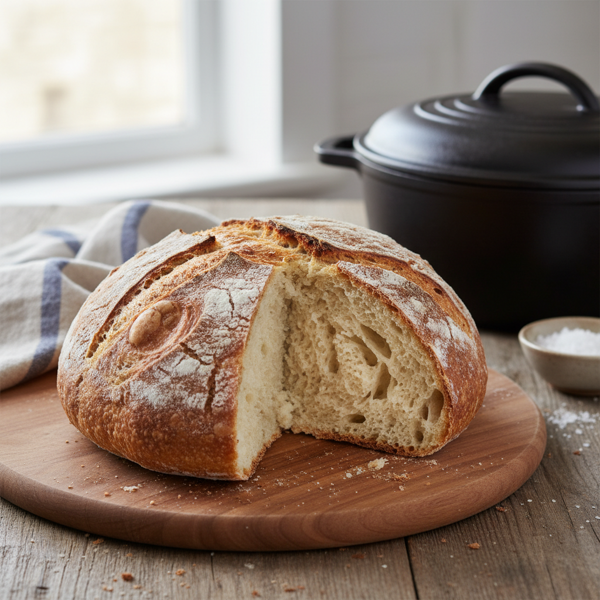
Experience the joy of freshly baked artisan bread with this incredibly simple and versatile no-knead Boule recipe inspired by 'Artisan Bread in Five Minutes a Day' by Jeff Hertzberg and Zoe Francois. This dough is a game-changer, allowing you to create delicious crusty loaves with minimal effort. Once prepared, the dough can be stored in the refrigerator for up to 14 days, giving you the flexibility to bake a fresh loaf whenever the craving strikes. The result is a beautifully textured bread with a crispy crust and soft, airy interior, perfect for sandwiches, toast, or simply enjoying with butter. Ideal for home bakers of any skill level, this recipe is a must-have for anyone who loves the smell and taste of homemade bread without the hassle of traditional kneading methods. Pair it with your favorite spreads or use it as a base for creative toppings.
N/A
Servings
N/A
Calories
4
Ingredients
Ingredients
Lukewarm Water
3 cups (Warmed slightly, feeling just a bit warmer than body temperature.)
Granulated Yeast
1 1/2 tablespoons (Can also use 2 packets (7 1/4 g each) of granulated yeast.)
Kosher Salt
1 1/2 tablespoons (Can also use other coarse salt.)
Unbleached All-Purpose Flour
6 1/2 cups (Unsifted, not strong.)
Instructions
1
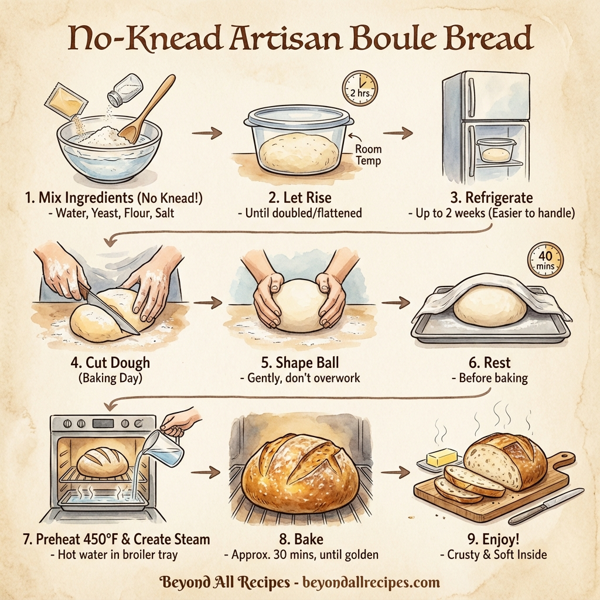
Warm the lukewarm water slightly until it feels just a bit warmer than body temperature. This will help in the dough rising to the right point in about 2 hours.
2
In a 5-quart bowl or a resealable, lidded, plastic food container, add the yeast to the water. It's okay if the yeast doesn't fully dissolve.
3
Mix in the flour and salt all at once, using a wooden spoon, a high-capacity food processor with a dough attachment, or a heavy-duty stand mixer with a dough hook. Avoid kneading; simply ensure the mixture is uniform with no dry patches.
4
Cover the mixture with a lid (not airtight) and allow it to rise at room temperature for about 2 hours, until it begins to collapse or at least flattens on the top. It can rise longer; up to 5 hours is fine.
5
After rising, the dough can be stored in the refrigerator for up to 2 weeks. It will be less sticky and easier to handle once chilled.
6
On baking day, prepare your baking surface, whether it's a loaf tin, tray, or pizza peel. Sprinkle the surface of your cold dough with flour.
7
Cut off a grapefruit-sized piece (about 1 lb) of dough using a serrated knife.
8
Shape the dough gently by pulling the surface around to the bottom on all sides, forming a smooth ball without incorporating too much flour.
9
Let the shaped dough rest and rise for about 40 minutes on the baking surface.
10
Twenty minutes before baking, preheat your oven to 450°F and place an empty broiler tray on a different shelf.
11
Dust the top of the loaf liberally with flour before slashing it with a serrated knife to create a decorative pattern.
12
Place the loaf in the oven and pour about 1 cup of hot water into the broiler tray to create steam. Close the oven to trap the steam.
13
Bake for approximately 30 minutes or until the loaf is nicely browned and firm to the touch.
14
After baking, store any remaining dough in the fridge for up to 14 days. The flavor and texture will improve with time.
Nutrition Information
Frequently Asked Questions
Frequently Asked Questions
What is No-Knead Artisan Boule Bread?
It is a simple and versatile bread recipe inspired by 'Artisan Bread in Five Minutes a Day' that produces crusty loaves with a soft, airy interior without the need for traditional kneading.
Who inspired this artisan bread recipe?
This recipe is inspired by the work of Jeff Hertzberg and Zoe Francois.
How long can I store the dough in the refrigerator?
The dough can be stored in the refrigerator for up to 14 days.
What type of flour is best for this bread?
The recipe calls for 6 1/2 cups of unsifted, unbleached all-purpose flour.
Does the yeast need to be fully dissolved in the water?
No, it is perfectly fine if the yeast does not fully dissolve when added to the water.
What temperature should the water be?
The water should be lukewarm, feeling just a bit warmer than body temperature.
Can I use a stand mixer for this dough?
Yes, you can use a heavy-duty stand mixer with a dough hook or a wooden spoon to mix the ingredients.
How long should the dough rise at room temperature?
The dough should rise for about 2 hours, or until it begins to collapse or flattens on the top.
What is the maximum time the dough can rise at room temperature?
While 2 hours is standard, the dough can safely rise for up to 5 hours.
Should the container lid be airtight during the rising process?
No, the lid should be placed on the container but not sealed airtight.
Why should I refrigerate the dough before shaping?
Chilling the dough makes it less sticky and much easier to handle.
What size piece of dough should I use for a single loaf?
A grapefruit-sized piece, weighing approximately 1 pound, is recommended.
How do I shape the artisan boule?
Gently pull the surface of the dough around to the bottom on all sides to form a smooth ball.
How long does the shaped loaf need to rest before baking?
The shaped dough should rest and rise on the baking surface for about 40 minutes.
At what temperature should the oven be preheated?
The oven should be preheated to 450 degrees Fahrenheit.
Why is an empty broiler tray placed in the oven?
The broiler tray is used to hold hot water, which creates steam to help form a crispy crust.
How do I create steam in the oven?
Pour about 1 cup of hot water into the preheated broiler tray immediately after placing the loaf in the oven.
What is the purpose of slashing the dough?
Slashing the top with a serrated knife creates a decorative pattern and allows the bread to expand.
How long does the bread take to bake?
The loaf typically bakes for approximately 30 minutes.
How can I tell when the bread is finished baking?
The loaf is done when it is nicely browned and feels firm to the touch.
Can I use yeast packets instead of bulk granulated yeast?
Yes, you can use 2 packets (7 1/4 grams each) of granulated yeast.
Can I use different types of salt?
While kosher salt is recommended, you can also use other types of coarse salt.
What kind of container is needed for mixing?
A 5-quart bowl or a resealable, lidded plastic food container is ideal.
Do I need to sift the flour?
No, the flour should be used unsifted.
Is this recipe suitable for beginner bakers?
Yes, it is ideal for home bakers of any skill level due to its minimal effort and no-knead method.
What are the best ways to serve this bread?
It is perfect for sandwiches, toast, or simply enjoyed with butter or your favorite spreads.
How does the flavor of the dough change over time?
The flavor and texture of the dough actually improve as it sits in the refrigerator.
Is this bread recipe low in cholesterol?
Yes, based on the recipe tags, this bread is considered a low cholesterol food.
What tools can I use to cut the dough?
A serrated knife is best for cutting pieces of dough and slashing the top of the loaf.
Can I use a pizza peel with this recipe?
Yes, a pizza peel can be used as a baking surface for the dough.