Nihon no Nikujaga (Japanese Style Meat & Potatoes)

Nihon no Nikujaga is the quintessential Japanese comfort food, embodying warmth and homeliness in every bite. This hearty dish features tender slices of meat intermingled with soft potatoes, crisp snow peas, and silky shirataki noodles, all simmered in a savory-sweet broth infused with mirin, soy sauce, and sake. Perfect for family gatherings or a cozy dinner, this recipe is easy to follow, making it a delightful addition to your home cooking repertoire. Serve it warm and enjoy the comforting flavors that remind you of home-cooked meals in Japan.
4
Servings
215
Calories
12
Ingredients
Ingredients
Onion
1 large (cut into 10-12 wedges)
Carrot
1/2 (peeled and sliced diagonally into 1-inch pieces)
Potatoes
2 medium (cut into large bite-sized chunks)
Thinly sliced meat
225 g (beef or pork, cut in half if necessary)
Shirataki noodles
1 (5-7 ounce) package (rinsed, drained, and boiled for 1 minute)
Snow peas
4 (trimmed and boiled for 30 seconds)
Vegetable oil
1 tablespoon (for cooking)
Dashi stock
2 cups (prepared or substitute with beef broth)
Mirin
4 tablespoons
Soy sauce
4 tablespoons
Sake
2 tablespoons
Sugar
1 tablespoon
Instructions
1
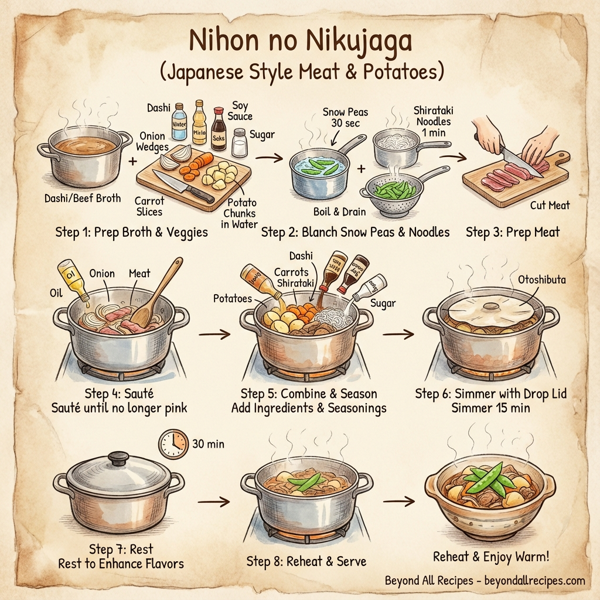
Begin by preparing the dashi or beef broth, which will form the flavorful base of your dish.
2
Chop the onion into 10-12 wedges, peel and slice the carrot diagonally into 1-inch pieces. Cut the potatoes into large bite-sized chunks and soak them in water to keep them from browning.
3
For the snow peas, remove any strings and boil them briefly for 30 seconds, then set aside to cool.
4
Rinse the shirataki noodles under cold water, boil them for 1 minute, and drain. You can cut them in half if you prefer shorter pieces. Set aside.
5
If the meat slices are large, cut them in half for easier eating later.
6
In a large pot, heat the vegetable oil over medium heat. Add the onion and meat, cooking until the meat loses its pink color and the onion becomes translucent.
7
Add the soaked potatoes, carrot pieces, and shirataki noodles to the pot. Pour in the prepared dashi stock and add mirin, soy sauce, sake, and sugar. Stir to combine and bring to a boil.
8
Once boiling, reduce the heat, skim off any foam that rises to the surface, and cover with an 'otoshibuta' (drop lid made from parchment or aluminum foil) to trap in moisture. Simmer for about 15 minutes or until the vegetables are tender.
9
After simmering, turn off the heat and let the dish rest with the lid on for 30 minutes. This resting period enhances the flavors.
10
Just before serving, gently reheat the dish. Top with the boiled snow peas and enjoy warm.
Nutrition Information
3g
Fat
35g
Carbs
10g
Protein
2.5g
Fiber
Frequently Asked Questions
Frequently Asked Questions
What is Nihon no Nikujaga?
Nihon no Nikujaga is a quintessential Japanese comfort food consisting of meat and potatoes simmered in a savory-sweet broth.
What are the primary ingredients in Nikujaga?
The main ingredients include thinly sliced meat, potatoes, carrots, onions, shirataki noodles, and snow peas.
How many servings does this recipe provide?
This recipe is designed to serve 4 people.
What is the calorie count per serving?
Each serving contains approximately 215 calories.
What kind of meat is best for Japanese Style Meat & Potatoes?
You can use 225g of thinly sliced beef or pork for this recipe.
What can I use if I do not have dashi stock?
If dashi stock is unavailable, you can substitute it with an equal amount of beef broth.
How should the potatoes be prepared?
Potatoes should be cut into large bite-sized chunks and soaked in water to prevent browning.
What is the purpose of soaking the potatoes?
Soaking the potatoes in water prevents them from discoloring or browning before they are cooked.
How do I prepare shirataki noodles for this dish?
Rinse the noodles under cold water, boil them for 1 minute, and drain them before adding to the pot.
How should the carrots be sliced?
The carrots should be peeled and sliced diagonally into 1-inch pieces.
What is the cooking time for the snow peas?
The snow peas should be trimmed and boiled briefly for only 30 seconds.
What seasonings are used for the broth?
The broth is seasoned with mirin, soy sauce, sake, and sugar.
What is an otoshibuta?
An otoshibuta is a drop lid, which can be made from parchment paper or aluminum foil, used to trap moisture during simmering.
How long should the Nikujaga simmer?
The dish should simmer for about 15 minutes or until the vegetables are tender.
Why is there a resting period after cooking?
Resting the dish for 30 minutes with the lid on allows the flavors to fully develop and penetrate the ingredients.
How much fat is in one serving of Nikujaga?
There are 3 grams of fat per serving.
How many carbohydrates are in this recipe?
There are 35 grams of carbohydrates per serving.
What is the protein content per serving?
Each serving provides 10 grams of protein.
How much fiber does this dish contain?
There are 2.5 grams of fiber per serving.
What type of oil should be used for frying the meat and onions?
One tablespoon of vegetable oil is recommended for cooking the meat and onions.
How should the onion be cut?
The onion should be cut into 10-12 wedges.
What should I do with the foam that rises to the surface?
You should skim off any foam that rises to the surface once the liquid begins to boil.
Can I cut the shirataki noodles?
Yes, you can cut the shirataki noodles in half if you prefer shorter pieces for easier eating.
When should the snow peas be added to the dish?
The boiled snow peas should be added as a topping just before serving.
How many total ingredients are required for this recipe?
There are 12 specific ingredients required for this recipe.
Is sake necessary for this recipe?
Sake is used as a traditional seasoning to provide depth of flavor, requiring 2 tablespoons.
What is the serving size for this recipe?
While the specific serving size is not listed, the total recipe is divided into 4 equal portions.
Is Nikujaga served hot or cold?
Nikujaga is best enjoyed warm, and it should be gently reheated just before serving.
How much soy sauce is needed?
The recipe calls for 4 tablespoons of soy sauce.
Can I use both beef and pork?
The recipe suggests using either thinly sliced beef or pork depending on your preference.