Moroccan Spiced Beef Tagine with Dried Fruits

Dive into the rich and aromatic flavors of Morocco with this traditional Beef Tagine, a heartwarming stew cooked slowly in a traditional tagine pot. This sumptuous dish features tender chunks of lean beef combined with a medley of sweet dried fruits like dates and prunes, complemented by fragrant spices such as cinnamon and ras el hanout. Each bite delivers a burst of complex flavors that reflect the culinary heritage of North Africa. Perfect for a family feast or a celebratory gathering, serve this hearty tagine alongside freshly baked bread or fluffy couscous to soak up the delicious sauce.
6
Servings
N/A
Calories
19
Ingredients
Ingredients
lean beef
2 1/2 lbs (cut into 1-inch cubes)
good quality olive oil
1-2 tablespoons
onion
1 lb (peeled and quartered)
garlic cloves
6-7 (minced)
carrot
1 lb (peeled and cut into quarters)
tinned plum tomatoes
10 ounces
best quality dates
4 ounces (carefully pitted)
prunes
4 ounces (pitted carefully)
raisins
2 tablespoons
good quality honey
2-3 tablespoons
water
1/2 pint
beef stock cube (Maggi)
1
cinnamon sticks
2 small
ras el hanout spice mix
5-6 teaspoons
fresh ground coriander seeds
2 teaspoons
gingerroot
1 inch (minced or 1 teaspoon ground ginger)
salt
to taste
freshly ground black pepper
to taste
chopped fresh coriander
3 tablespoons (for garnish)
Instructions
1
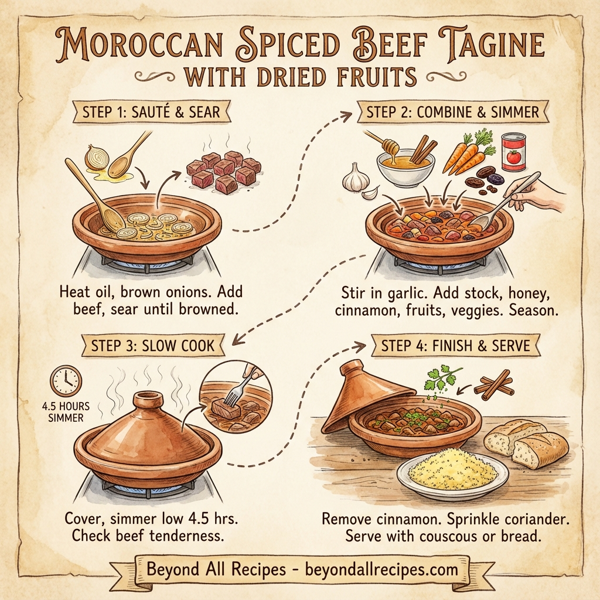
In the base of the tagine, heat 1/2 tablespoon of olive oil over high heat. Add the quartered onions and sauté until they are well browned, releasing their sweetness.
2
Once the onions are golden, add the remaining olive oil and the beef cubes. Sear the beef on all sides until browned, sealing in the juices.
3
Stir in the minced garlic and cook for an additional 30 seconds to allow the flavors to meld.
4
In a separate bowl, prepare the beef stock by dissolving the beef stock cube in 1/2 pint of boiling water. Add honey and the cinnamon sticks, and set aside.
5
Reduce the heat to low. Add the quartered carrots, tinned plum tomatoes, dates, prunes, raisins, and the prepared stock to the tagine. Use a wooden spoon to gently mix the ingredients, ensuring they are well combined.
6
Season with salt and freshly ground black pepper to taste.
7
Cover the tagine with its lid and let it simmer on low heat for approximately 4 1/2 hours. Around the 3-hour mark, check for doneness, as cooking times may vary depending on your tagine and heat source.
8
The dish is ready when the beef is fork-tender and the sauce has thickened, bursting with the rich flavors of the spices and fruits.
9
Before serving, carefully remove the cinnamon sticks from the tagine and sprinkle the chopped fresh coriander over the top for a burst of freshness.
10
Serve the tagine directly in its base, accompanied by warm, crusty bread or a side of fluffy steamed couscous.
Nutrition Information
Frequently Asked Questions
Frequently Asked Questions
What is Moroccan Spiced Beef Tagine with Dried Fruits?
It is a traditional North African stew featuring tender lean beef, sweet dried fruits like dates and prunes, and aromatic spices such as ras el hanout and cinnamon, slowly cooked in a tagine pot.
How many people does this beef tagine recipe serve?
This recipe is designed to serve 6 people.
What type of meat is recommended for this tagine?
The recipe calls for 2 1/2 lbs of lean beef cut into 1-inch cubes.
What dried fruits are used in this dish?
This tagine uses a combination of dates, prunes, and raisins to provide a sweet contrast to the savory spices.
How long is the total cooking time?
The tagine should simmer on low heat for approximately 4 1/2 hours to ensure the beef is fork-tender.
Can I use a regular pot instead of a tagine?
While a traditional tagine pot is ideal for slow cooking and flavor development, a heavy-based pot with a tight-fitting lid can be used as a substitute.
What is ras el hanout?
Ras el hanout is a complex North African spice blend that provides the signature aromatic flavor of this dish.
How do I prepare the beef stock for this recipe?
Dissolve one beef stock cube in 1/2 pint of boiling water, then stir in the honey and cinnamon sticks.
Should the dates and prunes be pitted?
Yes, the recipe specifies that both the dates and prunes should be carefully pitted before adding them to the stew.
What vegetables are included in the tagine?
The recipe includes 1 lb of peeled and quartered onions, 1 lb of carrots, and 10 ounces of tinned plum tomatoes.
What should I serve with the beef tagine?
It is best served with warm, crusty bread or a side of fluffy steamed couscous to soak up the flavorful sauce.
Is there honey in this recipe?
Yes, 2-3 tablespoons of good quality honey are added to the stock to provide a subtle sweetness.
How do I garnish the dish?
Sprinkle 3 tablespoons of chopped fresh coriander over the top of the tagine just before serving.
When do I add the garlic?
The minced garlic should be added after searing the beef and cooked for about 30 seconds to meld the flavors.
What spices are used for seasoning?
The dish is seasoned with ras el hanout, ground coriander seeds, ginger, cinnamon sticks, salt, and freshly ground black pepper.
Can I use ground ginger instead of fresh gingerroot?
Yes, you can substitute 1 inch of minced gingerroot with 1 teaspoon of ground ginger.
How do I know when the beef is fully cooked?
The beef is ready when it is fork-tender and the sauce has thickened significantly.
Do I need to remove the cinnamon sticks?
Yes, you should carefully remove and discard the cinnamon sticks before serving the dish.
Why do I need to sear the beef cubes?
Searing the beef on all sides seals in the juices and creates a better depth of flavor for the stew.
What kind of oil should be used?
The recipe recommends using 1-2 tablespoons of good quality olive oil.
Should the onions be sautéed before adding the beef?
Yes, the onions should be sautéed first until they are well browned to release their sweetness.
Is this recipe suitable for a family gathering?
Yes, its hearty nature and rich flavors make it perfect for a family feast or celebratory gathering.
How much water is needed for the sauce?
The recipe requires 1/2 pint of water mixed with the stock cube.
What is the role of the tinned plum tomatoes?
The tomatoes add acidity and body to the sauce, balancing the sweetness of the fruits and honey.
At what heat should the tagine simmer?
The tagine should be covered and simmered on low heat for the duration of the cooking time.
When should I first check the doneness of the meat?
It is recommended to check the beef around the 3-hour mark, though it usually takes 4 1/2 hours.
What is the significance of using a tagine base for serving?
Serving directly in the base is traditional and helps maintain the heat of the dish at the table.
How many teaspoons of ras el hanout are needed?
The recipe calls for 5-6 teaspoons of ras el hanout spice mix.
What type of raisins should I use?
The recipe simply calls for 2 tablespoons of raisins; any standard variety will work well.
Is salt and pepper added at the beginning or end?
Salt and freshly ground black pepper are added to taste before the long simmering process begins.