Morimoto's Sweet and Savory Beef Stew
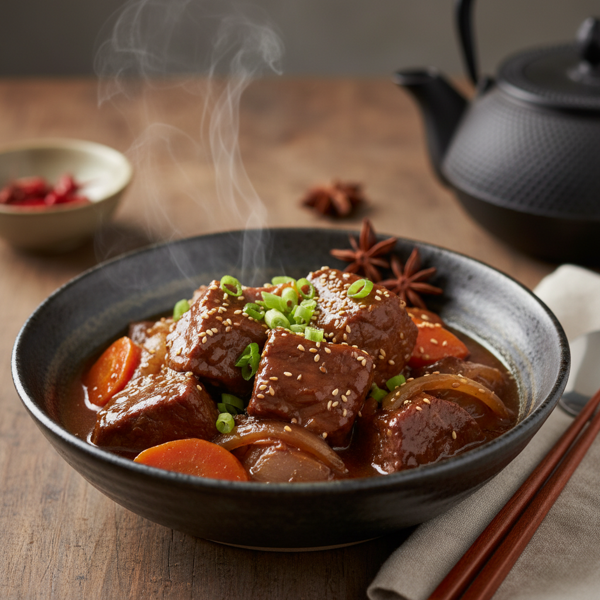
Dive into a delightful twist on traditional Japanese comfort food with Morimoto's Sweet and Savory Beef Stew. This unique take on Nikujaga combines tender, seared ribeye beef with a medley of earthy vegetables like potatoes, carrots, and sweet bell peppers, simmered in a delectable sauce of sake, soy sauce, and mirin. Offering a sweet profile that stands apart from American beef stew, this dish is perfect for a cozy dinner. Finish with vibrant chives and a drizzle of hot chili oil for a nuanced depth of flavor that tantalizes the taste buds.
N/A
Servings
N/A
Calories
13
Ingredients
Ingredients
vegetable oil
1 tablespoon (for searing)
beef rib eye
1 lb (cut into 1-inch pieces)
potatoes
4 (halved and cut into 1/4-inch slices)
carrot
1 (peeled and quartered)
baby onions
12 (left whole)
yellow bell pepper
1 (sliced)
red bell pepper
1 (sliced)
sake
2 cups (for deglazing)
soy sauce
2 tablespoons
mirin
2 tablespoons
chives
2 tablespoons (finely chopped)
sugar
2 tablespoons
hot chili oil
to taste (for drizzling)
Instructions
1
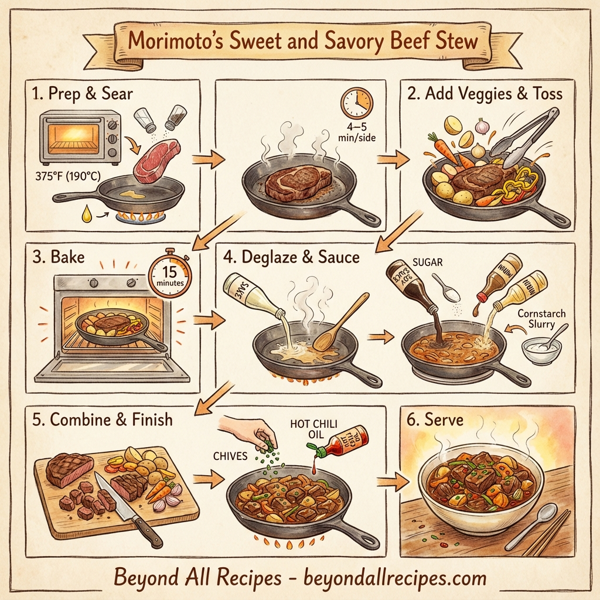
Preheat your oven to 375°F (190°C).
2
In a large, ovenproof skillet, heat a small amount of vegetable oil over medium-high heat.
3
Season the beef ribeye generously with salt and pepper, then sear it in the hot oil. Cook for about 4–5 minutes on each side, or until a rich brown crust forms.
4
Add the halved potatoes, quartered carrots, baby onions, and sliced yellow and red bell peppers to the skillet. Toss the vegetables well to coat them in the flavorful beef juices.
5
Transfer the skillet to the preheated oven and bake for approximately 15 minutes, allowing the flavors to meld together.
6
Carefully remove the skillet from the oven. Use tongs to take out the beef and vegetables. Set aside while keeping them warm.
7
On the stovetop, deglaze the pan by pouring in the sake, scraping up any browned bits stuck to the bottom with a wooden spoon.
8
Stir in the soy sauce, mirin, and sugar. Allow the mixture to simmer for a few minutes until the sauce thickens slightly. If desired, use a cornstarch slurry (1 tablespoon cornstarch mixed with 2 tablespoons water) to thicken further.
9
Cut the seared beef and vegetables into bite-sized pieces, then return them to the pan and toss to combine with the gravy.
10
Finish by sprinkling the dish with finely chopped chives and a drizzle of hot chili oil, adjusting the amount according to your spice preference.
Nutrition Information
Frequently Asked Questions
Frequently Asked Questions
What is Morimoto's Sweet and Savory Beef Stew?
It is a unique take on Nikujaga, a traditional Japanese comfort food, combining tender seared ribeye with earthy vegetables in a sweet and savory sauce.
How does this stew differ from American beef stew?
Unlike American beef stew, this version offers a sweet profile and utilizes Japanese ingredients like sake, soy sauce, and mirin for its flavor base.
What cut of meat is used in this recipe?
The recipe uses 1 lb of beef rib eye, cut into 1-inch pieces.
What temperature should the oven be set to?
Preheat your oven to 375°F (190°C).
How long should I sear the ribeye?
Sear the beef for about 4–5 minutes on each side until a rich brown crust forms.
What vegetables are included in the stew?
The stew includes potatoes, carrots, baby onions, and yellow and red bell peppers.
How long does the skillet need to bake in the oven?
The skillet should bake for approximately 15 minutes to allow the flavors to meld together.
What liquids are used to create the sauce?
The sauce is made from 2 cups of sake, 2 tablespoons of soy sauce, and 2 tablespoons of mirin.
How should I prepare the potatoes?
The potatoes should be halved and then cut into 1/4-inch slices.
Do I need to peel the carrots?
Yes, the carrots should be peeled and quartered.
Should the baby onions be chopped?
No, the 12 baby onions should be left whole.
How do I deglaze the pan?
Pour in the sake and use a wooden spoon to scrape up any browned bits stuck to the bottom of the pan.
How can I make the sauce thicker?
You can use a cornstarch slurry consisting of 1 tablespoon of cornstarch mixed with 2 tablespoons of water.
When is the sugar added?
Sugar is stirred in on the stovetop along with the soy sauce and mirin after deglazing the pan.
What kind of oil is best for searing the beef?
The recipe recommends using 1 tablespoon of vegetable oil.
How do I finish the dish before serving?
Finish the dish by sprinkling with finely chopped chives and a drizzle of hot chili oil.
Can I adjust the spice level?
Yes, you can adjust the amount of hot chili oil according to your personal spice preference.
What is the purpose of the sake in this recipe?
Sake is used to deglaze the pan and provides a flavorful base for the sauce.
Should I season the beef before cooking?
Yes, the beef ribeye should be seasoned generously with salt and pepper before searing.
What type of pan is required?
A large, ovenproof skillet is necessary as the dish moves from the stovetop to the oven.
How many bell peppers are used?
The recipe calls for one yellow bell pepper and one red bell pepper, both sliced.
What do I do with the beef after it comes out of the oven?
Remove the beef and vegetables from the skillet, keep them warm, and later cut them into bite-sized pieces before returning them to the sauce.
Is this a one-pot meal?
Yes, the dish is designed to be prepared in a single skillet.
What is the flavor profile of the sauce?
The sauce is sweet and savory, characterized by the combination of sugar, mirin, and soy sauce.
How much chives are needed?
The recipe uses 2 tablespoons of finely chopped chives for garnish.
Do I need to slice the carrots thinly?
No, the carrot should be quartered after peeling.
What is the role of mirin?
Mirin adds a subtle sweetness and luster to the sauce, balancing the savory soy sauce.
Can I use a different oil?
While vegetable oil is suggested, any high-smoke point oil suitable for searing can be used.
Is this a traditional Nikujaga recipe?
It is a 'unique take' on Nikujaga, meaning it incorporates modern techniques like oven roasting and non-traditional ingredients like bell peppers.
How many baby onions should I prepare?
The recipe specifically calls for 12 baby onions.