Miso Nikomi Udon with Chicken and Vegetables
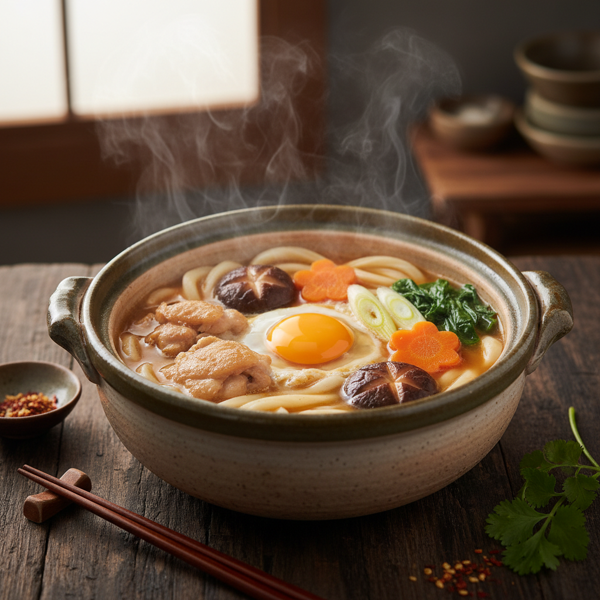
Indulge in the comforting flavors of Miso Nikomi Udon, a traditional Japanese dish featuring thick, chewy udon noodles simmered in a rich miso soup. This recipe, adapted from an authentic Japanese cookbook, combines tender chicken, nutritious vegetables, and hearty ingredients like shiitake mushrooms, gobo root, and kamaboko. The addition of creamy milk provides a delightful twist, creating a velvety broth that brings everything together. Perfect for a cozy dinner, this dish serves four and can be easily adjusted to suit your taste preferences. Be prepared to enjoy a bowlful of umami goodness that warms both body and soul.
N/A
Servings
N/A
Calories
12
Ingredients
Ingredients
Fresh udon noodles
280 g (Uncooked)
Chicken
120 g (Cut into small pieces)
Dried shiitake mushrooms
4 small (Soaked and stems removed)
Aburage (fried tofu)
1 (65 g) package (Cut into 3 x 0.5 cm rectangles)
Burdock root
1 small (Washed, scraped, and cut into slivers)
Kamaboko (fish cake)
4 slices (Commercially available)
Hard-boiled eggs
4 (Peeled and sliced)
Green onions
2 (Sliced thinly)
Red miso
160 g (To be dissolved in dashi)
Dashi (Japanese soup stock)
1400 ml (Ready-made or homemade)
Milk
200 ml (Regular or any preferred type)
Ground Japanese brown pepper (sansho)
To taste (For garnish)
Instructions
1
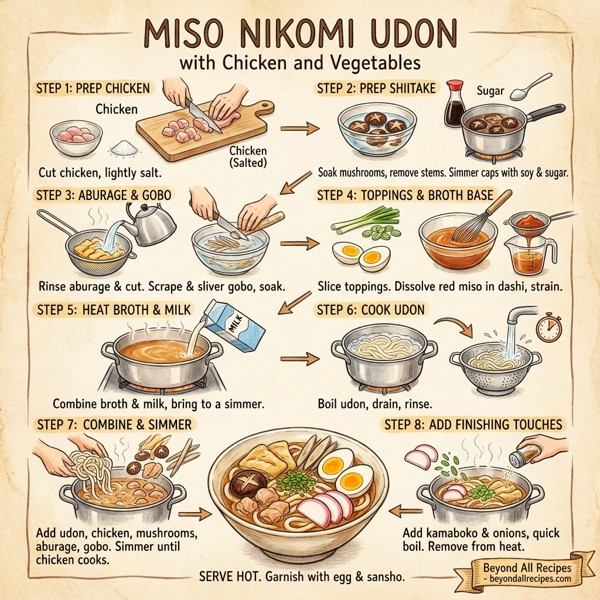
Cut the chicken into small bite-sized pieces and lightly salt them. Set aside.
2
Soak the dried shiitake mushrooms in water until the caps are soft and pliable. Remove the stems and briefly cook the caps in a small pot with about 1/4 cup of water, 2-3 teaspoons of soy sauce, and 2-3 teaspoons of sugar until they are flavored. Set aside.
3
Prepare the aburage by placing it in a metal sieve and pouring 1-2 cups of boiling water over it to remove excess oil. Rinse with warm water, squeeze dry, and cut into 3 x 0.5 cm rectangles.
4
Wash and scrape the gobo root lightly with a knife to remove the skin, ensuring you don't lose the flavor beneath. Cut the gobo into thin slivers and place them in a bowl of water to prevent browning.
5
Slice the green onions thinly and set them aside.
6
Peel the hard-boiled eggs and slice them horizontally into halves or quarters.
7
In a bowl, combine the 160 g of red miso with 1400 ml of dashi, stirring well to dissolve. Strain this mixture to remove any solids.
8
Pour the miso-dashi mixture into a large pot. Add the milk and bring to a gentle boil over medium heat, then reduce the heat to a simmer.
9
In a separate pot, boil plenty of water and cook the udon noodles according to the package instructions until slightly firm. Drain and rinse them under cold running water to remove excess starch.
10
When the miso broth is simmering, add the cooked udon, seasoned chicken, drained shiitake mushrooms, aburage, and gobo to the pot, stirring gently.
11
Once the chicken is cooked through and the udon is heated, add the kamaboko slices and green onions. Increase the heat to a gentle boil for just a moment.
12
Remove from heat, and serve the soup in individual bowls. Garnish each bowl with the slices of hard-boiled egg and a sprinkle of sansho for an aromatic touch.
Nutrition Information
Frequently Asked Questions
Frequently Asked Questions
What is Miso Nikomi Udon?
Miso Nikomi Udon is a traditional Japanese dish featuring thick, chewy udon noodles simmered in a rich, flavorful miso-based soup.
How many servings does this recipe provide?
This recipe is designed to serve four people.
What type of noodles are used in this recipe?
The recipe calls for 280 g of fresh udon noodles.
What unique ingredient is added to the broth for a creamy twist?
200 ml of milk is added to the miso and dashi mixture to create a velvety broth.
How should I prepare the chicken?
Cut 120 g of chicken into small bite-sized pieces and lightly salt them before setting aside.
How do I prepare the dried shiitake mushrooms?
Soak them in water until soft, remove the stems, and cook the caps in water with soy sauce and sugar to flavor them.
What is aburage and how is it prepared?
Aburage is fried tofu. Prepare it by pouring boiling water over it to remove excess oil, then rinse, dry, and cut into small rectangles.
How do I handle the gobo (burdock root)?
Scrape the skin lightly to retain flavor, cut into thin slivers, and place in water to prevent browning.
What kind of miso is used in this recipe?
The recipe specifies using 160 g of red miso for its rich flavor.
How much dashi is required for the soup?
You will need 1400 ml of dashi, which can be homemade or ready-made.
Should the miso mixture be strained?
Yes, after dissolving the red miso in the dashi, you should strain the mixture to remove any solids.
What is the proper way to cook the udon noodles?
Boil them in plenty of water until slightly firm, then drain and rinse under cold running water to remove starch.
What is kamaboko?
Kamaboko is a type of Japanese fish cake. This recipe uses 4 slices as an ingredient.
When do I add the kamaboko and green onions?
Add them once the chicken is cooked through and the udon is heated, then bring to a gentle boil for a moment.
How are the eggs prepared for this dish?
Use 4 hard-boiled eggs, peeled and sliced horizontally into halves or quarters.
What garnish is recommended for serving?
Garnish each bowl with slices of hard-boiled egg and a sprinkle of sansho.
What is sansho?
Sansho is ground Japanese brown pepper, used in this recipe as an aromatic garnish.
Can I adjust the recipe for different tastes?
Yes, the dish can be easily adjusted to suit your individual taste preferences.
What temperature should the miso broth be when adding ingredients?
The miso broth should be simmering when you add the udon, chicken, mushrooms, aburage, and gobo.
How do you remove the stems from shiitake mushrooms?
Wait until the caps are soft and pliable after soaking in water, then remove the stems.
What size should the aburage rectangles be?
The aburage should be cut into approximately 3 x 0.5 cm rectangles.
What is the flavor profile of this dish?
It is described as full of umami goodness with a comforting, rich, and velvety broth.
How many green onions are needed?
The recipe calls for 2 green onions, sliced thinly.
Is the gobo root skin completely removed?
No, it is scraped lightly with a knife to remove the skin while ensuring the flavor beneath is preserved.
What are the suggested tags for this recipe?
Tags include Japanese, noodles, miso soup, udon, chicken, comfort food, soup, and healthy.
Do you boil the milk separately?
No, you pour the milk into the miso-dashi mixture and bring them to a gentle boil together.
What happens if I don't soak the gobo in water?
It may brown due to oxidation; soaking it in water prevents this discoloration.
Can I use vegetarian ingredients?
The recipe tags suggest vegetarian options are possible, though this specific version includes chicken, kamaboko, and dashi.
What is the total number of ingredients?
There are 12 main ingredients in this recipe.
Is this a good dish for cold weather?
Yes, it is described as a comforting dish that warms both body and soul, making it perfect for a cozy dinner.