Meyer Lemon Blueberry-Apple Bliss Jam
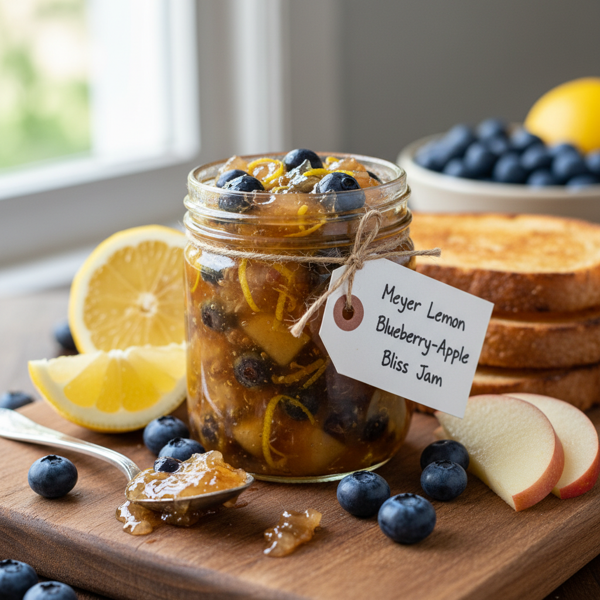
This vibrant Meyer Lemon Blueberry-Apple Bliss Jam is an exquisite blend of sweet blueberries and tart Granny Smith apples, paired with the fragrant zest and juice of Meyer lemons. Adapted from Liana Krissoff's 'Canning for a New Generation,' this jam strikes a perfect balance between sweetness and acidity, allowing the natural essence of the fruits to shine through. The use of apple trimmings provides necessary pectin for a luscious, spreadable jam without an overload of sugar. This recipe promises a delightful experience whether spread on morning toast or used as a filling for pastries, making it a versatile addition to your pantry. Best enjoyed in the summer months when blueberries are at their peak, or preserved for a taste of summer during the colder months.
N/A
Servings
N/A
Calories
5
Ingredients
Ingredients
Granny Smith apples
1 1/2 lbs (peeled, cored, and diced)
Blueberries
3 lbs (fresh)
Sugar
2 1/2 cups (granulated)
Fresh lemon juice
1/3 cup (from Meyer lemons if possible)
Lemon zest
1 lemon (minced)
Instructions
1
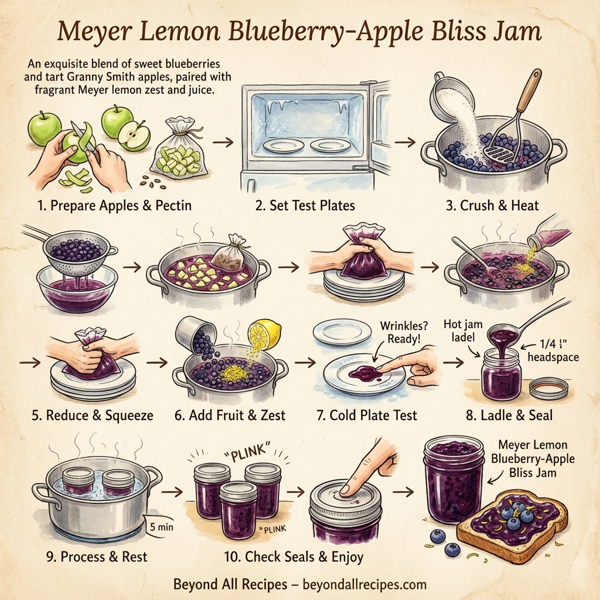
Begin by preparing the apples: peel, core, and dice the Granny Smith apples, reserving the peels, cores, and seeds. Place the trimmings securely inside a jelly bag or four layers of cheesecloth and tie it closed tightly.
2
Set the diced apples aside in a bowl. Don't worry about browning; the blueberries will transform their color.
3
To test the jam's set later, place two or three small saucers in the freezer.
4
In a large preserving pan (6 to 8 quarts), combine the blueberries and sugar. Use a potato masher to crush about one-third of the blueberries to help release their juices quicker, though this step is optional.
5
Heat the blueberry-sugar mixture over medium heat, stirring frequently until it simmers, about 5 minutes. Then, transfer the berries to a colander set over a bowl to drain the juices. Return the collected juice to the pan, add the diced apples and the jelly bag with the trimmings, and bring the mixture to a boil over high heat.
6
Boil the mixture, stirring occasionally, until it thickens and the syrup reduces, usually around 15 to 20 minutes. Remove from heat and carefully take out the jelly bag, squeezing it gently between two plates to extract any remaining juice.
7
Add back the drained blueberries, any residual juice, along with the fresh lemon juice and minced lemon zest. Bring the mixture back to a simmer and cook for another 5 minutes.
8
To check the set, perform the cold plate test: take the pan off the heat, place a drop of jam on one of the chilled saucers, and return it to the freezer for 1 minute. Afterward, nudge the drop with your finger. If it wrinkles slightly, it’s ready. If not set, continue cooking and check every 5 minutes.
9
Once the jam has reached the desired consistency, remove it from heat and stir gently to mix the fruit evenly through the syrup.
10
Ladle the hot jam into sterilized canning jars, ensuring to leave 1/4 inch of headspace. Wipe the rims with a damp cloth to eliminate any residue. Secure the lids and bands, tightening them just enough to be fingertip tight.
11
Process in a boiling water bath for 5 minutes. Once done, remove the jars and allow them to sit undisturbed for at least 12 hours. This resting period is crucial for the jars to seal properly. You should hear a 'plink' sound as they seal.
12
After 12 hours, check the seals: if the center of the lid does not flex when pressed, your jars are sealed. If there is any movement, you can reprocess the jar for another 5 minutes or refrigerate and use it within 3 months.
Nutrition Information
Frequently Asked Questions
Frequently Asked Questions
What is Meyer Lemon Blueberry-Apple Bliss Jam?
It is a vibrant fruit spread made from sweet blueberries, tart Granny Smith apples, and fragrant Meyer lemon juice and zest, using natural apple pectin for consistency.
Which type of apples are best for this jam?
Granny Smith apples are specifically recommended for their tartness and natural pectin content.
Why do I need to keep the apple peels and cores?
The peels, cores, and seeds contain natural pectin, which helps the jam set properly without needing to add commercial pectin.
What should I do with the apple trimmings?
Place the peels, cores, and seeds inside a jelly bag or four layers of cheesecloth and tie it tightly to submerge in the cooking liquid.
What if my diced apples turn brown while I prepare the blueberries?
Don't worry about browning; the blueberries will transform the color of the apples during the cooking process.
Can I use regular lemons instead of Meyer lemons?
Yes, although Meyer lemons are preferred for their unique fragrance and sweetness, regular lemons can be used as a substitute.
How much sugar is required for this recipe?
The recipe calls for 2 1/2 cups of granulated sugar.
Why is a potato masher used on the blueberries?
Crushing about one-third of the blueberries helps release their juices more quickly during the initial heating phase.
How long should I simmer the blueberry-sugar mixture?
Heat it over medium heat for about 5 minutes until it reaches a simmer.
Why do I need to drain the blueberries?
Draining allows you to boil the juice with the apples and pectin bag first to create a thick syrup without overcooking the whole blueberries.
How long does the syrup take to reduce?
Boil the mixture on high heat for 15 to 20 minutes until it thickens and reduces.
What do I do with the jelly bag after boiling?
Remove it from the heat and squeeze it gently between two plates to extract any remaining pectin-rich juice before discarding the bag.
When is the Meyer lemon juice and zest added?
Add the lemon juice and minced zest back into the pan along with the drained blueberries after the syrup has reduced.
How do I perform the cold plate test?
Place a drop of jam on a chilled saucer from the freezer, wait 1 minute, then nudge it; if it wrinkles, the jam is set.
What size preserving pan is recommended?
A large preserving pan with a capacity of 6 to 8 quarts is ideal.
How much headspace should be left in the jars?
Leave 1/4 inch of headspace at the top of the canning jars.
How long do I process the jars in the water bath?
Process the jars in a boiling water bath for 5 minutes.
How long should the jars rest after processing?
Allow the jars to sit undisturbed for at least 12 hours to ensure a proper seal.
What is the 'plink' sound when canning?
The 'plink' is the sound of the jar lids being vacuum-sealed as the contents cool.
How do I check if the jar is sealed correctly?
Press the center of the lid; if it does not flex or move, the jar is successfully sealed.
What should I do if a jar does not seal?
You can reprocess the jar for another 5 minutes or store it in the refrigerator and use it within 3 months.
What is the source of this recipe?
This recipe is adapted from Liana Krissoff's book, 'Canning for a New Generation.'
What can I serve with this jam?
It is delicious on morning toast or used as a sweet filling for various pastries.
When is the best time to make this jam?
It is best enjoyed in the summer when blueberries are at their peak freshness.
How many ingredients are in this recipe?
There are 5 main ingredients: Granny Smith apples, blueberries, sugar, lemon juice, and lemon zest.
How do I prepare the lemon zest?
The zest from one lemon should be finely minced before being added to the jam.
What is the preparation for the blueberries?
The blueberries should be fresh and washed before use.
Why is it important to wipe the jar rims?
Wiping the rims with a damp cloth ensures there is no residue that could prevent the lid from sealing properly.
How tight should the jar bands be?
Tighten them until they are just fingertip tight; do not over-tighten.
Can I use this recipe for long-term storage?
Yes, if processed correctly in a water bath and sealed, the jam can be preserved for use during the colder months.