Mediterranean Marbled Eggs
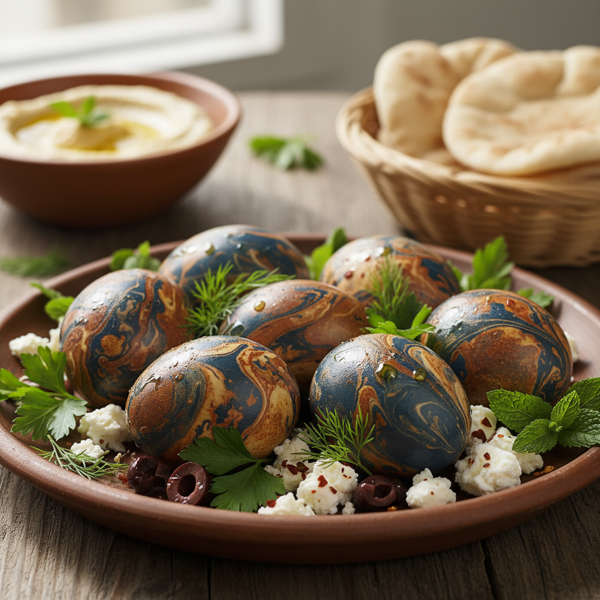
Mediterranean Marbled Eggs are a cherished traditional dish enjoyed by Jewish communities across the Mediterranean and Middle East, known for their strikingly beautiful maroon and brown marbling. These eggs achieve their unique color and delicate texture through a slow cooking process, which allows the porous egg shells to absorb rich hues from onion skins and other natural ingredients. Typically prepared during Passover Seders in regions such as Calcutta, Turkey, Greece, Morocco, and Tunisia, each region adds its own twist to this timeless delicacy. Additionally, they can be conveniently cooked overnight in a crockpot, making them a perfect addition to Shabbat meals. This dish, synonymous with the culinary heritage of Medieval Spain, not only delights the palate but also serves as a cultural homage to the rich history of Sephardic Jewish cuisine.
N/A
Servings
N/A
Calories
8
Ingredients
Ingredients
Eggs
6 (none)
Pepper
1/8 teaspoon (ground)
Salt
1 teaspoon (none)
Ground Coffee or Tea Leaves
1/2 teaspoon (optional, choose one)
Yellow Onion Skins
3-4 outer layers (washed)
Garlic Cloves
1-2 (chopped, optional)
Vegetable Oil
1 teaspoon (none)
Vinegar
1 teaspoon (none)
Instructions
1
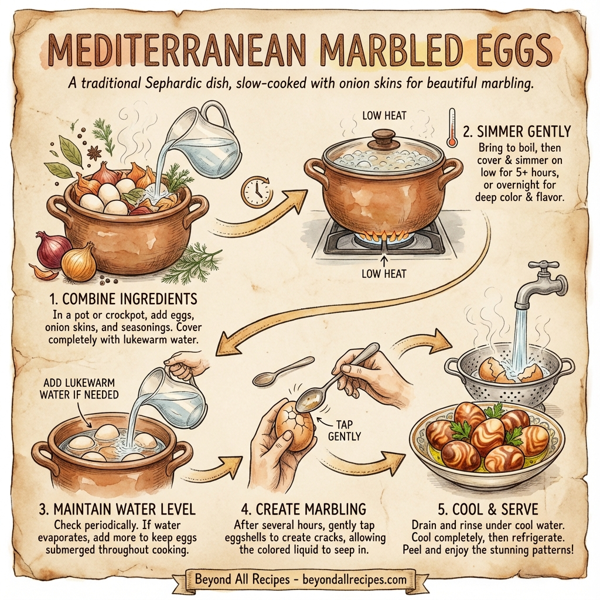
In a large pot or crockpot, combine all the ingredients. Ensure the eggs are covered completely by lukewarm water.
2
Bring the water to a rolling boil over medium-high heat. Once boiling, cover the pot, reduce the heat to low, and allow the eggs to simmer gently for at least 5 hours, or ideally, overnight for maximum flavor penetration.
3
Throughout the cooking process, keep an eye on the liquid level. If water evaporates, add more lukewarm water to keep the eggs submerged.
4
After cooking for several hours, gently tap the eggshells with a spoon to create small cracks, which will promote stunning marbling on the egg whites as they continue to cook.
5
Once cooked, carefully drain the eggs and rinse them under cool running water. Allow them to cool completely, then refrigerate until you're ready to serve.
Nutrition Information
Frequently Asked Questions
Frequently Asked Questions
What are Mediterranean Marbled Eggs?
They are a traditional Jewish dish known for their striking maroon and brown marbled appearance, often served during Passover and Shabbat.
What gives the eggs their unique color?
The eggs achieve their color by absorbing pigments from yellow onion skins and optional ingredients like coffee or tea during a slow cooking process.
How long should these eggs be cooked?
The eggs should simmer for at least 5 hours, but cooking them overnight is ideal for the best flavor and color.
Can I use a crockpot for this recipe?
Yes, a crockpot is a convenient way to cook these eggs overnight, especially for Shabbat meals.
Which Jewish communities traditionally prepare this dish?
This dish is cherished by Sephardic Jewish communities across the Mediterranean and Middle East, including those in Turkey, Greece, Morocco, and Tunisia.
What is the purpose of tapping the eggshells?
Gently cracking the shells during cooking allows the colored liquid to seep in, creating the beautiful marbled pattern on the egg whites.
Why is vinegar included in the recipe?
Vinegar is added to the cooking water to help set the color and assist in the slow cooking process.
What should I do if the water level drops?
You should monitor the pot and add more lukewarm water as needed to ensure the eggs remain completely submerged throughout the process.
Are there optional ingredients I can add for flavor?
Yes, you can add chopped garlic cloves and either ground coffee or tea leaves to enhance the flavor and depth of color.
What type of onion skins are best for this recipe?
The recipe specifically calls for the outer layers of yellow onion skins, which should be washed before use.
How many eggs does this recipe yield?
This recipe is designed for 6 eggs, though it can be scaled as long as the eggs remain covered by water.
What is the significance of this dish in Jewish culture?
It serves as a cultural homage to the history of Sephardic Jewish cuisine and the culinary heritage of Medieval Spain.
Can these eggs be served cold?
Yes, once cooked and cooled, they should be refrigerated and are typically served chilled.
What texture do the eggs have?
The slow cooking process results in a very delicate and unique texture compared to standard hard-boiled eggs.
Is vegetable oil necessary?
Yes, one teaspoon of vegetable oil is added to the cooking liquid as part of the traditional preparation.
When should I start cracking the shells?
You should gently tap the shells after they have already been cooking for several hours.
What heat setting is used for the simmering?
After reaching a rolling boil, the heat should be reduced to low for a gentle, long-term simmer.
Do I need to prepare the onion skins?
Yes, you should use 3 to 4 outer layers of yellow onions and make sure they are washed clean.
Is this recipe suitable for Passover?
Yes, these eggs are a traditional delicacy frequently prepared for Passover Seders in many regions.
How do I stop the cooking process?
Once finished, drain the eggs and immediately rinse them under cool running water to stop the cooking and help them cool.
Can I use tea instead of coffee?
Yes, the recipe allows for either 1/2 teaspoon of ground coffee or tea leaves as an optional color and flavor booster.
What is the historical origin of this dish?
It is rooted in the culinary traditions of Medieval Spain and has been preserved by Sephardic communities for centuries.
Is the garlic preparation specific?
The recipe suggests using 1 to 2 garlic cloves that have been chopped, though this is an optional addition.
What is the initial water temperature?
The recipe recommends starting with lukewarm water to cover all the ingredients in the pot.
How do you describe the flavor of these eggs?
They are described as having a rich flavor that is deeply penetrated into the egg through hours of slow cooking.
What is the first step in making these eggs?
The first step is to combine all ingredients in a large pot or crockpot and ensure the eggs are fully submerged in water.
Why is this dish associated with Shabbat?
Because they can be cooked slowly overnight, they are a practical and traditional food for the Shabbat morning meal.
What color will the egg whites be?
The egg whites will feature beautiful maroon and brown marbling once the shells are removed.
Does the recipe use a lot of salt?
The recipe uses 1 teaspoon of salt for 6 eggs to help season them during the long cooking time.
Is this a difficult recipe to master?
No, it is a simple slow-cooking process that mainly requires time and monitoring of the water level.