Mediterranean Halibut Fillets with Harissa Olive Sauce
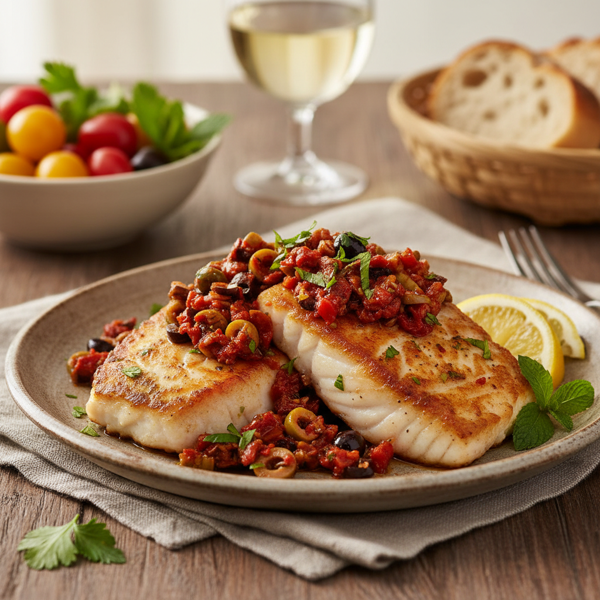
Indulge in the vibrant flavors of the Mediterranean with this exquisite dish that beautifully showcases thick and flaky halibut fillets. The bold combination of spicy harissa and savory kalamata olives mingles with rich tomato sauce to create a mouthwatering sauce that enhances the fish's natural flavors. This recipe provides a delectable and healthy meal perfect for family gatherings or special occasions, transporting your taste buds straight to the sun-soaked shores of Tunisia.
4
Servings
N/A
Calories
13
Ingredients
Ingredients
thick fish fillets
2 lbs (any white fish, such as halibut)
salt
to taste (for seasoning)
pepper
to taste (for seasoning)
flour
as needed (for dusting)
olive oil
as needed (for frying)
small onion
1 (finely chopped)
garlic cloves
2 (minced)
tomato sauce
1 cup (for the sauce)
harissa
1/2 teaspoon (for flavor)
medium bay leaf
1 (for flavor)
pitted kalamata olives
1 cup (for the sauce)
fresh lemon
1 (juice of, about 1-2 tablespoons)
fresh parsley
as needed (chopped for garnish)
Instructions
1
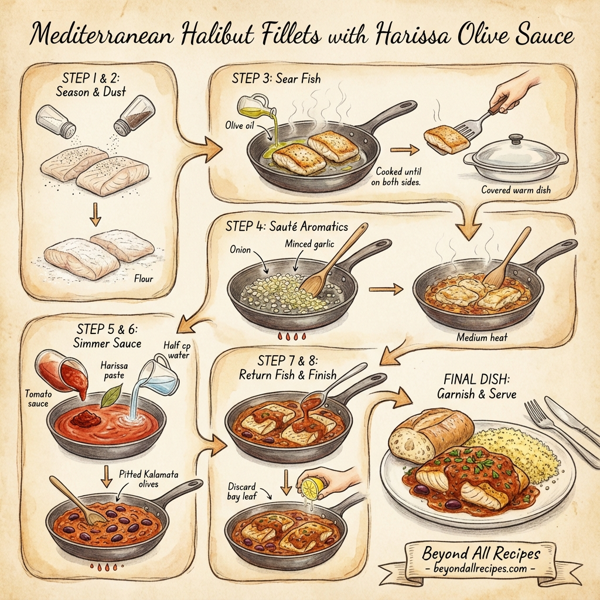
Start by seasoning the halibut fillets generously with salt and pepper on both sides.
2
Lightly dust the seasoned fish fillets with flour to give them a crispy exterior when cooked.
3
In a large skillet, heat a generous drizzle of olive oil over medium-high heat. When the oil is shimmering, carefully add the fish fillets, cooking them for about 3-4 minutes per side or until they are golden brown and cooked through. Once cooked, transfer the fillets to a warm serving dish and cover loosely to keep them warm.
4
In the same skillet, lower the heat to medium, then add the finely chopped onion and minced garlic. Sauté for 3-4 minutes until the onion is soft and translucent.
5
Stir in the tomato sauce, harissa, bay leaf, and half a cup of water. Allow the mixture to simmer for about 10 minutes, letting the flavors meld together.
6
Add the pitted kalamata olives to the sauce, gently stirring to incorporate them.
7
Carefully return the halibut fillets to the skillet, spooning some sauce over the top. Cook uncovered for an additional 5-7 minutes, or until the fish is tender and the sauce has thickened.
8
Finish by squeezing fresh lemon juice over the dish to brighten the flavors. Discard the bay leaf before serving.
9
Garnish with freshly chopped parsley and serve with crusty bread or over a bed of couscous to soak up the delicious sauce.
Nutrition Information
Frequently Asked Questions
Frequently Asked Questions
What is Mediterranean Halibut Fillets with Harissa Olive Sauce?
It is a flavorful dish featuring thick halibut fillets cooked in a savory sauce of tomato, harissa, and kalamata olives, inspired by Tunisian flavors.
What kind of fish is best for this recipe?
Thick white fish fillets are best; halibut is recommended, but you can also use cod or sea bass.
How much fish do I need for this recipe?
The recipe calls for 2 lbs of thick fish fillets.
What is harissa?
Harissa is a spicy North African chili pepper paste that adds a bold, smoky heat to the sauce.
How much harissa should I use?
The recipe suggests 1/2 teaspoon for a balanced flavor, though you can adjust it to your spice preference.
What kind of olives are used in the sauce?
One cup of pitted kalamata olives is used to provide a rich, savory Mediterranean taste.
Why do I need to dust the halibut with flour?
Dusting the fish with flour helps create a crispy golden-brown exterior when pan-frying.
How long do I cook the halibut fillets initially?
Sauté the fillets for 3-4 minutes per side until they are golden brown.
What ingredients are in the sauce?
The sauce consists of onion, garlic, tomato sauce, harissa, a bay leaf, water, and kalamata olives.
How many servings does this recipe provide?
This recipe is designed to yield 4 servings.
Should I season the fish before cooking?
Yes, season the fillets generously with salt and pepper on both sides before dusting with flour.
What should I serve with this halibut dish?
It is delicious served with crusty bread or over a bed of couscous to soak up the sauce.
How long does the sauce need to simmer?
Allow the tomato and harissa mixture to simmer for about 10 minutes to let the flavors meld.
When do I add the olives to the recipe?
Add the pitted kalamata olives to the sauce after it has simmered for 10 minutes.
Do I cook the fish and sauce together at the end?
Yes, return the fillets to the skillet with the sauce and cook for an additional 5-7 minutes.
What is the purpose of the lemon juice?
Fresh lemon juice is squeezed over the dish at the end to brighten and balance the bold flavors.
Should I remove the bay leaf?
Yes, discard the bay leaf before serving the dish.
Can I use frozen halibut?
Yes, but ensure the fillets are completely thawed and patted dry before seasoning.
What type of oil is best for frying the fish?
Olive oil is recommended for its flavor and traditional Mediterranean profile.
What garnish is recommended?
Garnish the finished dish with freshly chopped parsley.
Is this recipe considered healthy?
Yes, it is a healthy meal featuring lean protein and heart-healthy fats from olive oil and olives.
How do I know the fish is fully cooked?
The fish is done when it is opaque and flakes easily with a fork.
What can I substitute for kalamata olives?
You can use black olives or green olives, though the flavor profile will change slightly.
How much garlic is used?
The recipe calls for 2 minced garlic cloves.
Can I make this dish spicy?
Yes, you can increase the amount of harissa beyond the 1/2 teaspoon specified for more heat.
Can I use bottled lemon juice?
Fresh lemon juice is preferred for its zest, but bottled can be used in a pinch.
How do I store leftovers?
Store leftovers in an airtight container in the refrigerator for up to 2 days.
What size onion should I use?
One small onion, finely chopped, is sufficient for the sauce base.
Is this recipe suitable for a dinner party?
Absolutely, its vibrant presentation and exotic flavor profile make it perfect for special occasions.
Can I use a different vegetable in the sauce?
While not in the original recipe, you could add bell peppers or capers for extra texture.