Medieval Pear Tarte: A Royal Delight
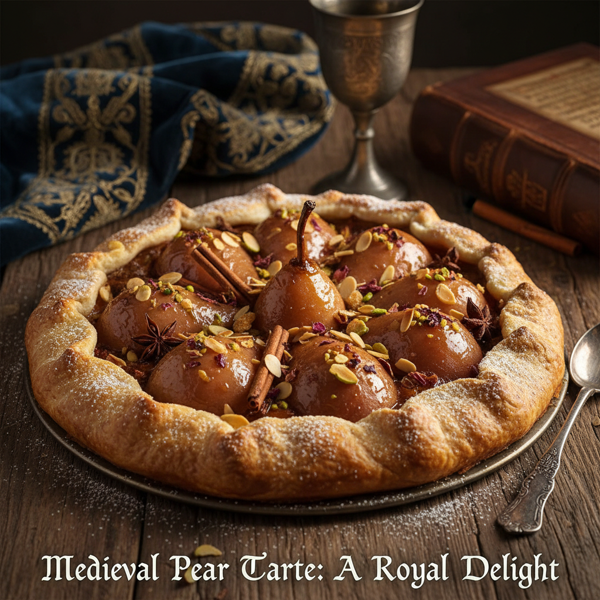
Inspired by the classic English recipe from The English Huswife by Gervase Markham, this Medieval Pear Tarte brings history to your table. This two-crust pie, often referred to as a 'coffin,' features tender poached pears enveloped in a fragrant vino syrup, enriched with warming spices and delicate rose water. With a beautifully golden crust and a luscious filling, this dessert is perfect for special gatherings or a cozy evening at home. Serve it warm, paired with a dollop of cream, and transport yourself to a time of feasting and celebration.
N/A
Servings
N/A
Calories
11
Ingredients
Ingredients
Dry white wine
3 cups (None)
Sugar
1 cup (For wine mixture)
Sugar
1/4 cup (For pear filling)
Cinnamon stick
1 (None)
Whole cloves
4-5 (None)
Firm ripe pears (e.g., bosc)
3 lbs (Peeled, halved, and cored)
Rose water
1 teaspoon (For wine syrup)
Double crust pie crust
1 (Prepared and rolled out)
Butter
1 tablespoon (Melted)
Rose water
1/2 teaspoon (For butter mixture)
Sugar
1 tablespoon (For crust topping)
Instructions
1
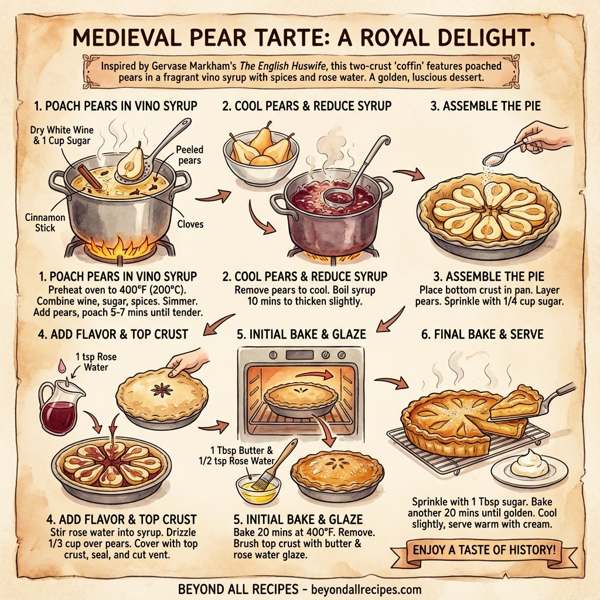
Preheat your oven to 400°F (200°C).
2
In a large, heavy pot over medium heat, combine the dry white wine and 1 cup of sugar, stirring until the sugar has dissolved.
3
Add the cinnamon stick and whole cloves to the pot.
4
While the mixture warms, peel the pears, slice them in half from top to bottom, and remove the cores.
5
Once the wine mixture begins to simmer, carefully add the halved pears and poach them for about 5-7 minutes, or until they are just tender but not falling apart.
6
Using a slotted spoon, remove the pears and set them aside to cool.
7
Increase the heat on the wine mixture to bring it to a rolling boil and reduce it down for about 10 minutes, allowing it to thicken slightly.
8
Place the bottom crust of the double crust pie in a pie pan and layer the poached pear halves on top, cut-side up.
9
Sprinkle the pears with 1/4 cup of sugar, distributing it evenly.
10
Remove the cinnamon stick and cloves from the wine syrup, then stir in 1 teaspoon of rose water until combined.
11
Drizzle 1/3 cup of the wine syrup over the pear halves, ensuring they are well coated.
12
Carefully place the top crust over the pie, sealing the edges by folding the top crust over the edge of the bottom crust and pressing it gently to create a seal.
13
Cut a vent hole in the center of the pie to allow steam to escape.
14
Place the pie on the center rack of your preheated oven and bake for 20 minutes.
15
After 20 minutes, remove the pie from the oven and melt 1 tablespoon of butter with 1/2 teaspoon of rose water. Brush this mixture generously over the top crust.
16
Sprinkle another tablespoon of sugar over the buttered crust.
17
Return the pie to the oven and bake for an additional 20 minutes, or until the crust is golden brown and the filling is bubbling slightly.
18
Allow the pie to cool for a few minutes before serving warm for the best flavor.
Nutrition Information
Frequently Asked Questions
Frequently Asked Questions
What is a Medieval Pear Tarte?
A Medieval Pear Tarte is a traditional two-crust pie, historically known as a 'coffin,' featuring poached pears in a spiced wine syrup.
What is the historical origin of this recipe?
This recipe is inspired by the classic English cookbook 'The English Huswife' by Gervase Markham, published in the 17th century.
What type of pears are recommended for this recipe?
Firm, ripe pears such as Bosc are recommended because they maintain their shape during the poaching and baking process.
Why is the pie referred to as a 'coffin'?
In medieval culinary terms, a 'coffin' refers to a crust or pastry case that completely encloses the filling.
What temperature should the oven be set to?
The oven should be preheated to 400 degrees Fahrenheit or 200 degrees Celsius.
What kind of wine is used for poaching the pears?
The recipe calls for three cups of dry white wine to create the poaching liquid.
How long should the pears be poached?
Pears should be poached for approximately 5 to 7 minutes until they are just tender but not falling apart.
What spices are included in the poaching liquid?
The poaching liquid is flavored with one cinnamon stick and four to five whole cloves.
Do I need to peel the pears before poaching?
Yes, the pears should be peeled, halved, and cored before being added to the simmering wine mixture.
What is the purpose of reducing the wine mixture?
The wine mixture is boiled for about 10 minutes after poaching to thicken it into a concentrated syrup.
How is the rose water used in this recipe?
Rose water is used twice: one teaspoon is stirred into the wine syrup, and half a teaspoon is mixed with melted butter for the crust glaze.
How much sugar is added to the pear filling itself?
A quarter cup of sugar is sprinkled evenly over the pears once they are layered in the bottom crust.
How much wine syrup should be drizzled over the pears?
You should drizzle one-third cup of the reduced wine syrup over the pear halves before adding the top crust.
How do I seal the double crust?
Seal the pie by folding the top crust over the edge of the bottom crust and pressing gently to create a secure seal.
Why must a vent hole be cut in the top crust?
A vent hole allows steam to escape during the baking process, preventing the crust from bursting or becoming soggy.
How long is the initial baking time?
The pie bakes for an initial 20 minutes before the glaze is applied.
What is used to glaze the top of the pie?
The glaze is a mixture of one tablespoon of melted butter and half a teaspoon of rose water, finished with a sprinkle of sugar.
What is the total baking time for the Medieval Pear Tarte?
The total baking time is approximately 40 minutes: 20 minutes initially and another 20 minutes after glazing.
How do I know when the tart is done?
The tart is finished when the crust is golden brown and the pear filling is bubbling slightly.
Should the tart be served warm or cold?
For the best flavor, it is recommended to serve the tart warm.
What are some recommended toppings for this dessert?
This tart pairs beautifully with a dollop of fresh cream.
Can I substitute the white wine?
While dry white wine is traditional for this specific 'royal' flavor profile, a light fruit juice could be used as a non-alcoholic alternative.
How many pears are needed for 3 lbs?
Depending on the size of the Bosc pears, 3 lbs usually equates to about 5 to 7 medium-sized pears.
Is the crust homemade or store-bought?
The recipe specifies one double crust pie crust, which can be either prepared from scratch or store-bought.
What does rose water add to the dish?
Rose water adds a delicate, floral aroma that was very popular in medieval and Renaissance-era sweets.
Can I leave the cloves in the pie?
No, you should remove the cinnamon stick and whole cloves from the wine syrup before drizzling it over the pears.
How should the pears be arranged in the pan?
The poached pear halves should be layered in the bottom crust with the cut-side facing up.
Is this recipe suitable for special occasions?
Yes, its 'Royal Delight' title and unique historical profile make it perfect for feasts, celebrations, or holiday gatherings.
Does the recipe contain any protein?
Based on the ingredients list, the protein content is negligible, as it is primarily a fruit and pastry-based dessert.
How long should the pie cool before serving?
It is best to let the pie rest for a few minutes after taking it out of the oven to let the syrup set slightly before slicing.