Luxurious Thai Shrimp & Chicken Pad Thai
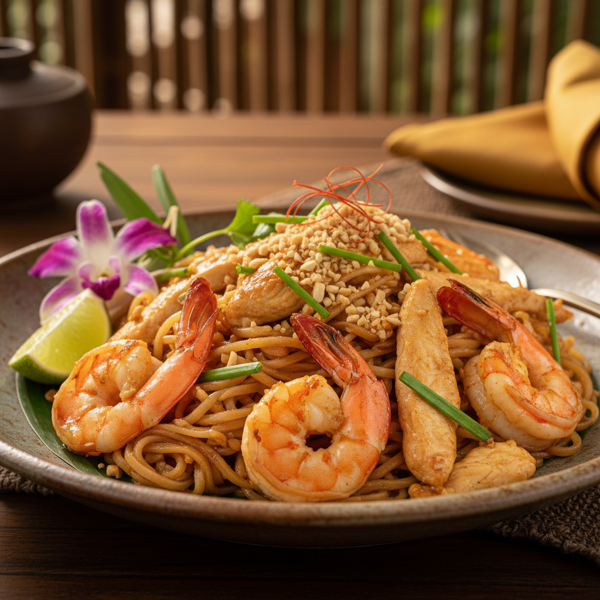
This Luxurious Thai Shrimp & Chicken Pad Thai is a culinary delight that combines vibrant flavors and textures in a simple yet sophisticated dish. The soft rice noodles, succulent shrimp, and tender chicken are enveloped in a tangy tamarind sauce, enriched by roasted peanuts and fresh vegetables. Perfect for a special lunch, this dish is not only a feast for the senses but also an impressive centerpiece for any gathering. While ensuring the right amount of oil is crucial to preventing sticking, don’t shy away from the richness of this dish. Each bite promises a burst of flavor, topped with crispy bean sprouts, fresh coriander, and a squeeze of lime to enhance the experience. Serve it hot, and watch your guests savor every mouthful!
N/A
Servings
600
Calories
19
Ingredients
Ingredients
Thai rice noodles
8 ounces (Soaked in cold water for at least 1 hour.)
Tamarind paste
1/4 cup (Soaked in warm water for 15 minutes.)
Water
1/4 cup (Warm.)
Boneless skinless chicken breasts
4 ounces (Sliced into 1/4-inch strips.)
Fried tofu
4 ounces (Cut into 3/4-inch cubes.)
Roasted unsalted peanuts
6 tablespoons (Ground into a coarse meal.)
Fish sauce
3 tablespoons (Used directly.)
Sugar
2 tablespoons (Used directly.)
Lime juice
2 tablespoons (Used directly.)
Vegetable oil
1/2 cup (For stir-frying.)
Chopped garlic
1 teaspoon (Used directly.)
Large shrimp
8 pieces (about 5 oz) (Shelled and deveined.)
Eggs
2 (Used directly.)
Bean sprouts
1 cup (Used directly.)
Green onions
2 (Cut into 1-inch pieces.)
Roasted chili
1/2 teaspoon (For garnish.)
Red pepper
Strips (For garnish.)
Fresh coriander leaves
As needed (For garnish.)
Lime wedges
As needed (For serving.)
Instructions
1
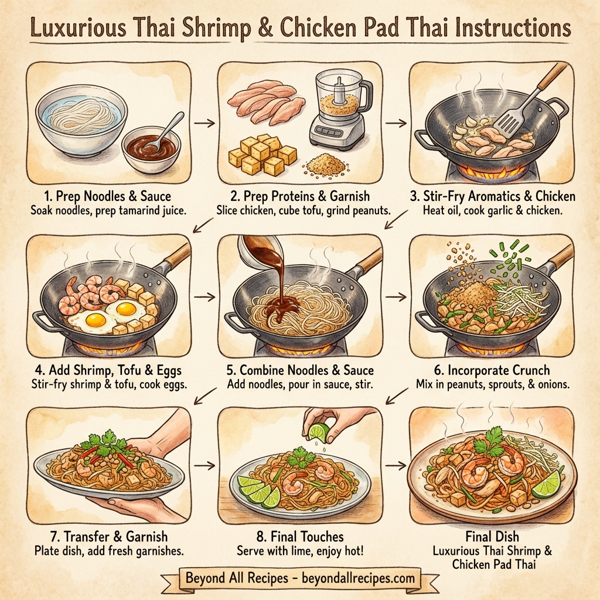
Soak the Thai rice noodles in cold water for at least one hour until soft and pliable. Drain and set aside.
2
In a small bowl, combine 1/4 cup of warm water with the tamarind paste and let it soak for a minimum of 15 minutes.
3
For easier slicing, place the chicken breasts in the freezer for 15-20 minutes until slightly firm. Slice the chicken into 1/4-inch strips and set aside.
4
Cut the fried tofu into 3/4-inch cubes and set aside.
5
Grind roasted peanuts in a blender or food processor until they reach a coarse meal consistency. Set aside.
6
Mash the soaked tamarind paste in the water and strain it through a fine mesh sieve, discarding the solids. You should have about 5 tablespoons of tamarind juice. Mix the tamarind juice with fish sauce, lime juice, and sugar. Set aside.
7
Heat the vegetable oil in a large wok or frying pan until it is shimmering but not smoking.
8
Add chopped garlic to the oil and stir-fry for about 30 seconds until fragrant. Add sliced chicken and stir-fry for 1 minute until the chicken is nearly cooked through.
9
Add cubed tofu and shrimp to the wok, stir-frying for an additional minute until prawns are pink and opaque.
10
Crack the eggs into the wok, cooking without breaking the yolks for 1-2 minutes, just until they begin to set.
11
Quickly drain the soaked noodles and add them to the wok. Fold the mixture gently to prevent sticking, stir-frying for about 1 minute.
12
Pour in the reserved tamarind sauce and continue stir-frying, mixing everything together for another 1-2 minutes until the noodles are al dente.
13
Incorporate 2/3 of the ground peanuts and 2/3 of the bean sprouts along with all the green onions. Stir-fry for an additional 30 seconds.
14
Transfer the pad thai to a serving platter, garnishing with the remaining ground peanuts, bean sprouts, red pepper strips, and fresh coriander leaves.
15
Serve with lime wedges on the side and enjoy while hot!
Nutrition Information
35g
Fat
65g
Carbs
22.5g
Protein
Frequently Asked Questions
Frequently Asked Questions
What is the main flavor profile of this Pad Thai?
The dish features a tangy tamarind sauce enriched by fish sauce, lime juice, and sugar, providing a balance of sweet, sour, and savory flavors.
How long should I soak the Thai rice noodles?
The rice noodles should be soaked in cold water for at least one hour until they are soft and pliable.
What is the secret to slicing the chicken thinly?
Place the chicken breasts in the freezer for 15-20 minutes until slightly firm; this makes it much easier to slice them into 1/4-inch strips.
How do I prepare the tamarind for the sauce?
Soak 1/4 cup of tamarind paste in 1/4 cup of warm water for 15 minutes, then mash and strain it through a sieve to collect about 5 tablespoons of juice.
What ingredients make up the Pad Thai sauce?
The sauce is a mixture of tamarind juice, fish sauce, lime juice, and sugar.
What size should the fried tofu be cut into?
The fried tofu should be cut into 3/4-inch cubes.
How should the roasted peanuts be prepared?
Grind the roasted unsalted peanuts in a blender or food processor until they reach a coarse meal consistency.
How much oil is required for this recipe?
The recipe calls for 1/2 cup of vegetable oil to ensure the noodles do not stick during stir-frying.
How do I cook the eggs in the wok?
Crack the eggs into the wok and cook them without breaking the yolks for 1-2 minutes until they just begin to set before adding the noodles.
How long should I stir-fry the chicken?
Stir-fry the sliced chicken for about 1 minute until it is nearly cooked through after sautéing the garlic.
When do I add the shrimp and tofu?
Add the cubed tofu and shrimp after the chicken is nearly cooked, and stir-fry for an additional minute until the prawns are pink and opaque.
How many calories are in a serving of this Pad Thai?
This dish contains approximately 600 calories per serving.
What is the protein content of this dish?
There are 22.5 grams of protein in this Luxurious Thai Shrimp & Chicken Pad Thai.
What are the suggested garnishes for serving?
Garnish with ground peanuts, bean sprouts, red pepper strips, fresh coriander leaves, and lime wedges.
How should the green onions be prepared?
The green onions should be cut into 1-inch pieces before being added to the stir-fry.
Is there any spice in this recipe?
Yes, 1/2 teaspoon of roasted chili is used as a garnish to add a hint of heat.
How do I prevent the noodles from sticking together?
Ensure you use the full 1/2 cup of oil and fold the mixture gently when adding the noodles to the wok.
What kind of shrimp should be used?
Use 8 large shrimp (about 5 oz) that have been shelled and deveined.
How long should the noodles cook once the sauce is added?
Continue stir-frying and mixing for 1-2 minutes until the noodles reach an al dente texture.
What type of garlic preparation is needed?
The recipe requires 1 teaspoon of chopped garlic.
Can I use cold water to soak the tamarind?
The recipe specifically recommends using 1/4 cup of warm water for 15 minutes to properly soften the tamarind paste.
How much fat is in this recipe?
There are 35 grams of fat per serving in this dish.
How many grams of carbohydrates does this dish have?
This Pad Thai contains 65 grams of carbohydrates.
When should the bean sprouts be added?
Add 2/3 of the bean sprouts during the final 30 seconds of stir-frying and use the remaining 1/3 as a fresh garnish.
How many ingredients are listed in this recipe?
There are 19 ingredients total, including garnishes.
Is the chicken breast skinless?
Yes, the recipe specifies using 4 ounces of boneless, skinless chicken breasts.
Should the noodles be drained before adding to the wok?
Yes, quickly drain the soaked noodles before adding them to the wok to prevent excess water from entering the dish.
What kind of noodles are used?
The recipe uses 8 ounces of Thai rice noodles.
What is the very last step before serving?
The final step is to transfer the Pad Thai to a platter and garnish with peanuts, sprouts, pepper, and coriander.
Can this be served cold?
It is best served immediately while hot to ensure the textures of the noodles and proteins are optimal.