Luxurious Homemade Dulce de Leche
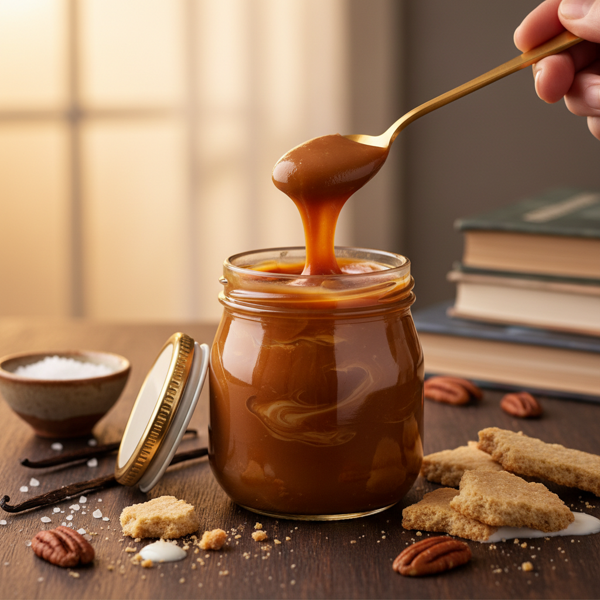
Indulge in the rich, creamy goodness of this homemade Dulce de Leche, a classic dessert that adds a touch of sweetness to any dish. This recipe, inspired by Good Eats, combines simplicity with unparalleled flavor. Made with just a few ingredients including whole milk, sugar, and vanilla bean, this dish transforms into a luscious caramel sauce that's perfect for drizzling over ice cream, pancakes, or even enjoying straight from the jar. With a velvety texture and a deep mahogany hue, this Dulce de Leche will delight your taste buds and impress your friends and family. Perfect for special occasions or as a treat for yourself, this recipe is sure to become a cherished staple in your kitchen.
N/A
Servings
200
Calories
4
Ingredients
Ingredients
Whole Milk
1 quart (none)
Sugar
12 ounces (by weight (approximately 1.5 cups))
Vanilla Bean
1 (split and seeds scraped)
Baking Soda
1/2 teaspoon (none)
Instructions
1
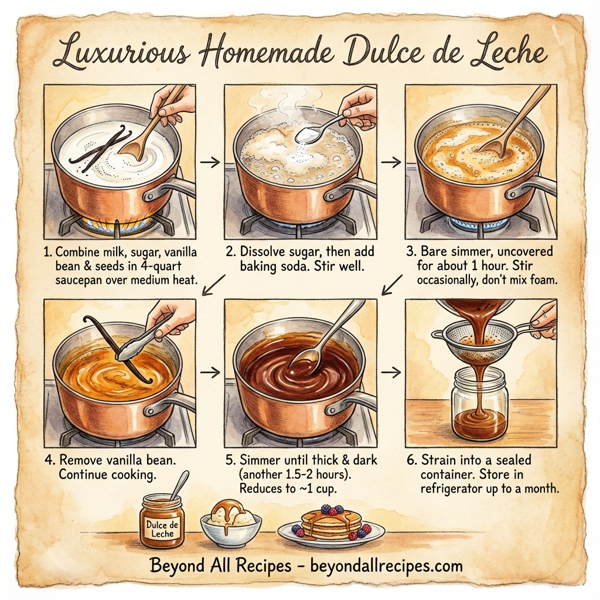
In a large, 4-quart saucepan, combine the whole milk, sugar, the split vanilla bean, and scraped seeds. Place the saucepan over medium heat.
2
Stir the mixture occasionally and bring it to a gentle simmer until the sugar has fully dissolved. Once dissolved, add the baking soda and stir well to incorporate.
3
Lower the heat to maintain a bare simmer, cooking the mixture uncovered. Stir periodically to prevent sticking, but do not re-incorporate the foam that forms on top. Allow this mixture to cook for about 1 hour.
4
After 1 hour, carefully remove the vanilla bean from the saucepan. Continue to cook the mixture until it thickens to a dark caramel color and reduces to approximately 1 cup, which should take another 1.5 to 2 hours.
5
Once you've reached the desired color and consistency, strain the Dulce de Leche through a fine mesh strainer to ensure a smooth texture.
6
Transfer the final product into a sealed container and store it in the refrigerator. It will keep for up to a month, ready to add a touch of luxurious sweetness to your favorite desserts.
Nutrition Information
0g
Fat
50g
Carbs
5g
Protein
Frequently Asked Questions
Frequently Asked Questions
What is the primary flavor profile of this Dulce de Leche?
This Dulce de Leche offers a rich, creamy, and deep caramel flavor with aromatic notes of real vanilla bean.
How long does it take to make homemade Dulce de Leche?
The total cooking time is approximately 2.5 to 3 hours to achieve the proper thickness and dark mahogany color.
What ingredients are required for this recipe?
You will need 1 quart of whole milk, 12 ounces of sugar, one vanilla bean, and 1/2 teaspoon of baking soda.
Why is baking soda used in Dulce de Leche?
Baking soda helps prevent the milk from curdling and aids in the Maillard reaction, which gives the sauce its deep caramel color.
What type of milk is best for this recipe?
Whole milk is recommended to achieve the most luxurious and creamy texture.
How much Dulce de Leche does this recipe yield?
This recipe reduces the initial mixture down to approximately 1 cup of finished sauce.
Should the pot be covered while cooking?
No, the mixture should be cooked uncovered to allow the liquid to evaporate and the sauce to thicken.
How should I prepare the vanilla bean?
The vanilla bean should be split lengthwise and the seeds scraped out; both the seeds and the pod are added to the milk.
When should I remove the vanilla bean pod?
Remove the vanilla bean pod after the first hour of simmering.
What size saucepan is recommended?
A large, 4-quart saucepan is ideal to prevent the milk from boiling over when the baking soda is added.
How often should I stir the mixture?
Stir the mixture occasionally to prevent sticking, but avoid re-incorporating the foam that forms on the surface.
What is the best way to store the finished product?
Store the Dulce de Leche in a sealed container in the refrigerator.
How long does homemade Dulce de Leche last in the fridge?
It will keep well for up to one month when stored properly in a sealed container.
Do I need to strain the sauce?
Yes, straining the sauce through a fine mesh strainer ensures a perfectly smooth and velvety final texture.
What heat setting should I use for simmering?
Once the sugar dissolves, lower the heat to maintain a very gentle, bare simmer.
Can I use this as a topping for pancakes?
Yes, it is excellent as a topping for pancakes, waffles, or ice cream.
What color should the Dulce de Leche be when finished?
It should reach a dark caramel or deep mahogany hue.
Is this recipe gluten-free?
Based on the ingredients listed (milk, sugar, vanilla, baking soda), this recipe is naturally gluten-free.
Can I use vanilla extract instead of a vanilla bean?
While a vanilla bean provides the best flavor, you can substitute 1-2 teaspoons of pure vanilla extract, added at the end of cooking.
Why didn't my sauce thicken enough?
It likely needs more time to reduce; continue simmering until the volume has decreased to about 1 cup.
Can I use brown sugar instead of white sugar?
Traditional Dulce de Leche uses white sugar; using brown sugar will change the flavor profile and acidity level.
Is this recipe inspired by any particular source?
Yes, this specific method is inspired by the techniques found in Good Eats.
What is the calorie count for this dessert?
The recipe provides an estimate of 200 calories per serving.
Can I double the recipe?
Yes, you can double the ingredients, but ensure you use a much larger pot and expect a longer reduction time.
What if my sauce has small lumps?
Straining the mixture through a fine mesh strainer at the end of the process will remove any small lumps and the vanilla seeds.
Can I use goat milk instead of cow milk?
Using goat milk would result in 'Cajeta,' which is a similar and delicious goat-milk version of this caramel.
Does the sauce thicken more as it cools?
Yes, Dulce de Leche will thicken significantly once it is refrigerated.
Is this the same as sweetened condensed milk?
No, while similar in ingredients, Dulce de Leche is cooked much longer until it caramelizes and turns brown.
Can I freeze Dulce de Leche?
While it can be frozen, the texture is best when kept in the refrigerator for up to a month.
What happens if I stir in the foam?
Stirring in the foam can result in a grainier texture; it is best to leave it undisturbed or skim it off.