Luscious Puran Poli Delight
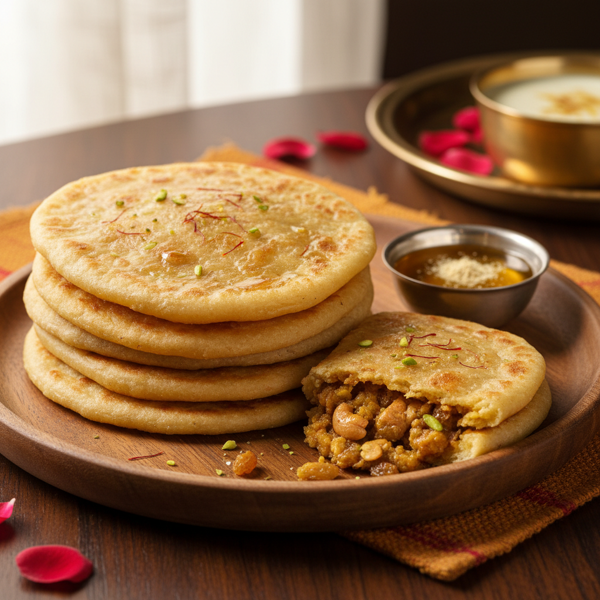
Celebrate the festival of Holi with this delightful recipe for Luscious Puran Poli, a traditional Indian sweet flatbread that embodies the essence of home and festivity. This cherished dish is made with a rich stuffing of sweetened and spiced split pigeon peas, enveloped in a soft, flaky whole wheat dough. The meticulous process of preparing the filling and dough pays homage to the love and tradition passed down through generations. With hints of cardamom, saffron, and nutmeg, each bite is a taste of nostalgia and happiness, further elevated by the generous drizzle of aromatic ghee. Perfect for sharing with family and friends, these Puran Polis are a true celebration of flavor and culture, bringing warmth and joy to every occasion.
8
Servings
N/A
Calories
10
Ingredients
Ingredients
Whole wheat flour
3 cups (sifted, plus extra for dredging)
Water
1 1/2 cups (for binding)
Salt
1/4 teaspoon ( )
Oil
1/2 teaspoon ( )
Ghee
2-5 tablespoons (for cooking and basting)
Split pigeon peas
1/2 cup (cooked in 1 cup water until softened)
Sugar
1/2 cup (to taste)
Green cardamom pods
3-4 (seeded and finely powdered)
Saffron strands
2-3 ( )
Grated nutmeg
1/4 teaspoon ( )
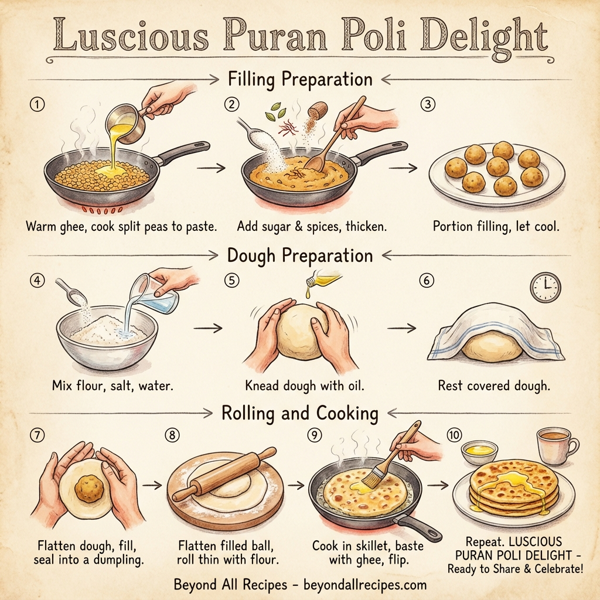
Instructions
Nutrition Information
Frequently Asked Questions
Frequently Asked Questions
What is Puran Poli?
Puran Poli is a traditional Indian sweet flatbread made with a spiced lentil filling enveloped in a soft whole wheat dough.
Which festival is Puran Poli traditionally associated with?
This recipe is a cherished dish for celebrating the festival of Holi.
What are the main ingredients for the Puran Poli filling?
The filling consists of cooked split pigeon peas, sugar, ghee, cardamom powder, saffron, and nutmeg.
What type of flour is used for the dough?
The recipe uses 3 cups of sifted whole wheat flour for the dough.
How many Puran Polis does this recipe make?
This recipe is designed to yield 8 servings.
Which spices provide the aroma in this recipe?
The dish is flavored with crushed cardamom powder, saffron strands, and grated nutmeg.
What type of lentils are required?
The recipe calls for 1/2 cup of split pigeon peas, also known as toor dal.
How long should the dough rest?
The dough should rest for at least 30 minutes to enhance its elasticity.
What is the ideal consistency of the dough?
The dough should be firm but pliable, similar to the consistency of modeling clay.
How do you prepare the split pigeon peas for the filling?
Cook 1/2 cup of split pigeon peas in 1 cup of water until they are softened.
What is the role of ghee in this recipe?
Ghee is used to sauté the filling and to baste the Puran Polis while they cook on the skillet.
How do you prevent the filling from spilling out during rolling?
Seal the dough completely around the filling ball and roll it out carefully and gently into a circle.
What size should the Puran Poli be when rolled out?
Each portion should be rolled out into an 8-inch circle.
How do you cook the Puran Poli?
Cook on a nonstick skillet over medium heat for about one minute per side, basting with ghee until slightly bubbled.
Is there salt in the Puran Poli dough?
Yes, 1/4 teaspoon of salt is added to the whole wheat flour.
What should I do if the filling is too thin?
Stir the mixture continuously over low heat until the excess water evaporates and it reaches a mashed potato-like consistency.
Can I adjust the sweetness of the filling?
Yes, you can adjust the 1/2 cup of sugar to suit your personal taste.
Why is the filling refrigerated before use?
Allowing the filling to cool and then chilling it makes it easier to handle and wrap inside the dough.
How much oil is added to the dough?
The recipe uses 1/2 teaspoon of oil kneaded into the dough for moisture.
How do you seal the dough after adding the filling?
Fold the dough disk over the filling like a dumpling and pinch the edges to seal it completely.
What temperature should the skillet be when starting?
Heat the skillet over medium-high heat initially, then reduce to medium once you begin cooking.
How much water is needed for the dough?
Approximately 1 1/2 cups of water are used to bind the flour into a dough.
Does this recipe use saffron?
Yes, 2-3 saffron strands are incorporated into the sweet filling.
How much nutmeg is recommended?
The recipe suggests 1/4 teaspoon of grated nutmeg.
Should the flour be sifted?
Yes, the 3 cups of whole wheat flour should be sifted for a smoother dough texture.
How many cardamom pods are used?
The recipe uses 3-4 green cardamom pods, which are seeded and finely powdered.
What is the first step in preparing the filling?
Warm two tablespoons of ghee in a nonstick saucepan over low heat before adding the cooked peas.
Is this recipe suitable for vegetarians?
Yes, this traditional sweet flatbread recipe is vegetarian.
How do you keep the Puran Polis soft after cooking?
Keep the cooked Puran Polis covered to retain their warmth and moisture.
What is the texture of a finished Puran Poli?
It should be a soft, flaky flatbread with a smooth, sweet, and spiced interior.