Luscious Moong Dal Halwa
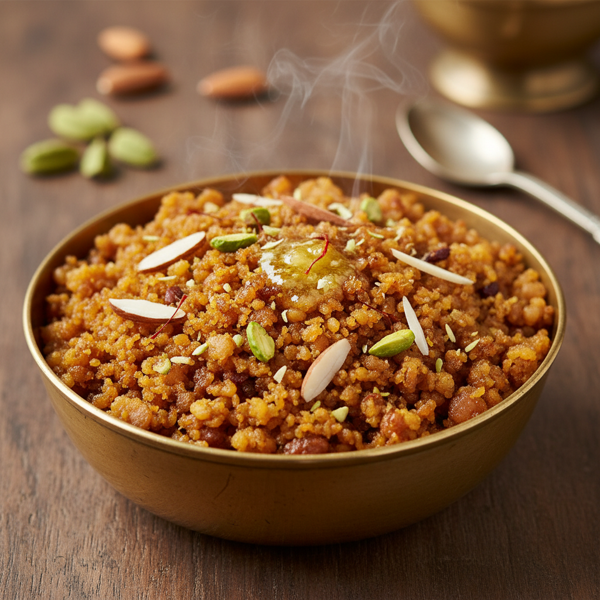
Indulge in the rich and delectable Luscious Moong Dal Halwa, a traditional Pakistani dessert that harmoniously blends the earthy flavors of split yellow lentils with aromatic spices and a hint of sweetness. This enticing treat is made with freshly ground moong dal, simmered to perfection with almonds and cardamom, resulting in a smooth, nutty, and fragrant halwa. Ideal for festive occasions or as a comforting dessert, this recipe provides a delightful way to enjoy the nutritional benefits of lentils while satisfying your sweet tooth. Perfect for sharing with family and friends, this dish captures the essence of Pakistani culinary heritage.
4
Servings
140
Calories
7
Ingredients
Ingredients
Split yellow lentils (moong daal)
120g (Washed and soaked for 30 minutes, then drained and ground into a rough paste)
Cardamom pods
2 (Crushed into powder)
Cooking oil
5 tablespoons (None)
Skimmed dry milk
100g (None)
Almonds
25g (Chopped)
Low-calorie sugar (Splenda granular)
20g (None)
Water
100ml (None)
Instructions
1
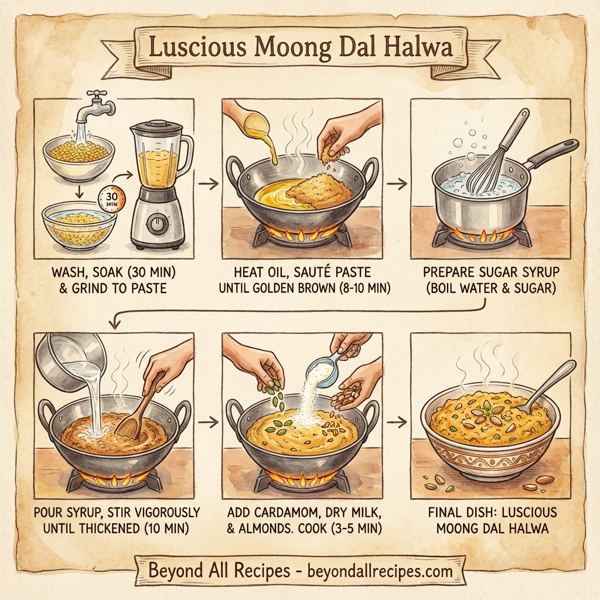
Begin by washing the split yellow lentils thoroughly and soaking them in water for 30 minutes. After soaking, drain the water and grind the lentils into a rough paste using a blender or food processor.
2
In a deep kadhai or heavy-duty pan, heat the cooking oil over medium heat. Add the lentil paste to the hot oil and sauté continuously until the mixture turns light golden brown and releases a nutty aroma. This should take about 8-10 minutes.
3
While the lentil mixture is frying, prepare the sugar syrup. In a separate saucepan, combine water and sugar, then bring it to a boil. Stir continuously until the sugar is completely dissolved, creating a syrup.
4
Once the lentil paste is nicely fried, carefully pour the sugar syrup into the kadhai with the lentils. Cook the mixture over low to medium heat, stirring vigorously to incorporate and ensure there are no lumps. Continue to cook until the mixture thickens and starts to leave the sides of the pan, approximately 10 minutes.
5
Add the crushed cardamom powder, skimmed dry milk, and chopped almonds to the thickened mixture. Stir well to combine and let it cook for another 3-5 minutes. The halwa should be slightly sticky but cohesive. Adjust sweetness if desired.
Nutrition Information
6.25g
Fat
16.75g
Carbs
4.75g
Protein
3g
Fiber
0.5g
Sugar
Frequently Asked Questions
Frequently Asked Questions
What is Luscious Moong Dal Halwa?
Luscious Moong Dal Halwa is a traditional Pakistani dessert made from split yellow lentils, aromatic spices, and a hint of sweetness.
What are the main ingredients in this recipe?
The main ingredients are split yellow lentils (moong dal), cardamom pods, cooking oil, skimmed dry milk, almonds, low-calorie sugar, and water.
How many calories are in one serving of this halwa?
Each serving contains approximately 140 calories.
How many servings does this recipe make?
This recipe is designed to yield 4 servings.
Is this Moong Dal Halwa a good source of protein?
Yes, it provides about 4.75g of protein per serving, primarily from the lentils and milk powder.
How much fat is in this dessert?
There are 6.25g of fat per serving in this recipe.
What type of lentils should I use?
You should use split yellow lentils, also known as moong dal.
Do the lentils need to be soaked?
Yes, the lentils should be washed thoroughly and soaked in water for 30 minutes before grinding.
What is the recommended preparation for the lentils after soaking?
After soaking and draining, the lentils should be ground into a rough paste using a blender or food processor.
How long does it take to sauté the lentil paste?
The lentil paste should be sautéed for about 8-10 minutes until it turns light golden brown and smells nutty.
What type of sweetener is used in this version?
This recipe uses 20g of low-calorie sugar, specifically Splenda granular.
How do I prepare the sugar syrup?
Combine water and sugar in a saucepan and bring it to a boil, stirring until the sugar is completely dissolved.
When should I add the sugar syrup to the lentils?
Add the syrup once the lentil paste has been fried to a light golden brown color.
What spices are used for flavoring?
The halwa is flavored with crushed cardamom powder.
Is milk included in this recipe?
Yes, the recipe calls for 100g of skimmed dry milk to add richness.
Are there nuts in this halwa?
Yes, the recipe includes 25g of chopped almonds for a nutty texture.
How long is the final cooking stage?
After adding the syrup and dry ingredients, cook for an additional 13-15 minutes until thickened and cohesive.
What should the final texture of the halwa be?
The halwa should be smooth, slightly sticky, and cohesive, leaving the sides of the pan.
What is the carbohydrate content per serving?
There are 16.75g of carbohydrates in each serving.
Does this dessert contain much sugar?
This specific low-calorie version contains only 0.5g of sugar per serving.
How much fiber is in this recipe?
Each serving provides approximately 3g of dietary fiber.
Is this recipe suitable for festive occasions?
Yes, Moong Dal Halwa is a classic choice for festive occasions and celebrations in Pakistani culture.
Can I adjust the sweetness level?
Yes, you can adjust the amount of sweetener at the end of the cooking process if desired.
What is the total number of ingredients needed?
The recipe requires 7 main ingredients.
Is there any cholesterol in this dish?
The provided nutritional information does not indicate significant cholesterol levels.
Is this recipe vegan?
No, this recipe contains skimmed dry milk, so it is not vegan.
What equipment is best for cooking the halwa?
A deep kadhai or a heavy-duty pan is recommended for even heat distribution.
Can I use regular milk instead of dry milk?
The recipe specifically calls for skimmed dry milk to achieve the correct consistency and richness.
What does 'sautéing continuously' mean in this context?
It means you must stir the lentil paste constantly while frying to prevent sticking and ensure even browning.
What is the origin of this dish?
This dish captures the essence of traditional Pakistani culinary heritage.