Light and Fluffy Whole Wheat Bread
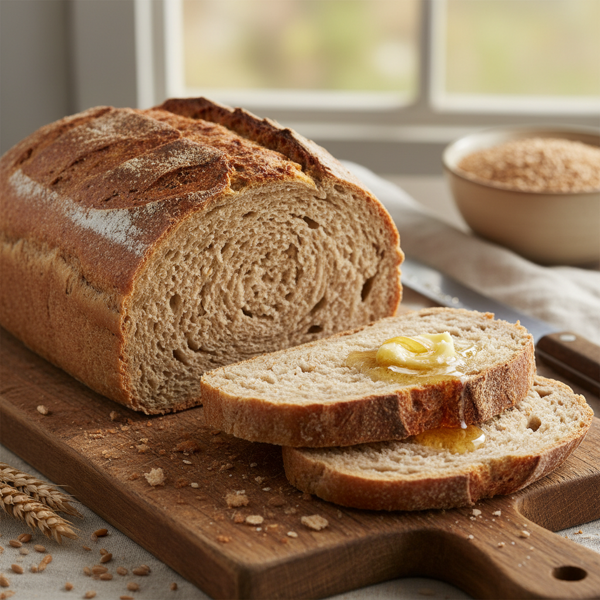
Experience the joy of a light and fluffy whole wheat bread that doesn't compromise on texture or taste. This bread offers the perfect balance of softness found in white bread, while giving you all the nutritious benefits of whole wheat. Whether it's for a sandwich or simply to enjoy with your favorite spread, this bread is sure to satisfy. By carefully adjusting the kneading time and using vital wheat gluten, you're guaranteed a loaf that rises to the occasion. Remember, high-altitude bakers, a slight adjustment may be necessary to achieve the best results.
18
Servings
166
Calories
11
Ingredients
Ingredients
fast rising yeast
4 teaspoons
warm water
3/4 cup
whole wheat flour
1 cup
warm water
2 cups
whole wheat flour
2 cups
dry milk
1/2 cup
vital wheat gluten
1/2 cup
salt
1 tablespoon
sugar
1/3 cup
oil
1/4 cup
whole wheat flour
2-4 cups
Instructions
1
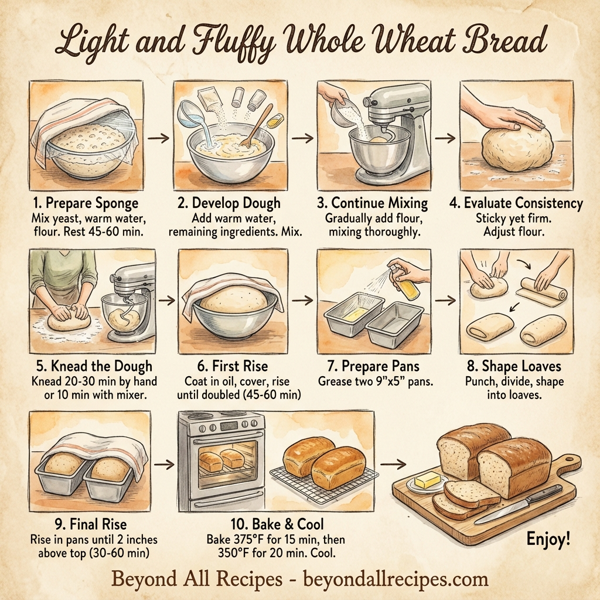
1. Prepare the Sponge: In a large bread mixing bowl, combine the fast rising yeast, 3/4 cup of warm water, and 1 cup of whole wheat flour. Stir until mixed together. Cover with plastic wrap followed by a towel and let it rest in a warm place for 45 minutes to an hour until bubbly.
2
2. Develop the Dough: To the sponge, add 2 cups of warm water, 2 cups of whole wheat flour, dry milk, vital wheat gluten, salt, sugar, and oil. Mix until all ingredients are incorporated.
3
3. Continue Mixing: Gradually add the remaining whole wheat flour, starting with 1 cup at a time, thoroughly mixing each addition before adding more. Depending on the texture desired, 2-4 cups may be used.
4
4. Evaluate Dough Consistency: The dough should be sticky yet firm. Once the right consistency is achieved, additional flour may be included during kneading if necessary.
5
5. Knead the Dough: Knead by hand (20-30 minutes) or with a mixer (10 minutes). Given the dense nature of whole wheat, using a mixer is recommended for optimal texture.
6
6. First Rise: Coat the dough lightly in oil and place it in a bowl where it can expand by at least 1.5 times. Cover with plastic wrap and a towel, allowing it to rise in a warm spot for 45 minutes to an hour until doubled.
7
7. Prepare the Baking Pans: During the rise period, grease or spray two 9”x5” bread pans with butter or a non-stick spray.
8
8. Shape the Loaves: Punch down the dough and gently push out air bubbles. Divide the dough evenly, then shape each piece into a rectangle slightly smaller than the pans and roll them up tightly. Pinch seams together, tuck in the ends, and place seam-side down in the prepared pans.
9
9. Final Rise: Allow the dough to rise for an additional 30 to 60 minutes in a warm environment, covered with a towel, until the loaves reach at least 2 inches above the pan's top.
10
10. Bake Bread: Preheat your oven to 375°F. Bake the loaves for 15 minutes, then reduce the temperature to 350°F and continue baking for another 20 minutes until they turn a deep brown color.
11
11. Cool and Serve: Remove the loaves from the oven, take them out of their pans, and let them cool on a wire rack before slicing. Savor each slice!
Nutrition Information
4.4g
Fat
22g
Carbs
6.7g
Protein
Frequently Asked Questions
Frequently Asked Questions
What makes this whole wheat bread light and fluffy?
The texture is achieved by carefully adjusting the kneading time and using vital wheat gluten to ensure the loaf rises properly.
How do I prepare the sponge for this bread?
Combine fast rising yeast, 3/4 cup warm water, and 1 cup whole wheat flour. Cover and let it rest in a warm place for 45 to 60 minutes until bubbly.
What is the purpose of vital wheat gluten in this recipe?
Vital wheat gluten helps the dense whole wheat flour rise better, resulting in a lighter and fluffier texture similar to white bread.
How long should I knead the dough by hand?
If kneading by hand, you should continue for 20 to 30 minutes to develop the dough properly.
How long should I knead the dough using a mixer?
Using a mixer is recommended for the dense whole wheat dough and typically takes about 10 minutes.
What should the dough consistency be like?
The dough should be sticky yet firm. You can add more flour during the kneading process if needed to reach this consistency.
How many times does the dough need to rise?
The dough rises twice: once for 45-60 minutes after mixing, and a final rise of 30-60 minutes after shaping into loaves.
What size bread pans are required?
This recipe requires two 9x5 inch bread pans.
How high should the bread rise in the pans before baking?
The loaves should rise until they are at least 2 inches above the top of the bread pans.
What are the oven temperatures for baking?
Start by preheating the oven to 375°F for the first 15 minutes, then reduce the temperature to 350°F for the remaining 20 minutes.
How do I know when the bread is finished baking?
The loaves are done when they have turned a deep brown color, typically after a total of 35 minutes in the oven.
Should I cool the bread in the pan?
No, you should remove the loaves from the pans immediately and let them cool on a wire rack before slicing.
Is this recipe suitable for high-altitude baking?
Yes, though high-altitude bakers may need to make slight adjustments for the best results.
How many servings does one recipe produce?
The recipe makes approximately 18 servings.
How many calories are in a serving of this bread?
Each serving contains approximately 166 calories.
What is the protein content per serving?
Each serving provides about 6.7g of protein.
How much sugar is in the recipe?
The recipe calls for 1/3 cup of sugar.
What type of yeast is used?
The recipe specifies 4 teaspoons of fast rising yeast.
Can I use a different type of flour?
This specific recipe is designed for whole wheat flour to provide nutritional benefits while maintaining a soft texture.
How much oil is needed?
The recipe requires 1/4 cup of oil.
What is the total amount of warm water used?
A total of 2 and 3/4 cups of warm water is used (3/4 cup for the sponge and 2 cups for the dough development).
How much dry milk is included?
The recipe uses 1/2 cup of dry milk.
How do I shape the loaves?
Shape the dough into rectangles slightly smaller than the pans, roll them up tightly, pinch the seams, and tuck in the ends.
What should I use to grease the pans?
You can use butter or a non-stick cooking spray to grease the bread pans.
How much salt is in this bread?
The recipe calls for 1 tablespoon of salt.
What is the fat content per serving?
There are 4.4g of fat per serving.
How many carbohydrates are in each slice?
Each serving contains 22g of carbohydrates.
What is the first step in the instructions?
The first step is preparing the sponge by mixing yeast, water, and flour and letting it rest.
What is the category of this recipe?
This recipe is categorized under Yeast Breads.
Can this bread be used for sandwiches?
Yes, its light and fluffy texture makes it perfect for sandwiches or enjoying with your favorite spread.