Lemon Mascarpone Fettuccine with Asparagus and Pine Nuts
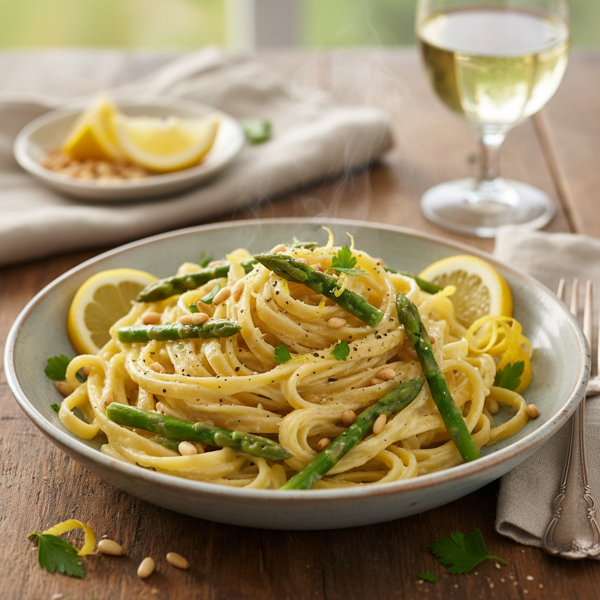
Indulge in the delightful flavors of this Lemon Mascarpone Fettuccine with Asparagus and Pine Nuts. This creamy pasta dish brings together tender fettuccine, vibrant asparagus, and the rich flavors of mascarpone and parmesan, all elevated with a zesty lemon brightness. Toasted pine nuts add a delightful crunch, while fragrant thyme and scallions round out the dish with their aromatic notes. Perfect for a comforting weeknight dinner or a special occasion, this recipe is not just a meal; it's a celebration of seasonal ingredients and fresh flavors. Serve it warm for a hearty experience, and don’t forget to garnish with extra lemon zest for a fragrant finish.
4
Servings
N/A
Calories
18
Ingredients
Ingredients
olive oil
2 tablespoons (plus extra for the pan)
medium-thick asparagus
2 pounds (ends trimmed and cut into 1-inch pieces on an angle)
scallions
8 (cut into thin rounds (whites and tender greens))
lemon zest
2 lemons (finely grated)
lemon juice
1 lemon (about 4 tablespoons)
fresh thyme
3-5 sprigs (leaves chopped)
salt
to taste
black pepper
to taste (freshly ground)
unsalted butter
1 tablespoon
all-purpose flour
1 tablespoon
whole milk
1 cup
mascarpone
1 cup
parmesan cheese
1 cup (or Romano cheese)
cayenne pepper
1 pinch
ground allspice
1 pinch
homemade breadcrumbs
3/4 cup
fresh fettuccine
1 pound (or dry fettuccine)
pine nuts
1/2 cup (lightly toasted)
Instructions
1
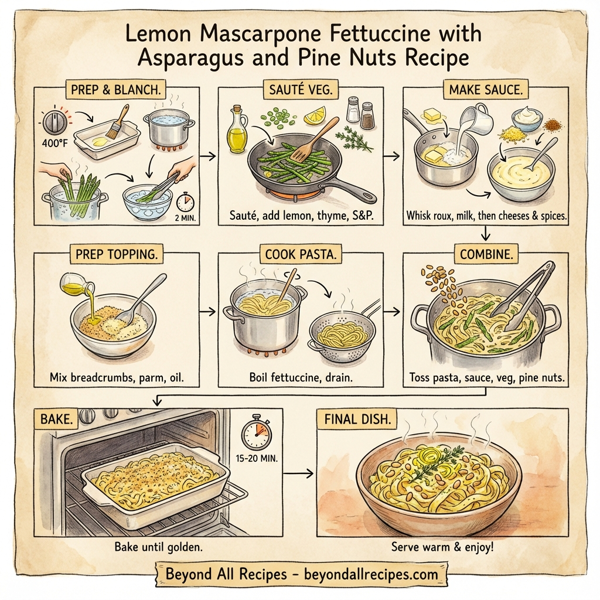
Preheat the oven to 400°F (or 450°F for fresh pasta) and lightly coat a large, shallow baking dish with olive oil.
2
Bring a large pot of salted water to a boil and prepare an ice bath.
3
Blanch the asparagus in the boiling water for about 2 minutes, until tender yet crisp. Transfer to the ice bath immediately to halt the cooking process and maintain color. Drain well.
4
In the same pot, leave the water boiling for cooking pasta later.
5
In a large skillet, heat the olive oil over medium heat. Add the scallions and sauté for about 1 minute to soften.
6
Add the blanched asparagus to the skillet and sauté briefly for about 1 minute. Remove from heat and stir in half of the lemon zest, lemon juice, thyme, salt, and pepper. Set aside.
7
In a medium saucepan, melt the butter over medium heat and whisk in the flour until smooth. Cook for 1 minute while whisking to remove the raw flour taste.
8
Gradually whisk in the milk, continuing until the mixture comes to a boil. Reduce heat and simmer until the sauce thickens slightly, around 3-4 minutes.
9
Remove from heat and add the mascarpone, remaining lemon zest, and 1/2 cup of the parmesan cheese, whisking until mostly smooth. Add in cayenne, allspice, and additional salt and pepper to taste.
10
In a small bowl, combine the breadcrumbs with the remaining parmesan cheese; season with salt and pepper and a drizzle of olive oil. Mix well to combine.
11
Return the pot of water to a boil, then cook the fettuccine according to package instructions, taking care not to overcook. Drain well.
12
Return the fettuccine to the pot and add the mascarpone sauce, toasted pine nuts, and asparagus mixture with all its juices. Toss everything gently until well combined and taste for seasoning adjustments.
13
Transfer the pasta mixture to the prepared baking dish and sprinkle the breadcrumb mixture evenly over the top.
14
Bake uncovered in the preheated oven for 15-20 minutes, until bubbly and golden. Serve immediately for the best taste.
Nutrition Information
Frequently Asked Questions
Frequently Asked Questions
What is the main flavor profile of this Lemon Mascarpone Fettuccine?
This dish features a creamy, rich flavor from mascarpone and parmesan, balanced by zesty lemon and aromatic fresh thyme.
How many servings does this recipe make?
This recipe is designed to serve 4 people.
What is the recommended oven temperature?
The oven should be preheated to 400°F, or 450°F if you are using fresh pasta.
How should I prepare the asparagus?
Trim the ends and cut the medium-thick asparagus into 1-inch pieces on an angle.
Why is an ice bath used in this recipe?
The ice bath is used to immediately stop the cooking process of the asparagus after blanching to keep it tender-crisp and maintain its vibrant green color.
How long should the asparagus be blanched?
Blanch the asparagus in boiling salted water for approximately 2 minutes.
What type of pasta works best for this dish?
Fresh fettuccine is ideal, but dry fettuccine can also be used; just follow the package instructions.
Can I substitute the Parmesan cheese?
Yes, you can use Romano cheese as a substitute for the parmesan cheese.
How do I prepare the pine nuts?
The pine nuts should be lightly toasted to bring out their nutty flavor and add a crunch to the pasta.
What is the base of the creamy sauce?
The sauce is a roux-based mixture made from butter, flour, and whole milk, enriched with mascarpone and parmesan.
How much lemon juice is required?
You will need the juice of one lemon, which is approximately 4 tablespoons.
How much lemon zest should be used?
The recipe calls for the finely grated zest of 2 lemons, divided between the asparagus and the sauce.
What spices are used to season the mascarpone sauce?
The sauce is seasoned with cayenne pepper, ground allspice, salt, and black pepper.
How do I prepare the breadcrumb topping?
Combine homemade breadcrumbs with parmesan cheese, salt, pepper, and a drizzle of olive oil.
How long does the final dish need to bake?
Bake the assembled pasta uncovered for 15-20 minutes until it is bubbly and golden.
What parts of the scallions should be used?
Use both the white parts and the tender green parts, cut into thin rounds.
Is this recipe considered vegetarian?
Yes, this recipe is categorized as a vegetable dish and contains no meat ingredients.
How many ingredients are needed for this recipe?
There are 18 ingredients in total, including staples like salt, pepper, and flour.
Can I use dried thyme instead of fresh?
While fresh thyme is recommended for the best aroma, you can use dried thyme in smaller quantities if necessary.
What type of milk is used for the sauce?
Whole milk is used to ensure the sauce remains rich and creamy.
How do I ensure the pasta doesn't overcook?
Cook the fettuccine according to package instructions but take care to keep it slightly firm as it will bake further in the oven.
What should I do with the asparagus after sautéing?
After sautéing with scallions, stir in half the lemon zest, lemon juice, thyme, salt, and pepper, then set it aside.
What is the purpose of the flour in the sauce?
The flour is whisked into melted butter to create a roux, which acts as a thickening agent for the milk.
Should the baking dish be greased?
Yes, lightly coat a large, shallow baking dish with olive oil before adding the pasta.
How do I combine the pasta and sauce?
Return the drained pasta to the pot and toss gently with the mascarpone sauce, toasted pine nuts, and the asparagus mixture.
What is the final garnish for the dish?
It is recommended to garnish the dish with extra lemon zest for a fragrant finish before serving.
Can I use a different vegetable instead of asparagus?
While asparagus is the star, you could potentially use broccoli rabe or snap peas, though the flavor profile will change.
Is the sauce spicy?
The sauce contains only a pinch of cayenne pepper, which provides a very subtle warmth rather than significant heat.
How should the dish be served for the best experience?
Serve the dish immediately while it is warm and the breadcrumb topping is still crunchy.
What is the texture of the finished dish?
The dish is creamy and tender inside with a delightful crunch from the pine nuts and the golden breadcrumb topping.