Lemon-Infused Chicken Scaloppine with Herbed Glaze
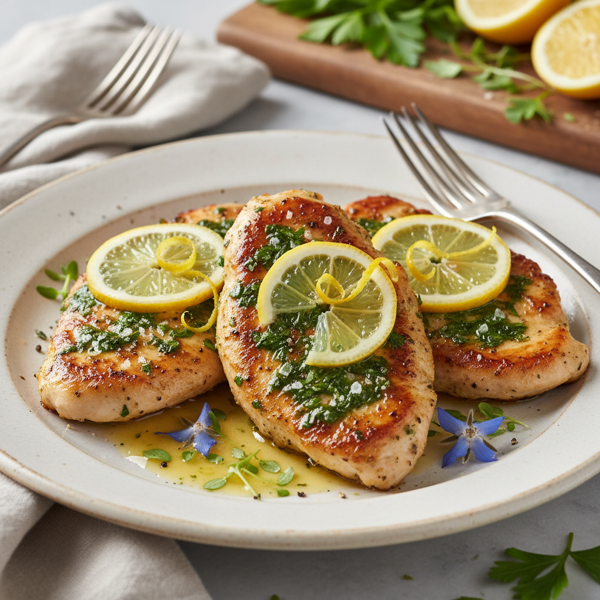
Indulge in the vibrant flavors of our Lemon-Infused Chicken Scaloppine with Herbed Glaze, a light yet satisfying dish that brings the essence of gourmet dining right to your kitchen. Each chicken breast is pounded to tenderness, then coated in a crispy breadcrumb crust that tantalizes the taste buds. The real star of this recipe is the lively lemon glaze, crafted from zesty fresh lemon juice, aromatic chicken broth, and a touch of seasoning, creating a refreshing sauce that seeps into the chicken. For those who adore the briny kick of capers, feel free to incorporate them into the glaze for an additional layer of flavor. This dish is not only easy to prepare but is also low in fat, making it a perfect choice for health-conscious food lovers without sacrificing taste. Serve it with steamed vegetables or a light salad for a balanced meal that shines at any occasion.
N/A
Servings
N/A
Calories
13
Ingredients
Ingredients
boneless skinless chicken breasts
4 (pounded to about 1/3-inch thickness)
Dijon mustard
2 tablespoons
large egg
1 (you may need two)
dry breadcrumbs
1 cup
poultry seasoning
1/4 teaspoon (or to taste)
garlic powder
1/2 teaspoon
seasoning salt
1/4-1/2 teaspoon (to taste)
olive oil
1-2 tablespoons (for frying)
chicken broth
1/4 cup
fresh lemon juice
2 tablespoons
salt
1/4 teaspoon (can use more to taste)
thin lemon slices
4-5
fresh parsley
(chopped to taste)
Instructions
1
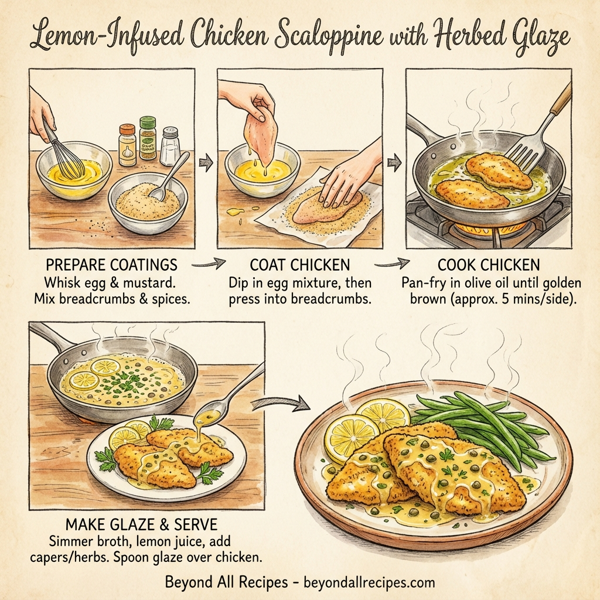
In a small bowl or shallow dish, whisk together the Dijon mustard and egg until well combined; set aside.
2
On a piece of waxed paper, combine the dry breadcrumbs, poultry seasoning, garlic powder, and seasoning salt. Mix them together evenly.
3
Dip each chicken breast first into the egg/mustard mixture, shaking off any excess, and then coat with the breadcrumb mixture by pressing down firmly to adhere the crumbs thoroughly.
4
Heat the olive oil in a large skillet over medium heat. Once hot, add the coated chicken breasts and cook for about 5 minutes on each side, or until they are golden brown and no longer pink inside. Remove the chicken from the skillet and transfer it to a plate to keep warm.
5
For the lemon glaze, in the same skillet, pour in the chicken broth and fresh lemon juice. Add 1/4 teaspoon salt (adjusting to taste) and bring the mixture to a boil, scraping up any brown bits from the bottom of the pan to enhance the flavor.
6
If using capers, stir them into the glaze at this point. Next, add in the thin lemon slices and chopped fresh parsley, mixing everything together and cooking for about 1 minute.
7
To serve, spoon the lovely lemon glaze over the warm chicken and garnish with additional parsley if desired.
Nutrition Information
Frequently Asked Questions
Frequently Asked Questions
What is Lemon-Infused Chicken Scaloppine?
It is a gourmet dish featuring chicken breasts pounded thin, coated in a crispy breadcrumb crust, and topped with a bright lemon and herb glaze.
What does scaloppine mean in this recipe?
Scaloppine refers to the technique of pounding the chicken breasts until they are thin, which ensures even and quick cooking.
How thin should I pound the chicken breasts?
The chicken should be pounded to approximately 1/3-inch thickness.
What ingredients are used for the wet coating?
The wet coating is a mixture of Dijon mustard and a large egg whisked together.
What seasonings are in the breadcrumb mixture?
The breadcrumb mixture includes poultry seasoning, garlic powder, and seasoning salt.
How do I ensure the breadcrumbs stay on the chicken?
After dipping the chicken in the egg mixture, press it down firmly into the breadcrumb mixture to help the crumbs adhere.
What kind of oil should I use for frying?
The recipe calls for 1 to 2 tablespoons of olive oil.
How long does it take to cook the chicken?
The chicken takes about 5 minutes per side over medium heat.
How can I tell when the chicken is finished cooking?
The chicken is done when it is golden brown on the outside and no longer pink on the inside.
What is the base of the lemon glaze?
The glaze is made from chicken broth and fresh lemon juice.
Should I use a new pan for the glaze?
No, use the same skillet used for the chicken to incorporate the flavorful brown bits left behind.
What is the purpose of scraping the pan?
Scraping the bottom of the pan while boiling the glaze releases browned bits that enhance the overall flavor of the sauce.
Can I add capers to this dish?
Yes, capers are an optional addition that provides a briny kick to the glaze.
When should the lemon slices be added?
Add the thin lemon slices to the glaze after it has reached a boil and the pan has been deglazed.
Which fresh herb is used for the glaze?
Freshly chopped parsley is used to add an aromatic herbed finish to the glaze.
How is the final dish assembled?
The warm lemon glaze is spooned over the cooked chicken breasts and garnished with extra parsley.
Is this recipe suitable for a low-fat diet?
Yes, the recipe is designed to be low in fat while maintaining gourmet flavors.
What should I serve with this chicken?
It pairs well with steamed vegetables or a light salad for a balanced meal.
How many chicken breasts does this recipe serve?
The recipe is designed for 4 boneless skinless chicken breasts.
What if I need more egg for the coating?
The recipe notes that you may need to use two eggs depending on the size of the chicken breasts.
Can I adjust the salt levels?
Yes, both the seasoning salt in the breading and the salt in the glaze can be adjusted to your personal taste.
What type of breadcrumbs should I use?
The recipe calls for dry breadcrumbs to create a crispy crust.
How much lemon juice is required?
You will need 2 tablespoons of fresh lemon juice.
What is the role of Dijon mustard in this recipe?
Dijon mustard is mixed with the egg to provide a tangy base that helps the breading stick to the chicken.
Is this recipe difficult to make?
No, it is described as easy to prepare and suitable for quick weeknight meals.
Can I use bottled lemon juice instead of fresh?
Fresh lemon juice is recommended for the best flavor and for the use of fresh lemon slices in the glaze.
How many lemon slices are used in the sauce?
The recipe suggests using 4 to 5 thin lemon slices.
What texture should the chicken have?
The chicken should have a crispy exterior and a tender, juicy interior.
Does the glaze need to be thickened?
The glaze is a light, juice-based sauce that relies on reduction through boiling rather than a thickener like flour.
What are the primary flavor tags for this recipe?
Key flavor profiles include lemon, poultry, herbs, and savory seasoning.