Lemon Herb Brined Roasted Chicken
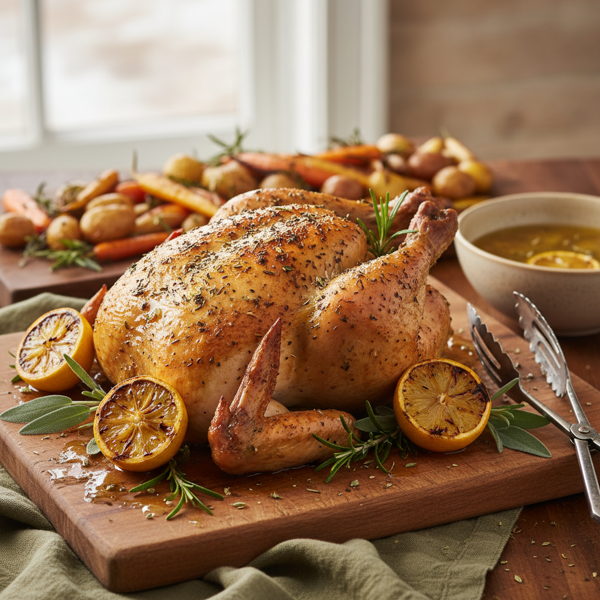
Indulge in the succulent flavors of our Lemon Herb Brined Roasted Chicken. Inspired by a classic recipe from Cook's Illustrated Magazine, this dish transforms a simple whole chicken into a restaurant-quality masterpiece. The secret to its juicy, tender meat lies in a brining process that enhances the flavor and texture. With aromatic herbs, zesty lemons, and garlic infused within, every bite bursts with delightful freshness. Perfect for family gatherings or special occasions, this easy-to-follow recipe is bound to impress your guests and leave them craving more.
4
Servings
375
Calories
9
Ingredients
Ingredients
Kosher salt
1 cup (dissolved in water)
Water
2 quarts (for brining)
Whole chicken
1 (3 1/2-4 lb) (brined and dried)
Vegetable oil cooking spray
as needed (for greasing the rack)
Medium lemons
2 (cut into quarters)
Garlic cloves
6 (peeled and crushed)
Melted butter
2 tablespoons (for brushing)
Ground black pepper
to taste (for seasoning)
Canned chicken broth
1 3/4 cups (for roasting)
Instructions
1
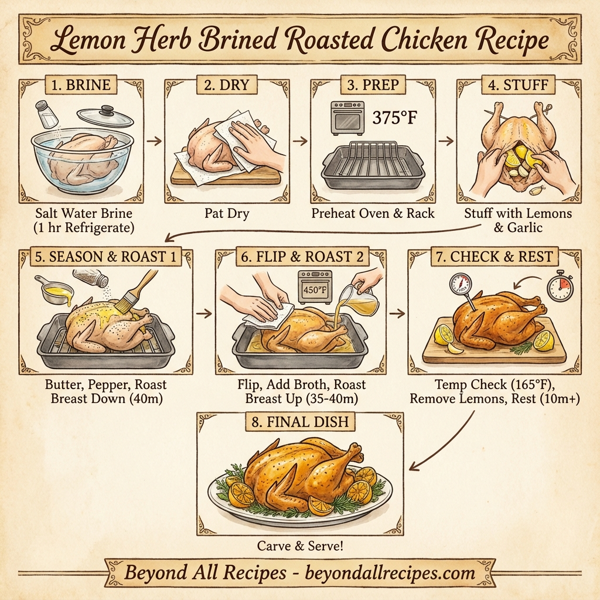
In a large bowl, combine 1 cup of kosher salt with 2 quarts of water, stirring until the salt is fully dissolved. Submerge the whole chicken in the brine and cover it with a lid, placing a small, domed lid on top to keep the chicken submerged. Refrigerate for 1 hour.
2
After brining, remove the chicken from the liquid and pat it dry thoroughly with paper towels. Allow it to rest while you prepare the roasting setup.
3
Preheat your oven to 375 degrees F and adjust the oven rack to the lower-middle position. Spray a V-rack with vegetable oil cooking spray and place it in a flameproof roasting pan or a lasagna pan.
4
Cut the lemons into quarters. Take the garlic cloves and rub them inside the chicken cavity. Stuff the chicken with lemon quarters, fitting in as many as possible without overcrowding. Use long wooden or metal skewers to secure the cavity closed.
5
Brush the exterior of the chicken, particularly the breast side, with melted butter and season generously with ground black pepper. Place the chicken breast side down on the V-rack and roast for 40 minutes.
6
After 40 minutes, carefully remove the roasting pan from the oven and increase the temperature to 450 degrees F. Using wads of paper towels for grip, turn the chicken over so that it is breast side up. Pour the canned chicken broth into the pan, then return the chicken to the oven.
7
Roast for an additional 35 to 40 minutes or until a meat thermometer inserted into the thickest part of the breast reads 165 to 170 degrees F. Once done, carefully remove the lemons from the cavity and let the chicken rest for at least 10 minutes before carving.
8
Carve the chicken, serve, and enjoy the incredible flavors!
Nutrition Information
15g
Fat
1.25g
Carbs
50g
Protein
Frequently Asked Questions
Frequently Asked Questions
Why should I brine the chicken for this recipe?
Brining enhances the flavor and ensures the meat remains juicy and tender throughout the roasting process.
How long does the chicken need to stay in the brine?
The chicken should be submerged in the brine and refrigerated for exactly 1 hour.
What type of salt is best for the brine?
This recipe specifically calls for 1 cup of kosher salt for the brining solution.
Do I need to rinse the chicken after brining?
No, you should remove the chicken from the liquid and pat it dry thoroughly with paper towels without rinsing.
Why is it important to pat the chicken dry?
Drying the skin thoroughly is essential for achieving a crispy, golden-brown texture when roasting.
What temperature should the oven be preheated to?
Initially, preheat your oven to 375 degrees F before placing the chicken inside.
Where should the oven rack be positioned?
Adjust the oven rack to the lower-middle position for even heat distribution.
What equipment is needed for roasting the chicken?
You will need a V-rack and a flameproof roasting pan or a lasagna pan.
How should I prepare the lemons for stuffing?
Cut two medium lemons into quarters before stuffing them into the chicken cavity.
How do I use the garlic in this recipe?
Rub the peeled and crushed garlic cloves inside the chicken cavity before stuffing it with lemons.
How do I keep the lemons inside the chicken?
Use long wooden or metal skewers to secure the cavity closed after stuffing.
Why start the chicken breast side down?
Starting breast side down protects the delicate breast meat from overcooking and keeps it moist.
What should I brush on the exterior of the chicken?
Brush the exterior, especially the breast side, with 2 tablespoons of melted butter.
When do I increase the oven temperature?
Increase the temperature to 450 degrees F after the first 40 minutes of roasting.
How do I flip the chicken safely?
Use wads of paper towels for a firm grip to carefully turn the chicken over so the breast side is up.
Why is chicken broth added to the pan?
The broth prevents the drippings from burning and creates a base for pan juices.
What is the final internal temperature for a cooked chicken?
The chicken is done when a meat thermometer in the thickest part of the breast reads 165 to 170 degrees F.
How long does the total roasting process take?
The total roasting time is approximately 75 to 80 minutes (40 minutes at 375F and 35-40 minutes at 450F).
Should I leave the lemons inside while the chicken rests?
No, carefully remove the lemons from the cavity immediately after taking the chicken out of the oven.
How long should the chicken rest before carving?
Allow the chicken to rest for at least 10 minutes to allow the juices to redistribute.
How many servings does this recipe yield?
This recipe is designed to provide 4 generous servings.
What are the nutritional facts for one serving?
One serving contains approximately 375 calories, 50g of protein, and 15g of fat.
Is this recipe suitable for a low-carb diet?
Yes, with only 1.25g of carbohydrates per serving, it is an excellent low-carb meal.
What size chicken should I buy?
Look for a whole chicken weighing between 3 1/2 and 4 pounds.
Can I substitute the melted butter?
While butter provides the best flavor and browning, you could use olive oil as a substitute.
What if I don't have a V-rack?
You can use a wire cooling rack or create a bed of thick-cut vegetables to keep the chicken elevated.
How much chicken broth is required?
You will need 1 3/4 cups of canned chicken broth.
Can I use different citrus fruits?
While lemons are classic, oranges or limes can be used for a different flavor profile.
Is the salt from the brine included in the nutrition?
Most of the salt is discarded with the brine; however, the sodium level depends on how much is absorbed by the meat.
Where did this recipe inspiration come from?
This recipe is inspired by a classic technique featured in Cook's Illustrated Magazine.