Lemon-Garlic Balsamic Flounder Fillets
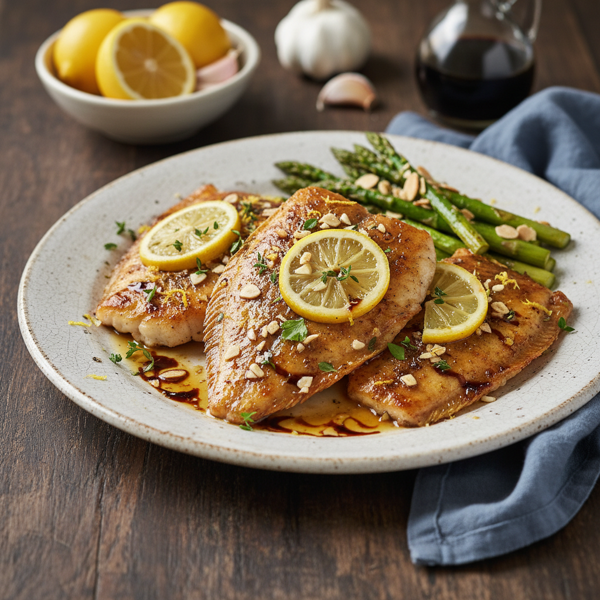
Indulge in the exquisite flavors of Lemon-Garlic Balsamic Flounder Fillets, a cherished recipe from Elswet's mother, who was renowned for her adventurous culinary spirit as an experimental Kitchen Witch. This dish celebrates the delicate texture of flounder, enhanced by a dreamy sauce of balsamic vinegar, fresh lemon, and garlic. Perfectly broiled to flaky perfection, each bite is a harmony of zesty and umami notes, making it an ideal complement to Elswet's fragrant Jasmine Rice. Whether for a special dinner or a cozy meal at home, this recipe captures the essence of Creole cooking with a whimsical twist.
N/A
Servings
N/A
Calories
10
Ingredients
Ingredients
Flounder
10 ounces (cleaned, scaled, and ready to cook (per person))
Lemon juice
1/2 tablespoon (freshly squeezed (per fish))
Garlic powder
1/8 teaspoon ((or 1/2 small garlic clove minced, per fish))
White pepper
1 pinch ((per fish))
Balsamic vinegar
1/4 cup (for sauce)
Virgin olive oil
1/2 cup (for sauce)
Sugar substitute
1/2 cup (for sauce)
Catsup
3 tablespoons (for sauce)
Salt
1/4 teaspoon (for sauce)
White pepper
1/2 teaspoon (for sauce)
Instructions
1
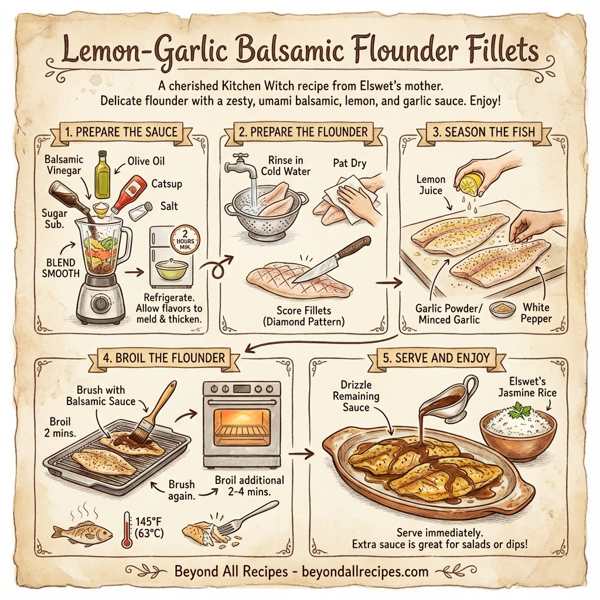
Prepare the sauce: In a blender, combine balsamic vinegar, olive oil, sugar substitute, catsup, salt, and white pepper. Blend until smooth. Refrigerate the sauce for at least 2 hours to allow the flavors to meld and the sauce to thicken slightly.
2
Prepare the flounder: Preheat your broiler. Rinse the flounder fillets under cold water, then pat them dry with paper towels. Score the top of each fillet in a diamond pattern, taking care not to cut too deeply.
3
Season the fish: Drizzle the fillets with lemon juice, then evenly sprinkle the garlic powder or minced garlic and a pinch of white pepper over the top.
4
Broil the flounder: Place the prepared fillets on a broiling pan. Brush the top liberally with the refrigerated sauce. Broil the flounder for 2 minutes, then brush with more sauce and return to the broiler for an additional 2-4 minutes, or until the fish is light and flaky and easily flakes apart when prodded gently with a fork. Ensure the internal temperature reaches 145°F (63°C).
5
Serve and enjoy: Transfer the broiled flounder to a serving platter, drizzling any remaining sauce over the top. This recipe yields enough sauce for eight fillets, perfect for salads or as a vegetable dip.
Nutrition Information
Frequently Asked Questions
Frequently Asked Questions
What is Lemon-Garlic Balsamic Flounder Fillets?
It is a Creole-inspired seafood dish featuring delicate flounder fillets broiled with a zesty sauce made from balsamic vinegar, lemon, and garlic.
What kind of fish is used in this recipe?
The recipe specifically calls for flounder fillets that have been cleaned and scaled.
How much flounder should I prepare per person?
The recipe recommends 10 ounces of flounder per person.
What are the ingredients for the balsamic sauce?
The sauce consists of balsamic vinegar, virgin olive oil, a sugar substitute, catsup, salt, and white pepper.
How is the balsamic sauce prepared?
Combine all sauce ingredients in a blender and blend until the mixture is completely smooth.
Does the sauce need to be made in advance?
Yes, the sauce should be refrigerated for at least 2 hours before use to allow the flavors to meld and the consistency to thicken.
How should I prepare the flounder fillets before seasoning?
Rinse the fillets under cold water, pat them dry with paper towels, and score the top of each fillet in a diamond pattern.
What seasoning is applied directly to the fish?
The fish is drizzled with fresh lemon juice and sprinkled with garlic powder (or minced garlic) and a pinch of white pepper.
Can I use fresh garlic instead of garlic powder?
Yes, you can substitute 1/8 teaspoon of garlic powder with 1/2 of a small minced garlic clove per fish.
What is the primary cooking method for this recipe?
The fish is cooked using the broiler in your oven.
How long does it take to broil the flounder?
The fish typically takes between 4 to 6 minutes total to broil.
When do I apply the sauce to the fish?
Brush the fillets liberally with sauce before they go into the broiler, and then again after the first 2 minutes of cooking.
What is the target internal temperature for the flounder?
The flounder should reach an internal temperature of 145°F (63°C).
How can I tell if the flounder is fully cooked?
The fish is done when it is light and flaky and easily pulls apart when prodded gently with a fork.
What should I serve with Lemon-Garlic Balsamic Flounder?
It is highly recommended to serve this dish with fragrant Jasmine Rice.
How many fillets does the sauce recipe cover?
The sauce recipe yields enough for eight fillets.
Can the leftover sauce be used for other things?
Yes, any remaining sauce is excellent as a salad dressing or a dip for vegetables.
What is the flavor profile of this dish?
The dish features a harmony of zesty lemon, umami garlic, and the deep, tangy sweetness of balsamic vinegar.
Is this a quick recipe to make?
Yes, it is tagged as a 'quick meal' because the actual cooking time is very short.
Who originally created this recipe?
This recipe comes from Elswet’s mother, who was known as an experimental 'Kitchen Witch'.
Why is it called an 'experimental Kitchen Witch' recipe?
The name honors the creator's adventurous culinary spirit and unique approach to flavor combinations.
What kind of oil is used in the sauce?
The recipe specifies using virgin olive oil.
How much lemon juice is needed per fish?
Use 1/2 tablespoon of freshly squeezed lemon juice per fillet.
Is there a specific way to score the fish?
Yes, score the top of the fillet in a diamond pattern, being careful not to cut too deeply.
What type of pepper is used?
The recipe uses white pepper both in the sauce and as a seasoning for the fish.
Can I use real sugar instead of sugar substitute?
The recipe specifically lists a sugar substitute, though you could likely use sugar if you prefer, keeping the 1/2 cup measurement.
What is the texture of the flounder after broiling?
The flounder should have a delicate and light texture that is perfectly flaky.
Does the recipe belong to a specific regional cuisine?
It is described as capturing the essence of Creole cooking with a whimsical twist.
What should I do with the remaining sauce after broiling?
Drizzle any remaining sauce over the fillets just before serving on a platter.
Is the fish rinsed before cooking?
Yes, the instructions say to rinse the flounder fillets under cold water and pat them dry.