Lemon Butter Mustard Scallop Pasta
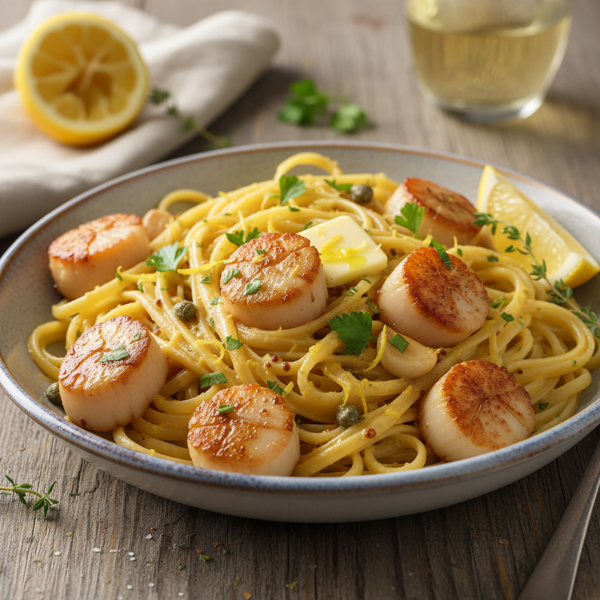
Indulge in a refined dish of Lemon Butter Mustard Scallop Pasta, where the sweetness of bay scallops meets the tangy elegance of Dijon mustard and bright lemon. This quick and easy recipe creates a delightful harmony of flavors, making it a perfect choice for a romantic dinner or a weeknight treat. Using affordable bay scallops and lightening the dish with low-fat butter allows you to enjoy a delicious restaurant-quality meal at home in just under 30 minutes. Served over your choice of hot pasta, this dish is sure to impress!
2
Servings
303
Calories
9
Ingredients
Ingredients
dry white wine
1 cup (none)
lemon zest
1/2 teaspoon (grated)
bay scallops
8 ounces (none)
Dijon mustard
2 teaspoons (none)
low-fat butter
1/4 cup (40%, cut into small pieces)
pasta
6 ounces (cooked and hot)
chives
1/4 cup (snipped)
salt
to taste (none)
pepper
to taste (none)
Instructions
1
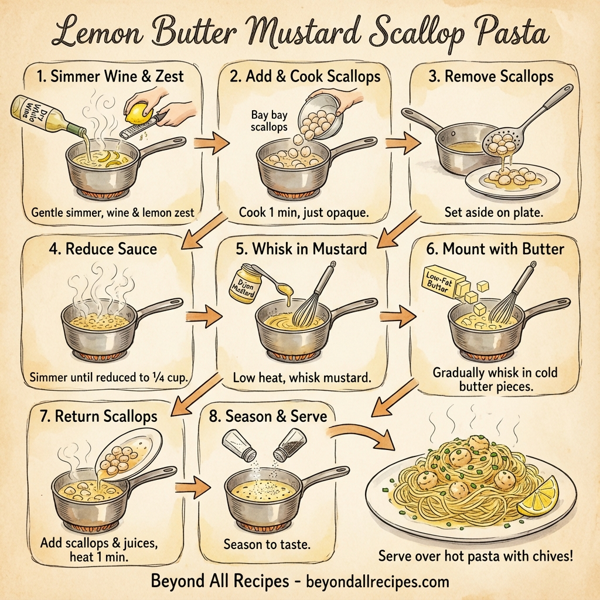
In a medium saucepan, bring the dry white wine and lemon zest to a gentle simmer over medium heat.
2
Add the bay scallops to the pan and cook, stirring gently, for about 1 minute until just opaque. Be careful not to overcook.
3
Using a slotted spoon, remove the scallops from the pan and set them aside on a plate.
4
Increase the heat to medium-high and continue to simmer the wine mixture until it reduces to about 1/4 cup, concentrating the flavors.
5
Once reduced, decrease the heat to low. Add the Dijon mustard and whisk until fully combined.
6
Cut the low-fat butter into small pieces and gradually whisk them into the sauce, allowing each piece to melt and incorporate into the sauce.
7
Return the scallops along with any accumulated juices to the pan, heating them gently through for about 1 minute.
8
Season the sauce with salt and pepper to taste.
9
Serve the sauce over hot cooked pasta, such as angel hair, and generously sprinkle with snipped chives for a fresh finish.
Nutrition Information
12g
Fat
30.5g
Carbs
15.5g
Protein
Frequently Asked Questions
Frequently Asked Questions
What is Lemon Butter Mustard Scallop Pasta?
It is a refined and elegant seafood dish featuring bay scallops, a tangy Dijon mustard and lemon butter sauce, served over hot pasta.
How many servings does this recipe provide?
This recipe is designed to serve 2 people.
How long does it take to prepare this scallop pasta?
The dish is quick and easy, taking just under 30 minutes to prepare from start to finish.
What type of scallops are recommended for this recipe?
The recipe calls for 8 ounces of bay scallops, which are smaller and more affordable than sea scallops.
What are the nutritional facts per serving?
Each serving contains approximately 303 calories, 12g of fat, 30.5g of carbohydrates, and 15.5g of protein.
What kind of wine should I use for the sauce?
A dry white wine is recommended to bring out the best flavors in the sauce and complement the seafood.
How do I ensure the scallops don't become rubbery?
Cook the bay scallops for only about 1 minute until they are just opaque, then remove them immediately from the heat.
What type of pasta works best with this dish?
While you can use your choice of pasta, angel hair is a particularly good match for the light lemon butter sauce.
How much lemon zest is needed?
The recipe requires 1/2 teaspoon of grated lemon zest.
Is this a low-fat recipe?
Yes, the recipe specifically uses 1/4 cup of 40% low-fat butter to lighten the dish while maintaining a creamy texture.
What kind of mustard is used?
The recipe uses 2 teaspoons of Dijon mustard to provide a tangy elegance to the sauce.
How should the butter be added to the sauce?
Cut the butter into small pieces and gradually whisk them into the reduced wine and mustard mixture over low heat.
What is the final garnish for this pasta?
The dish is finished with a generous sprinkle of 1/4 cup of snipped fresh chives.
To what volume should the wine be reduced?
The wine and lemon zest mixture should be simmered until it reduces to about 1/4 cup to concentrate the flavors.
How many ingredients are in this recipe?
There are 9 total ingredients: wine, lemon zest, scallops, Dijon mustard, butter, pasta, chives, salt, and pepper.
Can I use regular butter instead of low-fat?
Yes, regular butter can be substituted, though it will increase the total fat and calorie content of the dish.
When should I add the salt and pepper?
Season the sauce with salt and pepper to taste just before serving over the pasta.
Is this dish suitable for a special occasion?
Absolutely, it is described as an elegant dinner perfect for a romantic evening or a restaurant-quality treat at home.
What preparation is needed for the chives?
The chives should be freshly snipped before being added to the dish.
Do I need to drain the scallops before returning them to the pan?
No, you should return the scallops along with any accumulated juices to the pan to maximize the flavor.
What is the texture of the sauce?
The sauce is a light, emulsified butter sauce thickened slightly by the reduction of wine and the addition of Dijon mustard.
How much pasta is recommended per serving?
The recipe uses 6 ounces of pasta for 2 servings, which is about 3 ounces per person.
Can this be considered a one-dish meal?
Yes, as it combines protein, carbohydrates, and sauce into a complete pasta dish.
What flavor profile does the Dijon mustard add?
The Dijon mustard provides a tangy depth and a touch of sharpness that balances the richness of the butter.
How do I prep the lemon for this recipe?
You will need to grate the zest from a fresh lemon to get 1/2 teaspoon.
Is there any fiber in this dish?
Based on the nutritional data provided, the fiber content is negligible or not specified.
Does the recipe contain any sugar?
No added sugar is listed in the ingredients or nutritional information for this savory dish.
What equipment do I need for the sauce?
You will need a medium saucepan, a whisk, and a slotted spoon.
Is this a good recipe for beginners?
Yes, with only 9 ingredients and a 30-minute timeline, it is categorized as 'quick and easy'.
Should the pasta be cold when adding the sauce?
No, the pasta should be cooked and hot when you serve the sauce over it.