Lavender-Infused Fig Conserve with Pine Nuts
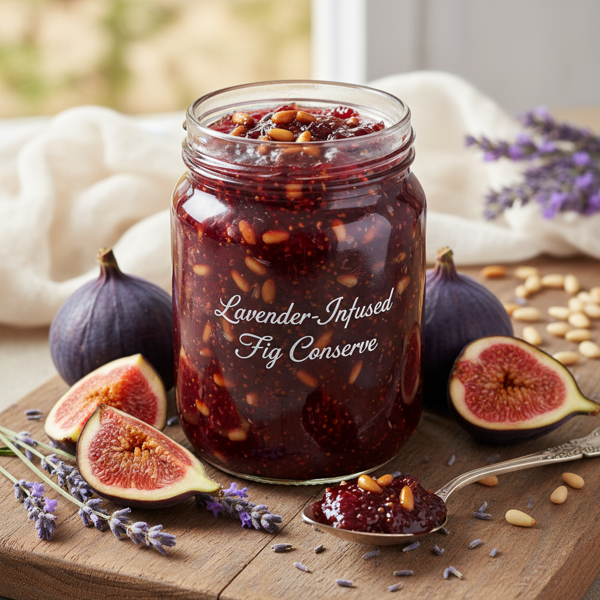
This delightful Lavender-Infused Fig Conserve is a sophisticated blend of fresh figs, fragrant lavender, and spicy candied ginger, offering a unique taste experience. The addition of toasted pine nuts introduces a delightful crunch, making it perfect for elegant cookies, warm scones, or simply spread on toasted bread. The natural sweetness of the figs harmonizes beautifully with the floral notes of lavender, while the ginger provides a subtle warmth. Without the use of pectin, this recipe achieves its perfect consistency through the natural gelling properties of the fruit. Indulge in this sweet treat, and don’t worry if you can’t find lavender; the conserve will still be delicious and satisfying!
N/A
Servings
N/A
Calories
6
Ingredients
Ingredients
sugar
3 1/2 cups (can be flavored sugar, Splenda, or plain white sugar)
candied ginger
1 tablespoon (finely chopped)
fresh lavender blossoms
2 tablespoons (loose, gently rinsed)
fresh figs
1 3/4 lbs (rinsed, stems removed)
lemon
1 (juice and zest)
pine nuts
2 tablespoons (lightly toasted)
Instructions
1
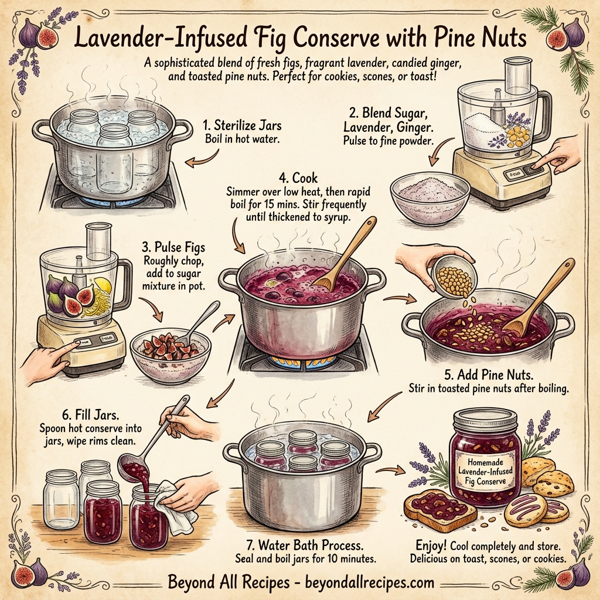
Begin by preparing your work area. Ensure your jars are sterilized by boiling them in hot water.
2
In a food processor, combine the sugar, lavender blossoms, and candied ginger. Pulse until the ingredients are finely chopped, and the sugar has a powdery texture. Transfer this mixture to a large, heavy-bottomed pot.
3
Next, add the rinsed fresh figs, lemon juice, and lemon zest to the food processor. Pulse the figs until they are roughly chopped, taking care not to puree them completely. Scrape the chopped figs into the pot with the sugar mixture.
4
Place the pot over low heat and gradually bring to a simmer. Once it begins to simmer, increase the heat to bring it to a rapid boil. Cook for about 15 minutes, stirring frequently. You will notice the mixture thickening into a vibrant dark red syrup.
5
After 15 minutes of boiling, stir in the toasted pine nuts. Mix well.
6
Carefully spoon the hot conserve into the sterilized jars, leaving about a quarter-inch of headspace. Wipe down the rims of the jars to remove any residue.
7
Seal the jars with lids and process them in a hot water bath for 10 minutes to ensure preservation. Remove from the water bath and allow to cool completely before storing.
Nutrition Information
Frequently Asked Questions
Frequently Asked Questions
What is Lavender-Infused Fig Conserve?
It is a sophisticated blend of fresh figs, fragrant lavender, and spicy candied ginger with toasted pine nuts, creating a unique floral and sweet spread.
Can I make this recipe without lavender?
Yes, if you cannot find lavender, the conserve will still be delicious and satisfying without it.
What types of sugar are suitable for this recipe?
You can use plain white sugar, flavored sugar, or even a sugar substitute like Splenda.
Does this fig conserve require added pectin?
No, this recipe does not use pectin; it achieves the perfect consistency through the natural gelling properties of the fruit.
How should I prepare the jars for canning?
Ensure your jars are sterilized by boiling them in hot water before you begin the canning process.
What is the best way to chop the figs?
Pulse the rinsed and de-stemmed fresh figs in a food processor until they are roughly chopped, being careful not to puree them completely.
How long should the fig mixture boil?
Bring the mixture to a rapid boil and cook for about 15 minutes while stirring frequently.
When should I add the pine nuts?
Stir in the toasted pine nuts after the conserve has boiled for 15 minutes and reached a thickened consistency.
What is the recommended headspace for the jars?
Leave about a quarter-inch of headspace at the top of the jars before sealing them.
How long do the jars need to be processed in a water bath?
Process the sealed jars in a hot water bath for 10 minutes to ensure proper preservation.
How should the lavender and ginger be prepared?
Pulse the sugar, lavender blossoms, and candied ginger in a food processor until finely chopped and the sugar is powdery.
What color should the conserve be when finished?
The mixture should thicken into a vibrant dark red syrup after boiling.
What can I serve with this fig conserve?
It is perfect for elegant cookies, warm scones, or simply spread on toasted bread.
Should the pine nuts be toasted?
Yes, the recipe calls for 2 tablespoons of lightly toasted pine nuts to add a delightful crunch.
What type of ginger is used in this recipe?
The recipe requires 1 tablespoon of finely chopped candied ginger for a subtle warmth.
Do I need to use fresh or dried lavender?
The recipe specifies using 2 tablespoons of loose, gently rinsed fresh lavender blossoms.
What part of the lemon is used?
Both the juice and the zest of one lemon are used in this recipe.
How do I know when the conserve is ready to be jarred?
The conserve is ready once it has boiled for 15 minutes and has thickened into a syrup.
Should I remove the fig stems?
Yes, ensure the stems are removed from the 1 3/4 lbs of fresh figs before processing.
What kind of pot should I use for cooking?
A large, heavy-bottomed pot is recommended to prevent burning and ensure even heating.
Is it necessary to stir the mixture while boiling?
Yes, you should stir frequently during the 15-minute boiling period.
How do I clean the lavender blossoms?
The blossoms should be gently rinsed before being combined with the sugar and ginger.
Can I use a food processor for the figs?
Yes, use a food processor to pulse the figs into a rough chop after rinsing them.
What heat level should I use to start the simmer?
Place the pot over low heat and gradually bring the mixture to a simmer before increasing to a rapid boil.
What should I do after the water bath processing?
Remove the jars from the water bath and allow them to cool completely before storing them.
How do I ensure the jar lids seal properly?
Wipe down the rims of the jars to remove any residue before applying the lids.
Does this conserve have a crunchy texture?
Yes, the addition of toasted pine nuts introduces a delightful crunch to the spread.
Is this recipe suitable for gifting?
Absolutely, its sophisticated flavor profile and elegant appearance make it an excellent gift.
Can I use lime instead of lemon?
While the recipe calls for lemon, lime could provide a different citrus profile, though it may alter the intended floral balance.
How much sugar is required?
The recipe requires 3 1/2 cups of sugar, which can be plain, flavored, or a substitute.