Lavender Infused Crème Brûlée Delight
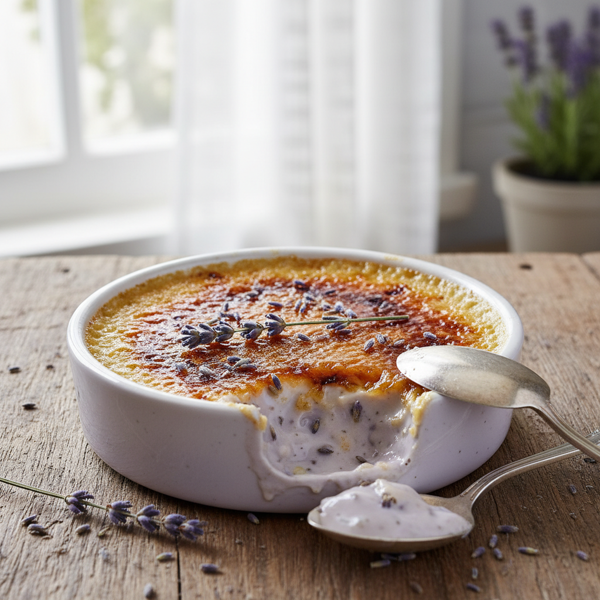
Indulge in the exquisite flavors of our Lavender Infused Crème Brûlée Delight, a luxurious dessert that beautifully marries traditional French influence with the enchanting essence of lavender. This elegant custard is delicately infused with aromatic lavender, creating a stunning balance of floral notes and velvety creaminess that is sure to impress your guests. Perfect for special occasions or a delightful end to any meal, this dessert will transform your dining experience. The process may take some time, but the result is an unforgettable treat that showcases your culinary skills and adds a touch of sophistication to your dessert table.
N/A
Servings
N/A
Calories
7
Ingredients
Ingredients
Heavy cream
2 cups (None)
Dried lavender
2 tablespoons (Or 1/4 cup fresh lavender leaves, finely chopped)
Pure vanilla extract
1 teaspoon (None)
Salt
1 pinch (None)
Egg yolks
8 large (Separate yolks from whites)
Granulated sugar (for custard)
1/3 cup (None)
Granulated sugar (for topping)
1/2 cup (None)
Instructions
1
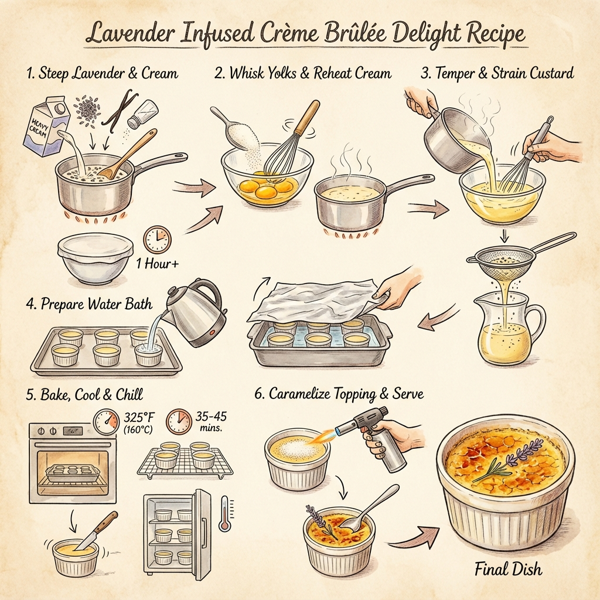
To begin creating the custard, combine the heavy cream, dried or fresh lavender, pure vanilla extract, and a pinch of salt in a heavy-bottomed 2-quart saucepan. Place over moderate heat and stir the mixture occasionally with a wooden spoon or whisk. Once the mixture begins to simmer with tiny bubbles forming around the edges, remove from heat. Let the lavender flavors steep in the cream at room temperature for at least 1 hour, or for maximum flavor, cool it to room temperature and refrigerate overnight.
2
Preheat your oven to 325°F (160°C) and adjust the rack to the center position. Reheat the infused cream gently to a bare simmer, stirring a couple of times to ensure even heating. In a large mixing bowl, whisk together the egg yolks and 1/3 cup of granulated sugar until the mixture turns light yellow and slightly thickens.
3
Gradually pour the hot lavender-infused cream into the egg yolks while whisking constantly to prevent curdling. Strain the mixture through a fine sieve into a large measuring cup or spouted pitcher to remove any solids and bubbles, ensuring a silky custard.
4
Prepare six 8-ounce ramekins or crème brûlée dishes by filling them almost to the top with the custard mixture. Place the ramekins in a shallow roasting pan or heavy-duty rimmed baking sheet, ensuring that the edges are not touching. Carefully add hot water to the pan until it reaches halfway up the sides of the ramekins. Loosely cover the pan with aluminum foil to prevent browning.
5
Bake the custards in the preheated oven for 35 to 45 minutes. The custards should be set but still slightly jiggle in the center when done. A knife inserted in the center should come out clean. Once baked, transfer the ramekins to a wire rack and let them cool to room temperature. Afterward, refrigerate the ramekins, uncovered, until fully chilled.
6
For the caramelized topping, at least 30 minutes before serving, evenly sprinkle a generous layer of sugar over each custard's surface. Using a kitchen blowtorch, carefully melt the sugar by moving the flame back and forth evenly across the sugar until it bubbles and liquefies to form a golden crust. Finally, return the crème brûlée to the refrigerator for about 15 minutes to allow the sugar topping to harden before serving.
Nutrition Information
Frequently Asked Questions
Frequently Asked Questions
What is Lavender Infused Crème Brûlée Delight?
It is a luxurious French-inspired dessert consisting of a rich custard base infused with aromatic lavender and topped with a hard layer of caramelized sugar.
What type of lavender should I use for this recipe?
You can use either 2 tablespoons of dried culinary lavender or 1/4 cup of finely chopped fresh lavender leaves.
How long should I steep the lavender in the cream?
The lavender should steep for at least 1 hour at room temperature, or for maximum flavor, you can refrigerate it overnight.
Can I substitute the heavy cream?
Heavy cream is essential for the rich, velvety texture of a traditional crème brûlée; substituting it with milk or lower-fat alternatives may result in a runny custard.
Why do I need to strain the cream mixture?
Straining through a fine sieve removes the lavender solids and any air bubbles, ensuring the final custard is perfectly smooth and silky.
What is the purpose of a water bath or bain-marie?
A water bath ensures the custard cooks gently and evenly by surrounding the ramekins with consistent heat, which prevents the eggs from curdling or the custard from cracking.
How much water should I add to the roasting pan?
Add hot water until it reaches halfway up the sides of the ramekins placed in the pan.
At what temperature should the oven be set?
Preheat your oven to 325°F (160°C) with the rack in the center position.
How many egg yolks are required for this recipe?
This recipe requires 8 large egg yolks to achieve the desired richness.
What should I do with the leftover egg whites?
Egg whites can be saved for other recipes like meringues, macarons, or healthy egg white omelets.
How do I know when the custard is done baking?
The custards are done when they are set but still have a slight jiggle in the center. A knife inserted in the center should come out clean.
How long does the custard need to bake?
Baking typically takes between 35 to 45 minutes depending on your oven and the depth of your dishes.
Why do I need to cover the roasting pan with foil?
Loosely covering the pan with aluminum foil prevents the tops of the custards from browning before they are fully set.
Can I make the custard in advance?
Yes, you can bake and refrigerate the custards a day or two in advance. Only add and caramelize the sugar topping just before serving.
How do I create the caramelized sugar topping?
Sprinkle a generous layer of sugar over the chilled custard and use a kitchen blowtorch to melt it until it bubbles and turns golden brown.
What if I do not have a kitchen blowtorch?
While a torch is best, you can use a broiler set to high; however, you must watch it very closely to prevent burning the custard itself.
Why must I chill the dessert again after torching the sugar?
Returning it to the refrigerator for about 15 minutes allows the liquefied sugar to harden into the signature crisp crust.
What kind of sugar is best for the topping?
Granulated white sugar is standard, though some chefs prefer superfine sugar for a faster, more even melt.
How many servings does this recipe provide?
This recipe is designed to fill six 8-ounce ramekins or crème brûlée dishes.
Is this recipe gluten-free?
Yes, the ingredients used in this Lavender Infused Crème Brûlée are naturally gluten-free.
What can cause the custard to curdle?
Curdling usually happens if the hot cream is added to the egg yolks too quickly without constant whisking, or if the oven temperature is too high.
Should the ramekins be touching in the roasting pan?
No, ensure the edges of the ramekins are not touching to allow the hot water to circulate and cook them evenly.
Can I use vanilla bean instead of extract?
Absolutely. You can scrape the seeds from one vanilla bean into the cream for an even more intense flavor and visual appeal.
Is culinary lavender different from garden lavender?
Yes, ensure you use culinary-grade lavender (often Lavandula angustifolia) to avoid a soapy or overly medicinal taste.
How long can I store the finished crème brûlée in the fridge?
Once baked, the custard stays fresh for up to 3 days in the refrigerator, but the sugar crust will soften after a few hours once torched.
Can I freeze crème brûlée?
Freezing is not recommended as it can ruin the delicate texture of the custard and cause it to separate upon thawing.
What size ramekins are best for this recipe?
Six 8-ounce ramekins are ideal for the proportions provided in this recipe.
Does the salt in the recipe make it salty?
No, a pinch of salt is used to enhance the sweetness and the floral notes of the lavender.
Can I use a different flower instead of lavender?
Yes, culinary rose petals or hibiscus could be used following similar steeping techniques for a different floral profile.
What is the best way to serve this?
Serve it chilled in the ramekin, perhaps garnished with a small sprig of fresh lavender or a few berries for an elegant presentation.