Kozunak: Traditional Bulgarian Easter Bread
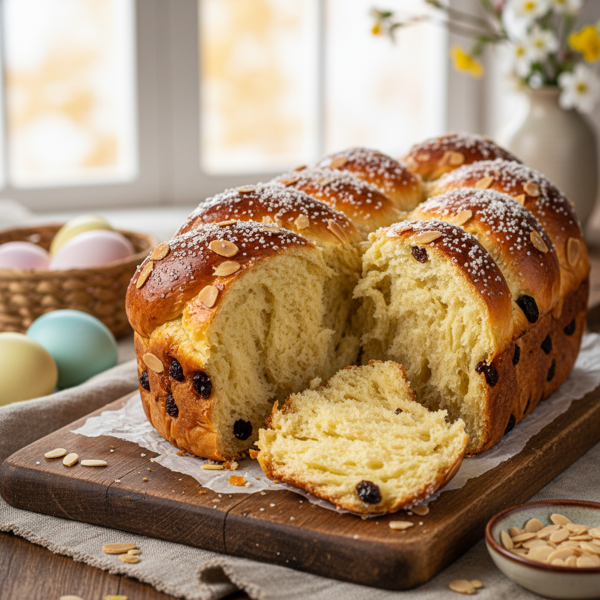
This cherished Bulgarian Easter bread, known as Kozunak, is a delightful and festive treat that has been passed down through generations. My beloved mother-in-law shared her time-honored recipe with me, and I've lovingly captured the process in these notes. While this recipe yields a generous eight loaves, you can easily halve it for a smaller batch. One of the joys of Kozunak is the intoxicating blend of zesty lemon and plump, rum-soaked raisins that permeate each slice. The traditional braided form adds a beautiful presentation, but feel free to shape it into rolls or smaller loaves if time is of the essence. With the holidays on the horizon, this recipe rewards your patience with a tender, stretchy, and irresistibly moist bread. Just remember to watch the baking time closely to ensure that the loaves retain their delightful texture. Enjoy sharing this festive bread with your family and friends during the Easter celebrations!
8
Servings
1500
Calories
13
Ingredients
Ingredients
yeast
2 1/2 tablespoons (active dry yeast)
sugar
1 1/2 tablespoons + 2 cups (divided)
salt
1 1/2 teaspoons (fine sea salt)
egg
11 eggs + 1 beaten for use (large eggs)
milk
1 1/3 cups warmed + 2 cups (whole milk, warmed)
raisins
1 1/2 cups (plump, soaked in rum)
rum
3/4 cup (for soaking the raisins)
lemons
2 (zested and juiced)
flour
5 lbs (all-purpose, sifted)
butter
1/2 cup (1 stick) (unsalted, melted)
vegetable oil
1/2 cup (for mixing into the dough)
vanilla extract
2 teaspoons (pure vanilla extract (or powder))
hazelnuts or walnuts
1 cup (chopped, for topping)
Instructions
1
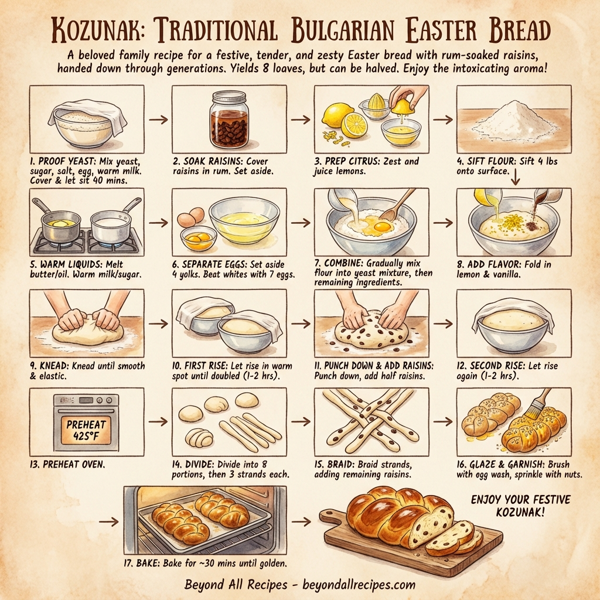
In a large bowl, mix together the yeast, 1 1/2 tablespoons of sugar, salt, beaten egg, and warmed milk. Cover and let it sit in a warm place for about 40 minutes, until frothy.
2
While the yeast mixes, soak the raisins in rum to fully cover them. Set aside for later.
3
Zest and juice both lemons, then set aside the zest and juice for use in the dough.
4
Sift 4 pounds of flour onto a large work surface, leaving the remaining flour for adjustments. You won't need all of it, but it's handy to have extra on hand.
5
In a small saucepan, melt the butter and mix it with the vegetable oil. In another saucepan, warm the 2 cups of milk with 2 cups of sugar over low heat until warm.
6
Separate 4 of the 11 eggs, setting aside the yolks for egg wash and beating the egg whites with the other 7 eggs.
7
Gradually incorporate a handful of flour from the work surface into your warm yeast mixture. Stir in the remaining flour, the warm milk mixture, beaten eggs, and the melted butter and oil mixture.
8
Once most of the mixture is combined, fold in the lemon juice, lemon zest, and vanilla extract.
9
Dump the dough onto the work surface and knead it until it's smooth and elastic, adding more flour as necessary to prevent stickiness.
10
Allow the dough to rise in a warm spot until it has doubled in size, which usually takes about 1 to 2 hours. You might need to divide it between two bowls.
11
Once risen, punch down and re-knead the dough. Drain the raisins, dredge them in flour to prevent sticking, and gradually work half into the dough as you knead.
12
Let the dough rise again for an additional 1 to 2 hours.
13
Preheat your oven to 425°F (or 400°F if your oven runs hot).
14
After the second rise, punch the dough down once more and divide it into 8 equal portions. Each portion should be further divided into 3 strands.
15
Roll each strand into a long rope and braid them together to form a single loaf. As you braid, incorporate the remaining raisins between the strands for added flavor.
16
Brush the braided loaves with the reserved egg yolks and sprinkle the tops with your choice of hazelnuts or walnuts.
17
Bake the loaves in the preheated oven for about 30 minutes or until they are golden brown. If making smaller rolls, be sure to adjust the baking time accordingly.
Nutrition Information
50g
Fat
225g
Carbs
31g
Protein
Frequently Asked Questions
Frequently Asked Questions
What is Kozunak?
Kozunak is a traditional Bulgarian Easter bread that is sweet, festive, and typically braided.
What is the origin of this specific Kozunak recipe?
This is a time-honored recipe passed down from the creator's mother-in-law.
How many loaves does this recipe produce?
This recipe yields a generous batch of eight loaves.
Can I make a smaller batch of this bread?
Yes, the recipe can be easily halved if you want to make fewer loaves.
What are the primary flavors in this Easter bread?
The bread features an intoxicating blend of zesty lemon, vanilla, and plump rum-soaked raisins.
How should I prepare the raisins for the dough?
Soak 1 1/2 cups of raisins in 3/4 cup of rum until they are fully covered and plump.
What type of yeast is required?
The recipe calls for 2 1/2 tablespoons of active dry yeast.
How long does the yeast mixture need to sit before adding flour?
It should sit in a warm place for about 40 minutes until it becomes frothy.
How much flour is needed for the full recipe?
You will need approximately 5 pounds of all-purpose flour, sifted.
What kind of fats are used in the dough?
The recipe uses a combination of 1/2 cup melted unsalted butter and 1/2 cup vegetable oil.
How are the eggs prepared for the recipe?
You use 11 eggs total: 4 yolks are reserved for the wash, while the 4 whites and the remaining 7 eggs are beaten into the dough.
When do I add the lemon zest and juice?
Fold in the juice and zest from two lemons after most of the flour, milk, and egg mixture has been combined.
How long is the first rising period?
The dough should rise in a warm spot for 1 to 2 hours, or until it has doubled in size.
Why might I need two bowls for the rising process?
Because the recipe uses 5 pounds of flour, the dough volume is quite large and may require division to rise properly.
What do I do after the first rise?
Punch down and re-knead the dough, then work in half of the rum-soaked raisins.
How do I prevent the soaked raisins from sticking together?
Drain the raisins and dredge them in a little bit of flour before adding them to the dough.
How many times does the dough need to rise?
The dough requires two separate rising periods of 1 to 2 hours each.
What is the recommended oven temperature?
Preheat your oven to 425 degrees Fahrenheit, or 400 degrees Fahrenheit if your oven tends to run hot.
How is each loaf shaped?
Divide each portion into 3 strands, roll them into ropes, and braid them together.
Where does the second half of the raisins go?
Incorporate the remaining raisins between the strands as you are braiding the loaves.
What is used to glaze the top of the bread?
Brush the loaves with the reserved egg yolks before baking.
What toppings can be added to the crust?
Sprinkle the tops with one cup of chopped hazelnuts or walnuts for added texture and flavor.
How long does Kozunak take to bake?
Bake the loaves for about 30 minutes until they reach a golden brown color.
Can I make rolls instead of large loaves?
Yes, you can shape the dough into smaller rolls, but you must adjust and shorten the baking time.
What should the texture of the finished bread be like?
The finished bread should be tender, stretchy, and irresistibly moist.
What are the calories per serving for this bread?
Each of the eight loaves contains approximately 1500 calories.
How much protein is in one loaf?
There are approximately 31 grams of protein per serving/loaf.
What is the fat content per serving?
Each serving contains approximately 50 grams of fat.
How many carbohydrates are in a single loaf?
There are approximately 225 grams of carbohydrates per serving.
What is the total number of ingredients used?
This traditional recipe uses 13 distinct ingredients including the toppings.