Korean Sweet Potato Noodles Stir-Fry (Japchae)
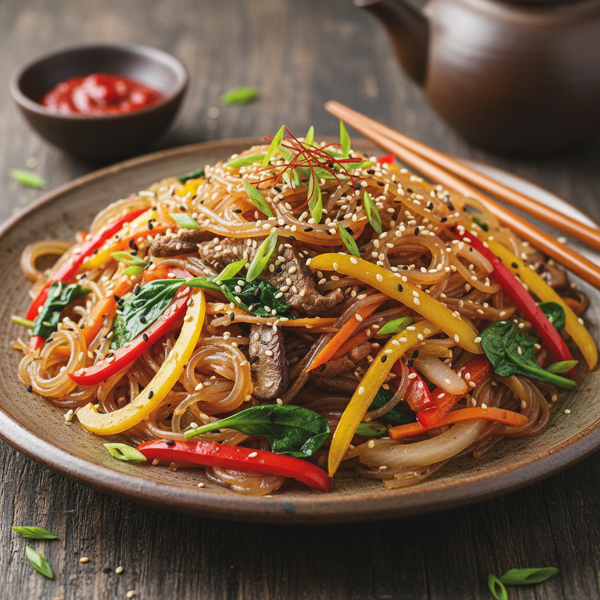
Indulge in the vibrant flavors of Korea with this delightful Japchae recipe! Made with chewy sweet potato starch noodles, this dish features an array of beautifully sautéed vegetables and optionally tender beef, creating a colorful medley that feels as good as it tastes. Key ingredients like spinach, shiitake mushrooms, and crunchy carrots ensure a healthy yet delicious meal that can be enjoyed any time of the year. Perfect as a side dish for Korean BBQ or as a hearty main course, Japchae is versatile and sure to impress at your dinner table. Whether you're enjoying it hot or cold, this dish offers a pleasant combination of savory, sweet, and umami flavors! Don't miss the accompanying video for a visual step-by-step guide.
4
Servings
160
Calories
15
Ingredients
Ingredients
Korean starch noodles (dangmyun)
150 g (Cooked until soft)
Beef
150 g (Sliced into thin strips (optional))
Spinach
1 bunch (Washed and blanched)
Carrot
1 medium (Cut into thin matchsticks)
Onion
1 medium (Sliced thinly)
Dried shiitake mushrooms
5 (Soaked, softened, and sliced)
White mushrooms
2 cups (Sliced)
Garlic
3 cloves (Minced)
Green onions
7-8 (Cut into 7 cm long pieces)
Soy sauce
4 tablespoons (Divided)
Sesame oil
4 tablespoons (Divided)
Olive oil
as needed (For sautéing)
Sugar
3 tablespoons (Divided)
Ground pepper
1 teaspoon (To taste)
Toasted sesame seeds
1 tablespoon (For garnish)
Instructions
1
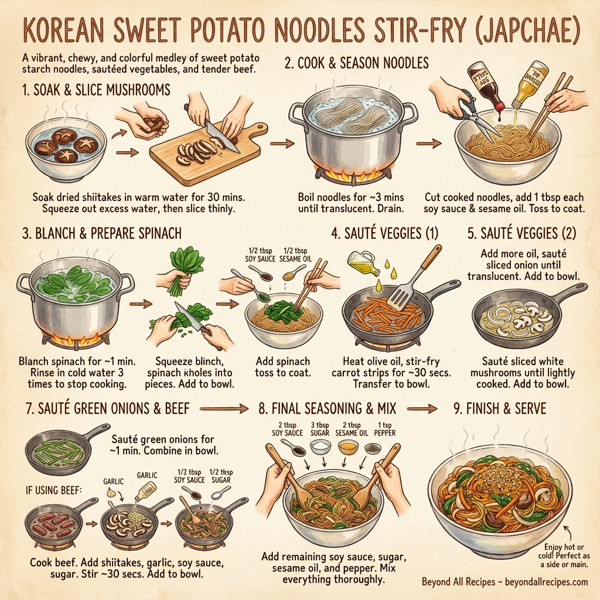
Begin by soaking the dried shiitake mushrooms in a bowl of warm water for at least 30 minutes until they soften. Once soft, squeeze out excess water and slice thinly.
2
In a large pot, bring water to a boil. Add the Korean starch noodles (dangmyun) and cook for about 3 minutes or until they become translucent and soft. Drain the noodles and transfer them to a large mixing bowl.
3
Using scissors, cut the cooked noodles several times to make them shorter, then add 1 tablespoon of soy sauce and 1 tablespoon of sesame oil. Toss to coat the noodles evenly and set aside.
4
In the same boiling water, blanch the spinach for about 1 minute or until wilted. Remove the spinach, rinse it under cold water three times to stop cooking, and squeeze out excess water. Chop into 5 cm pieces and add to the noodles along with ½ tablespoon of soy sauce and ½ tablespoon of sesame oil. Mix well.
5
In a skillet, heat a few drops of olive oil over medium heat. Add the carrot strips and stir-fry for approximately 30 seconds until they are slightly softened. Transfer to the large bowl with the noodles and spinach.
6
Next, add a bit more olive oil to the skillet and sauté the sliced onion until translucent. Add to the noodle mixture.
7
Repeat the process with the sliced white mushrooms, stirring until lightly cooked before adding them to the bowl.
8
Add a few more drops of olive oil and sauté the green onions for about 1 minute. Combine with the other ingredients in the bowl.
9
If using, cook the beef strips in the skillet with minimal oil until fully cooked. Once cooked, add the sliced shiitake mushrooms and 3 minced garlic cloves, followed by ½ tablespoon of soy sauce and ½ tablespoon of sugar. Stir for another 30 seconds until incorporated and then add to the large bowl.
10
In the large bowl, add the remaining ingredients: 2 tablespoons of soy sauce, 3 tablespoons of sugar, 2 tablespoons of sesame oil, and 1 teaspoon of pepper. Mix everything thoroughly until well combined.
11
Finish off by sprinkling the toasted sesame seeds on top before serving.
Nutrition Information
5g
Fat
22.5g
Carbs
6.25g
Protein
Frequently Asked Questions
Frequently Asked Questions
What is Japchae?
Japchae is a popular Korean stir-fry dish made with chewy sweet potato starch noodles, various sautéed vegetables, and often tender beef, offering a savory-sweet flavor.
What type of noodles are used in this recipe?
This recipe uses 150g of Korean starch noodles, also known as dangmyun.
How many calories are in a serving of Japchae?
Each serving of this Japchae recipe contains approximately 160 calories.
Is this Japchae recipe vegetarian?
The recipe includes beef as an optional ingredient; it can be easily made vegetarian by omitting the beef strips.
How long should I soak the dried shiitake mushrooms?
The dried shiitake mushrooms should be soaked in warm water for at least 30 minutes until they soften.
How long do the Korean starch noodles need to boil?
The noodles should be boiled for about 3 minutes or until they become translucent and soft.
How should I prepare the spinach for Japchae?
Blanch the spinach for about 1 minute, rinse it under cold water three times, squeeze out excess water, and chop into 5 cm pieces.
What is the macronutrient breakdown for this dish?
A serving contains 5g of fat, 22.5g of carbohydrates, and 6.25g of protein.
Can Japchae be served cold?
Yes, Japchae is versatile and can be enjoyed either hot or cold.
How many servings does this recipe yield?
This recipe is designed to yield 4 servings.
What vegetables are included in this recipe?
The recipe features spinach, carrots, onions, dried shiitake mushrooms, white mushrooms, and green onions.
How should the carrots be cut?
The carrots should be cut into thin matchsticks before sautéing.
What seasoning is added directly to the noodles after boiling?
After draining and cutting, the noodles are tossed with 1 tablespoon of soy sauce and 1 tablespoon of sesame oil.
How much soy sauce is needed in total?
The recipe uses 4 tablespoons of soy sauce in total, divided among the noodles, spinach, meat, and final mixing.
What is the role of sugar in this recipe?
A total of 3 tablespoons of sugar is used to provide the signature sweet notes of the dish.
How much sesame oil is used?
The recipe calls for 4 tablespoons of sesame oil, which is divided throughout the preparation process.
What type of oil is used for sautéing the vegetables?
Olive oil is used as needed for stir-frying the individual vegetable components.
Why should I cut the noodles with scissors?
Cutting the long starch noodles several times makes them shorter and much easier to eat and mix with other ingredients.
How do I prepare the green onions?
The green onions should be cut into 7 cm long pieces and sautéed for about 1 minute.
What is the garnish for Japchae?
The dish is finished with a sprinkle of toasted sesame seeds on top before serving.
How much garlic is required?
The recipe uses 3 cloves of minced garlic, which are sautéed with the beef and shiitake mushrooms.
How should the beef be prepared?
The beef should be sliced into thin strips and cooked in a skillet with minimal oil until fully cooked.
What is the total number of ingredients in this recipe?
This recipe consists of 15 ingredients, including the seasonings and garnish.
What are the tags associated with this dish?
Tags include japchae, korean noodles, stir-fry, vegetarian option, quick meal, healthy recipe, asian cuisine, side dish, and main course.
How many white mushrooms are needed?
The recipe calls for 2 cups of sliced white mushrooms.
What seasoning is added at the very end of mixing?
The final mixing step includes 2 tablespoons of soy sauce, 3 tablespoons of sugar, 2 tablespoons of sesame oil, and 1 teaspoon of pepper.
Should I cook all the vegetables together in one go?
No, the recipe recommends stir-frying the carrots, onions, mushrooms, and green onions separately to ensure proper texture.
How long do I sauté the carrots?
Carrots should be stir-fried for approximately 30 seconds until they are slightly softened.
Is ground pepper used in this recipe?
Yes, 1 teaspoon of ground pepper is added during the final mixing phase.
What kind of flavor profile does Japchae have?
Japchae offers a pleasant combination of savory, sweet, and umami flavors.