Korean Sweet Potato Glass Noodle Stir-Fry

Korean Sweet Potato Glass Noodle Stir-Fry, or Japchae, is a delightful and colorful dish that's perfect for both weeknight dinners and special occasions. This vegan recipe features chewy glass noodles made from sweet potato starch, which soak up the savory flavors of soy sauce and sesame oil. A medley of crisp vegetables, including vibrant carrots, earthy shiitake mushrooms, and fresh spinach, provide both texture and nutrition. Quick to prepare and even quicker to consume, this dish can be enjoyed warm or at room temperature, making it a versatile choice for any meal. With its glossy noodles and appealing look, it’s a true crowd-pleaser that embodies the essence of Korean cuisine.
N/A
Servings
110
Calories
14
Ingredients
Ingredients
Dried Korean sweet potato noodles
6 ounces (None)
Toasted sesame oil
4 teaspoons (Divided)
Soy sauce
1/4 cup (None)
Dark brown sugar
1 tablespoon (Packed)
Vegetable oil
1 tablespoon (None)
Carrot
1 medium (Peeled and cut into 1-1/2-inch matchsticks)
Yellow onion
1/2 medium (Thinly sliced)
Kosher salt
3/4 teaspoon (Plus more as needed)
Fresh ground black pepper
1/4 teaspoon (Plus more as needed)
Fresh shiitake mushrooms
4 ounces (Stems trimmed and thinly sliced)
Garlic cloves
2 medium (Finely chopped)
Baby spinach
4 ounces (None)
Scallion
1 medium (Thinly sliced (white and light green parts only))
Toasted sesame seeds
1.5 teaspoons (None)
Instructions
1
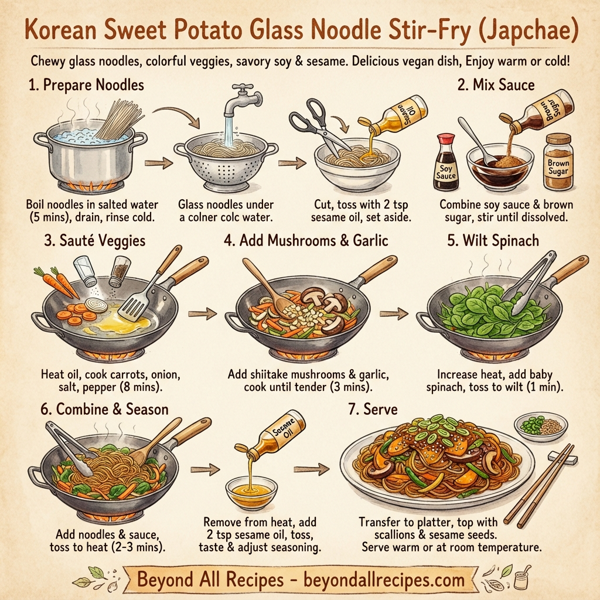
1. Bring a large saucepan of heavily salted water to a rolling boil over high heat. Add the dried Korean sweet potato noodles and stir to separate them. Boil for about 5 minutes, or until cooked through. Drain the noodles in a colander and rinse them under cold water until cool. Using kitchen scissors, cut the noodles into 6- to 8-inch lengths for ease of serving. In the colander, drizzle the noodles with 2 teaspoons of toasted sesame oil and toss gently to coat. Set aside.
2
2. In a small bowl, combine the soy sauce and dark brown sugar, stirring until the sugar has dissolved. Set this mixture aside for later use.
3
3. Heat 1 tablespoon of vegetable oil in a large frying pan or wok over medium heat until shimmering. Add the sliced carrots, thinly sliced onion, kosher salt, and freshly ground black pepper. Cook, stirring occasionally, for about 8 minutes, or until the onions have softened and become translucent.
4
4. Introduce the shiitake mushrooms and finely chopped garlic to the pan. Continue to cook for another 3 minutes, stirring occasionally, until the mushrooms have released their moisture and are tender.
5
5. Increase the heat to medium-high. Add the baby spinach to the pan, using tongs to toss the ingredients together. Cook until the spinach is slightly wilted, around 1 minute.
6
6. Incorporate the reserved noodles along with the soy sauce mixture. Toss everything gently but thoroughly, ensuring the noodles are heated through (about 2 to 3 minutes). Remove the pan from heat, then drizzle the remaining 2 teaspoons of toasted sesame oil over the mixture and toss again to incorporate. Taste for seasoning, adjusting with additional salt and pepper as needed.
7
7. Transfer the Japchae to a serving platter, topping it with sliced scallions and a sprinkle of toasted sesame seeds. Serve immediately while warm or let it cool to room temperature.
Nutrition Information
4.5g
Fat
17g
Carbs
2.3g
Protein
1.25g
Fiber
Frequently Asked Questions
Frequently Asked Questions
What is Japchae?
Japchae is a classic Korean dish made with sweet potato glass noodles, vegetables, and a savory soy-based sauce.
Are the noodles in this recipe gluten-free?
Sweet potato glass noodles are naturally gluten-free, but you must use a gluten-free soy sauce alternative like tamari to make the entire dish gluten-free.
Is Korean Sweet Potato Glass Noodle Stir-Fry vegan?
Yes, this specific recipe is entirely vegan as it uses only plant-based ingredients.
How long should I boil the sweet potato noodles?
Boil the noodles in heavily salted water for approximately 5 minutes until they are cooked through.
Why do I need to rinse the noodles in cold water?
Rinsing stops the cooking process and removes excess starch, which prevents the noodles from becoming mushy and sticking together.
Why are the noodles cut with kitchen scissors?
Cutting them into 6- to 8-inch lengths makes them easier to toss with the vegetables and more manageable to serve and eat.
What is the purpose of adding sesame oil to the noodles after boiling?
Tossing the cooked noodles in sesame oil prevents them from clumping together while you prepare the other ingredients.
What kind of sugar is best for this recipe?
Dark brown sugar is recommended as it adds a deep sweetness and helps create a rich sauce.
How do I prepare the carrots for Japchae?
The carrots should be peeled and cut into 1-1/2-inch matchsticks for even cooking and a traditional appearance.
How long should the onions and carrots cook?
They should be cooked for about 8 minutes until the onions are softened and translucent.
What type of mushrooms are used in this recipe?
The recipe calls for 4 ounces of fresh shiitake mushrooms with the stems trimmed and caps thinly sliced.
When should the garlic be added to the pan?
The garlic should be added along with the shiitake mushrooms after the onions and carrots have softened.
How long do the mushrooms need to cook?
Sauté the mushrooms for about 3 minutes until they have released their moisture and become tender.
When is the spinach added to the stir-fry?
Add the baby spinach at the very end, once the heat is increased to medium-high, and cook for about 1 minute until wilted.
How many calories are in one serving?
Each serving contains approximately 110 calories.
How much protein does this dish provide?
This recipe provides 2.3g of protein per serving.
What is the fat content of this recipe?
There are 4.5g of fat per serving in this Japchae recipe.
How many carbohydrates are in a serving?
There are 17g of carbohydrates per serving.
Does this dish contain any cholesterol?
No, this vegan recipe contains zero cholesterol.
What is the fiber content of this dish?
There is 1.25g of fiber per serving.
What kind of oil is used for the sautéing process?
One tablespoon of vegetable oil is used for cooking the vegetables.
Can I serve Japchae cold?
Yes, Japchae is versatile and can be served warm, at room temperature, or even cold.
What should I use to garnish the dish?
Garnish with thinly sliced scallions (white and light green parts) and a sprinkle of toasted sesame seeds.
How many ingredients are in this recipe?
The recipe calls for a total of 14 ingredients.
How long does the final mixing step take?
Once the noodles and sauce are added, it takes about 2 to 3 minutes to ensure everything is heated through.
What is the texture of sweet potato glass noodles?
They have a unique, delightfully chewy and bouncy texture.
Can I substitute the yellow onion?
Yes, you can use a white onion or a sweet onion if a yellow onion is unavailable.
What gives Japchae its glossy appearance?
The combination of the sweet potato starch in the noodles and the toasted sesame oil creates its signature glossy look.
How do I adjust the seasoning?
After cooking, taste the dish and add more kosher salt or freshly ground black pepper as needed.
How many scallions are needed for the garnish?
One medium scallion, thinly sliced, is sufficient for the garnish.