Korean Spicy Garlic Chicken Wings
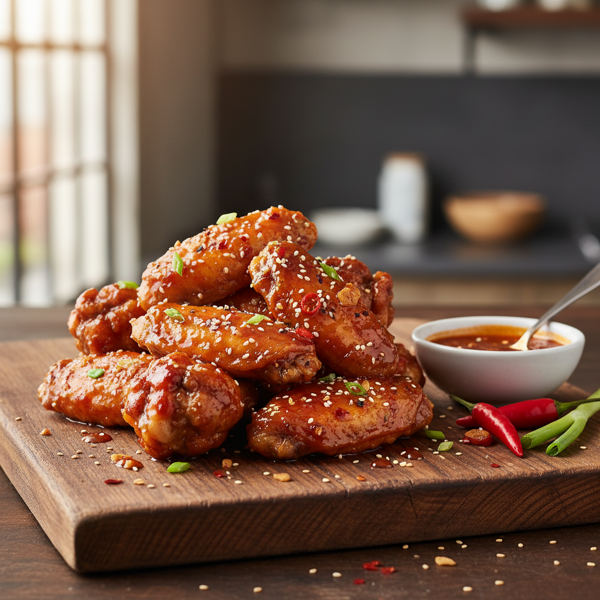
Indulge in the rich and bold flavors of these Korean Spicy Garlic Chicken Wings, inspired by a top-tier recipe from a renowned Korean restaurant. With a crispy exterior infused with aromatic spices and a fiery kick from gochujang, these wings are perfect for gatherings or game nights. Marinated in a creamy soak and tossed in a savory-sweet sauce, each wing delivers an explosion of taste that's sure to please your palate. Serve them as a delectable appetizer or pair them with sticky rice and ban chan for a complete meal experience!
N/A
Servings
N/A
Calories
16
Ingredients
Ingredients
Chicken Wings
1 lb (Sectioned)
Potatoes or Cornstarch
1/3 cup (Either can be used for coating)
Milk
1/2 cup (For marinating)
Salt
1 teaspoon (Seasoning)
Ground Black Pepper
1 tablespoon (Seasoning)
Vegetable Oil
As needed (For deep frying)
Fine Ground Red Chili Pepper
2 tablespoons (For the sauce)
Soy Sauce
2 tablespoons (For the sauce)
Sugar or Honey or Corn Syrup
2 tablespoons (For sweetness in the sauce)
Rice Vinegar or Wine
1 tablespoon (For acidity in the sauce)
Garlic
4 cloves (Peeled)
Fresh Gingerroot
1/2 inch (Peeled)
Korean Red Pepper Paste (Gochujang)
2 tablespoons (For flavor in the sauce)
Water
As needed (To obtain a thin paste)
Spring Onion
1 (Finely chopped for garnish)
Toasted Sesame Seeds
1 tablespoon (For garnish)
Instructions
1
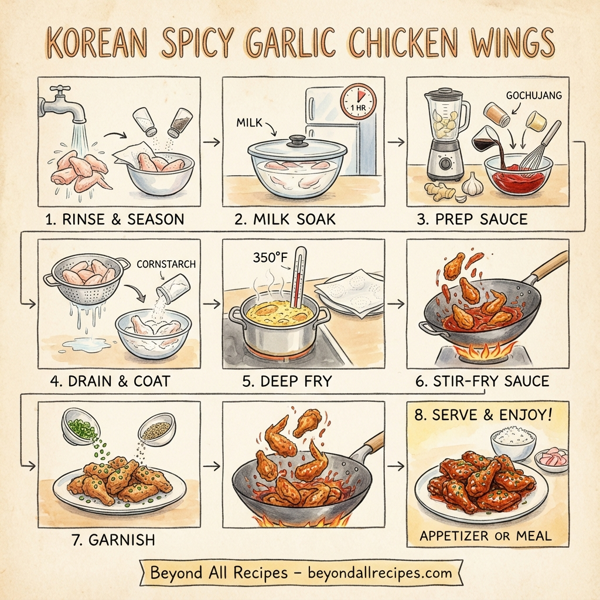
Start by rinsing the chicken wings under cold water. Pat them dry with paper towels and then lightly season with salt and ground black pepper. Allow them to marinate at room temperature for about 10 to 15 minutes.
2
In a large bowl, immerse the seasoned wings in milk and cover. Refrigerate for one hour, turning three to four times to ensure they soak evenly.
3
Prepare the stir-fry sauce by placing the peeled garlic and ginger in a blender, adding just enough water to blend into a smooth paste. Transfer the mixture to a small mixing bowl. Stir in the fine ground red chili pepper, soy sauce, sugar, rice vinegar, and Korean red pepper paste (gochujang). Mix until well combined, and adjust the water as necessary to achieve a thin paste consistency.
4
Once the wings have marinated, discard the milk and allow the wings to drain until slightly damp. Heat vegetable oil in a large pot to about 350°F (use the bread test to check if the oil is ready). In a separate bowl, roll the wings in cornstarch or potato starch until they are evenly coated.
5
Deep fry the wings in batches, ensuring not to overcrowd the pot. Fry them until they are golden brown and crispy, about 8-10 minutes, then transfer to a plate lined with paper towels to drain any excess oil.
6
In a large stir-fry pan or wok over medium to medium-high heat, add the fried wings, pour over the prepared sauce, and stir fry until the sauce thickens and coats all the wings evenly, about 3-5 minutes.
7
Transfer the sauced wings to a serving tray. Finely chop the green onion and sprinkle it over the top along with the toasted sesame seeds. Serve hot and enjoy as an appetizer or with sticky rice and ban chan for a full Korean meal experience.
Nutrition Information
Frequently Asked Questions
Frequently Asked Questions
What are Korean Spicy Garlic Chicken Wings?
These are crispy, deep-fried chicken wings marinated in milk and tossed in a bold, savory-sweet Korean sauce made with gochujang, garlic, and ginger.
What gives these wings their signature heat?
The fiery kick comes from a combination of fine ground red chili pepper and Korean red pepper paste, also known as gochujang.
Why are the chicken wings soaked in milk?
Soaking the wings in milk for one hour helps tenderize the meat and removes any gamey odors before the cooking process begins.
How long should I marinate the wings in milk?
The wings should be refrigerated in a milk soak for one hour, making sure to turn them three to four times for even coverage.
What is used to coat the wings for frying?
The recipe calls for either cornstarch or potato starch to coat the wings, which creates a light and very crispy exterior when deep-fried.
What is the recommended temperature for deep frying the wings?
The vegetable oil should be heated to approximately 350 degrees Fahrenheit before adding the wings.
How can I tell if the oil is ready without a thermometer?
You can use the bread test: drop a small piece of bread into the oil, and if it browns quickly, the oil is ready for frying.
How long do the wings need to deep fry?
The wings should be fried in batches for about 8 to 10 minutes until they are golden brown and crispy.
What are the main components of the stir-fry sauce?
The sauce is a mixture of garlic, fresh ginger, ground red chili pepper, soy sauce, sugar, rice vinegar, and gochujang.
How do I prepare the garlic and ginger for the sauce?
Peel the garlic and ginger, then place them in a blender with a small amount of water and blend until they form a smooth paste.
Can I substitute the sugar in the sauce?
Yes, you can use honey or corn syrup as a substitute for sugar to provide the necessary sweetness and a glossy finish.
What is gochujang?
Gochujang is a savory, sweet, and spicy fermented Korean condiment made from chili powder, glutinous rice, and fermented soybeans.
How do I apply the sauce to the wings?
The fried wings are placed in a large stir-fry pan or wok with the prepared sauce and tossed over medium-high heat for 3 to 5 minutes.
What should the consistency of the sauce be before cooking?
The sauce ingredients should be mixed with enough water to obtain a thin paste consistency before being added to the pan.
What garnishes are recommended for these wings?
Finely chopped spring onions and toasted sesame seeds are sprinkled over the wings just before serving.
How should these wings be served?
They can be served hot as a standalone appetizer or paired with sticky rice and ban chan (Korean side dishes) for a full meal.
Can I use potato starch instead of cornstarch?
Yes, both potato starch and cornstarch work effectively to provide the signature crunch of Korean-style fried chicken.
What type of oil is best for frying?
A neutral vegetable oil with a high smoke point is best for deep frying these chicken wings.
Can I use rice wine instead of rice vinegar?
Yes, the recipe allows for the use of either rice vinegar or rice wine for the acidic component of the sauce.
How do I ensure the wings aren't greasy?
Transfer the fried wings to a plate lined with paper towels immediately after deep frying to drain any excess oil.
Is it necessary to rinse the wings before cooking?
Yes, the instructions suggest rinsing the wings under cold water and patting them dry with paper towels before seasoning.
How long should the initial seasoning sit?
After seasoning with salt and pepper, allow the wings to marinate at room temperature for 10 to 15 minutes before the milk soak.
Can I make these wings less spicy?
To reduce the spiciness, you can decrease the amount of fine ground red chili pepper and gochujang used in the sauce.
What is the purpose of the water in the garlic-ginger blend?
Adding just enough water to the blender helps facilitate the blending process to create a perfectly smooth garlic and ginger paste.
Can I use this recipe for chicken drumsticks?
Yes, you can use the same marinade and sauce for drumsticks, though the frying time will need to be increased to ensure they are cooked through.
What are ban chan?
Ban chan are traditional Korean small side dishes served alongside rice, such as kimchi, pickled radish, or seasoned vegetables.
Can I prepare the sauce in advance?
Yes, you can blend the paste and mix the sauce ingredients ahead of time and store them in the refrigerator until ready to stir-fry.
How many wings does 1 lb typically yield?
One pound of sectioned chicken wings usually provides about 10 to 12 pieces depending on their size.
Why stir-fry the wings after deep frying?
Stir-frying the wings with the sauce allows the heat to thicken the sauce so it perfectly coats and adheres to the crispy skin.
Are these wings gluten-free?
Standard soy sauce and gochujang contain gluten; for a gluten-free version, use tamari and gluten-free gochujang, and ensure you use cornstarch or potato starch.